
Outbound Marketing helps modern companies start conversations with the right prospects, create demand faster, and guide business growth through focused outreach and clear positioning.
Outbound Marketing is the proactive side of revenue generation. Instead of waiting for people to discover a brand, Outbound Marketing reaches out to the right audience with the right message at the right time. That simple idea becomes powerful when a company wants more control over pipeline, speed, and market visibility.
For a Modern Business, timing matters as much as targeting. Buyers compare options quickly, attention is fragmented, and competition is often one click away. Outbound Marketing gives teams a direct way to enter that buying conversation early, before the prospect has fully formed a preference. When the message is relevant, the offer is useful, and the audience is precise, Outbound Marketing can create qualified opportunities that inbound alone may never capture.
This guide explains what Outbound Marketing is, how it works, why it still matters, and how modern teams can use it without sounding pushy. It also covers the Core Proactive Marketing Channels, the psychology behind response, the myths that weaken strategy, and the practical steps needed to Build Precise Outbound Target Audiences. If your goal is stronger demand generation, this guide deserves a clear place in your growth plan.
What Outbound Marketing Means Today
Outbound Marketing today is no longer about random blasts or generic spam. It is about structured outreach, data-informed targeting, and thoughtful messaging that matches a buyer’s context. The best campaigns do not interrupt people for no reason; they introduce a useful opportunity that the buyer may not have noticed yet.
In a Modern Business, Outbound Marketing works best when it is built around clarity. The sender knows who they are trying to reach, what the buyer is likely struggling with, and why the offer should matter. That means less guessing and more relevance. It also means that teams can test messages faster, learn from market feedback, and improve their process with each campaign.
Another important shift is that Outbound Marketing now lives inside a larger ecosystem. Email, social touchpoints, calling, events, direct outreach, and personalized content all support one another. The result is a coordinated system rather than isolated actions. This is what makes Outbound Marketing so useful for teams that want consistent lead flow and not just occasional wins.
Why Modern Companies Still Rely on Outreach
Outbound Marketing remains essential because many buyers do not start their journey by searching actively. Sometimes they have a problem but have not yet defined it. Sometimes they know the problem but have not explored solutions. Sometimes they are comfortable with the status quo until a better option is clearly presented. Outbound Marketing gives a company a chance to shape that awareness.
Modern teams also need speed. In competitive markets, waiting for organic discovery can slow growth. Outbound Marketing gives a company a chance to shape that awareness. Modern teams also need speed. In competitive markets, waiting for organic discovery can slow growth. Outbound Marketing offers a direct path to the people most likely to matter, which helps sales teams create meetings, test new segments, and enter markets faster. That is especially valuable when a company is launching a new product, entering a new geography, or trying to prove traction in a niche.
There is another reason Outbound Marketing continues to work: it teaches. Every reply, ignore, objection, and conversion reveals something about the market. Good outreach becomes a research tool. It shows which pain points resonate, which job titles engage, and which offers feel credible. That feedback loop makes Outbound Marketing a learning system as much as a revenue system.
Outbound Marketing for Modern Business
Outbound Marketing for Modern Business must feel relevant, not robotic. The modern buyer expects personalization, speed, and proof. That means the message has to match the audience’s role, industry, urgency, and likely objections. When those elements are aligned, Outbound Marketing feels more like an informed introduction than a sales push.
A Modern Business usually operates under pressure to do more with less. Teams need efficient growth channels, clear reporting, and repeatable processes. Outbound Marketing fits that need because it can be measured, refined, and scaled. It also gives leadership more control over pipeline creation, which is especially useful when inbound traffic fluctuates or when a company needs to support aggressive growth targets.
The strongest Outbound Marketing for Modern Business strategies are built on accuracy. The audience is narrow enough to matter, the message is specific enough to be remembered, and the offer is valuable enough to earn a reply. Without those three pieces, outreach becomes noise. With them, Outbound Marketing becomes a practical way to open doors that were previously closed.
Core Proactive Marketing Channels
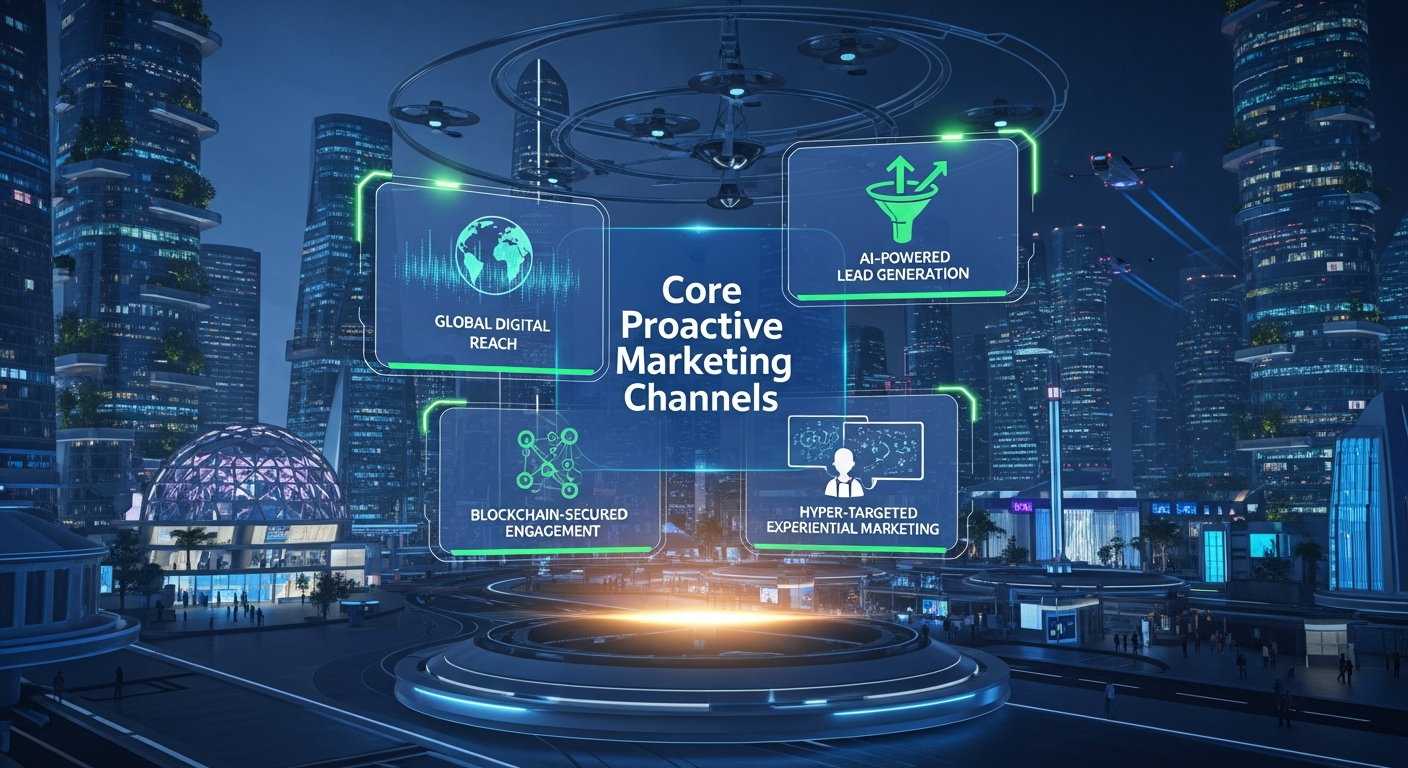
Core Proactive Marketing Channels are the paths used to reach prospects before they raise their hand. These channels usually include cold email, LinkedIn outreach, cold calling, direct mail, event follow-up, partner referrals, and targeted media support. Each channel plays a different role in the overall motion.
Cold email is often the most scalable starting point because it allows for segmentation and rapid testing. LinkedIn outreach adds context and familiarity, especially in professional markets where personal credibility matters. Cold calling can create immediate feedback, while events and referrals add warmth to the relationship. When combined well, these Outbound Marketing channels create multiple chances for the same buyer to notice, remember, and respond.
The best results happen when channel choice reflects buyer behavior. Some audiences respond better to concise written messages. Others prefer conversation. Some need social proof before they engage. A thoughtful Outbound Marketing system does not force every channel to do the same job. It uses each one for its strength, then layers them into a coordinated sequence.
Building the Right Target Audience
One of the biggest reasons Outbound Marketing succeeds or fails is audience quality. If the list is too broad, the messaging becomes generic. If the list is too narrow but poorly chosen, the campaign may never reach enough of the right people. The goal is precision, not volume for its own sake.
To build better Outbound Marketing target audiences, start with a clear picture of the ideal company and the ideal buyer. Consider industry, company size, geography, buying maturity, technology stack, and trigger events. Then layer in role, seniority, responsibilities, and likely pain points. This helps Outbound Marketing become more relevant before the first message is even sent.
Precise targeting is not only about who might buy. It is also about who will care enough to respond. A founder may react differently than a marketing manager. A finance leader may value risk reduction, while an operations leader may care more about efficiency. Outbound Marketing becomes sharper when the message reflects those differences.
The Psychology Behind Response
People respond to Outbound Marketing when it speaks to a real need, a hidden opportunity, or a growing risk. The human brain is always filtering for relevance. If a message feels generic, it gets ignored. If it feels specific and timely, it gets attention. That is why psychology matters so much in outreach.
A strong message reduces friction. It does not demand immediate trust. It simply gives the buyer enough clarity to keep reading. Outbound Marketing works well when it creates curiosity without confusion, confidence without exaggeration, and urgency without pressure. That balance is what makes the message feel human.
Trust also plays a major role. People are cautious about unknown senders, especially in a crowded inbox. So Outbound Marketing must feel respectful and informed. It should show that the sender understands the buyer’s environment and has a reason for reaching out. When the first impression is thoughtful, the conversation has a much better chance of continuing.
Outbound Marketing For Business Growth & Goals
Outbound Marketing For Business Growth & Goals should be designed with a measurable business outcome in mind. Some teams want more qualified meetings. Others want to expand into a new market. Some want to grow revenue in a specific segment. This growth-focused Outbound Marketing framework should be designed with a measurable business outcome in mind. Some teams want more qualified meetings. Others want to expand into a new market. Some want to grow revenue in a specific segment. Outbound Marketing can support each objective, but the strategy changes depending on the target.
When the goal is growth, the company needs more than activity. It needs a system that converts attention into opportunities. That means tracking the right metrics, testing the right messages, and prioritizing the right accounts. Outbound Marketing is most effective when it is tied to revenue logic instead of vanity metrics.
A company that treats Outbound Marketing for Business Growth like a growth engine will also treat the feedback as strategic intelligence. Which vertical replied most often? Which offer created the strongest meeting rate? Which title moved fastest? These questions matter because they reveal where the business should invest next. The more the strategy connects to goals, the more valuable the channel becomes.
How to Structure a Strong Outbound Motion
A strong Outbound Marketing motion usually follows a sequence: identify the audience, define the problem, craft the message, choose the channel, test the response, and refine the approach. That sequence looks simple, but every step matters.
The first step is understanding the prospect’s world. What is expensive, slow, risky, or frustrating about the current state? Then the message should connect that problem to a concrete outcome. Outbound Marketing is more persuasive when it avoids broad claims and focuses on a specific improvement the buyer can imagine.
Next comes the cadence. One message is rarely enough, especially in B2B environments where people are busy and distracted. A sequence gives Outbound Marketing more chances to land at the right time. Each touchpoint can offer a slightly different angle, such as a pain point, an insight, a proof point, or a simple call to action.
Matching Message to Market
Every market has its own language. If the message sounds too internal or too product-centered, it will feel distant from the buyer. Outbound Marketing performs better when it borrows the words the market already uses to describe the problem.
That is why customer interviews, sales calls, objection logs, and support tickets matter. They reveal the terms people use in real conversations. Outbound Marketing becomes more credible when it reflects that language. Instead of sounding like a vendor, the brand sounds like a useful observer.
This is also where relevance becomes a competitive advantage. Many companies target the same buyers, but not all of them understand the buyer’s pressure points. A message that fits the market’s current reality will stand out. In practice, that is one of the main reasons Outbound Marketing still works in a world full of content and noise.
Outbound Marketing Myths
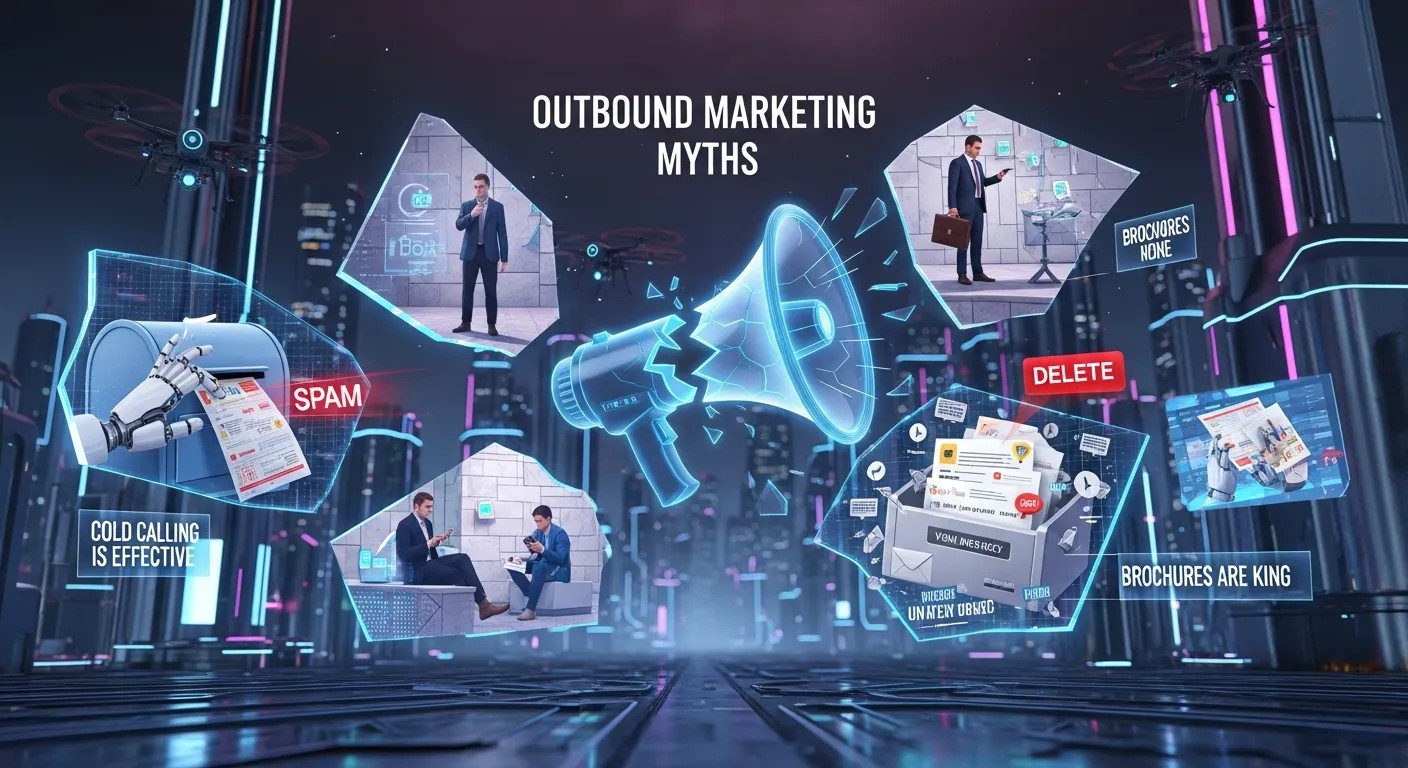
Outbound Marketing Myths can stop a team from using a powerful channel well. One common myth is that outreach is outdated. Another is that it only works if you have a massive sales team. A third myth is that it cannot be measured. None of these ideas holds up in a modern operating environment.
Outbound Marketing Myths also often suggest that buyers hate all outreach. In reality, buyers dislike irrelevant outreach. They respond to messages that are useful, specific, and respectful. The problem is not the channel itself; the problem is poor execution. When teams target carefully and communicate clearly, Outbound Marketing can feel like help rather than interruption.
Another myth says that Outbound Marketing must always be aggressive. That is not true. The most effective outreach is often calm, professional, and concise. It gives the buyer space to decide. That is why modern teams are replacing pressure with precision and why smarter outreach continues to outperform lazy volume.
Choosing the Right Channels for Different Situations
Different situations call for different combinations of channels. For example, a new market entry may need email and LinkedIn to establish the first touchpoints, while a strategic account approach may need calling and tailored content. Outbound Marketing should flex with the buying context.
In some cases, a single channel can create enough awareness to start a conversation. In others, the buyer needs repeated exposure across multiple touchpoints. That is why the strongest programs use Outbound Marketing channels in a sequence rather than in isolation. The goal is not to overwhelm the buyer. The goal is to build familiarity in a way that feels natural.
The channel mix should also reflect the average attention span of the audience. Executives may respond to concise, high-level messages. Operators may care more about implementation detail. Outbound Marketing becomes more effective when the channel strategy fits how each audience prefers to consume information.
Practical Steps for Smarter Execution
One of the simplest ways to improve Outbound Marketing is to narrow the list and improve the relevance of the offer. Too many teams try to compensate for weak targeting with more volume. That usually creates more noise, not better results. A smaller list with a sharper message often performs better.
Another practical step is to define one primary action per campaign. The prospect should not have to guess what is being asked. Outbound Marketing works best when the call to action is easy to understand and easy to accept. A clear next step reduces decision friction and helps the conversation move forward.
Testing is also critical. Change one element at a time so you can learn what matters. Subject line, opening line, proof point, audience segment, and call to action can all affect response. The more consistently you test, the more your Outbound Marketing improves. Over time, small improvements compound into meaningful growth.
Scaling Without Losing Quality
Scaling Outbound Marketing is not just about sending more messages. It is about sending better messages to more of the right people. As volume rises, quality can fall if the system is not built carefully. That is why documentation and process matter.
The team should know how lists are built, how messages are personalized, how follow-up works, and how responses are routed. If any of those pieces are unclear, Outbound Marketing becomes harder to manage. Scale should make execution smoother, not messier.
As the team grows, it also helps to keep a strong feedback loop between sales and marketing. Sales hears objections first. Marketing can turn those patterns into sharper messaging. That collaboration keeps Outbound Marketing connected to real market signals instead of assumptions.
Why Precision Beats Generic Volume
Generic volume often creates the illusion of activity without producing meaningful outcomes. Precision does the opposite. It may feel slower at first, but it usually creates better conversations and stronger conversion rates. That is especially important in Modern Business environments where efficiency matters.
When Outbound Marketing is precise, it respects the buyer’s time and improves the sender’s credibility. It also reduces wasted effort internally. Fewer irrelevant leads means less follow-up on poor-fit accounts and more time spent on opportunities that can actually move forward.
Precision also improves learning. If the list is well-defined, the team can see which segment responds best and why. That data becomes useful for future campaigns, product positioning, and sales planning. In this way, Outbound Marketing becomes a strategic asset rather than a one-off tactic.
Measuring the Right Outcomes
Not all metrics are equally helpful. Open rates can provide a signal, but they do not tell the whole story. Reply rates, positive reply rates, meetings booked, opportunities created, and influenced revenue are more important for understanding whether Outbound Marketing is truly working.
The quality of the conversation matters too. A high reply rate is not a win if the responses come from the wrong people. Likewise, a low reply rate may still be acceptable if the few responses turn into serious opportunities. Outbound Marketing should be judged on both activity and business impact.
The best measurement system connects outreach performance to pipeline outcomes. That makes it easier to see which audience, message, and channel combination deserves more investment. Over time, that data turns Outbound Marketing into a repeatable growth discipline.
Why This Matters for a Modern Business

A Modern Business cannot afford to rely on hope alone. Markets change quickly, customer expectations shift, and competition is always present. Outbound Marketing gives companies a way to stay active in the market instead of waiting for demand to appear on its own.
It also helps teams stay in control. When inbound slows down, Outbound Marketing can keep conversations moving. When the company enters a new market, outreach can accelerate learning. When growth goals get more ambitious, outbound can support the extra volume needed to reach them.
Most importantly, Outbound Marketing gives a company a chance to be proactive. That mindset matters because modern growth is rarely passive. The brands that win are usually the ones that know how to show up early, communicate clearly, and create relevance before the competition does.
Final Perspective
Outbound Marketing is not a relic of older sales playbooks. It is a modern growth capability when used with data, empathy, and discipline. The channel works because it solves a persistent business problem: how to start conversations with the right people before someone else does.
In a competitive environment, this matters more than ever. Companies need ways to control pipeline, test new markets, and build momentum without waiting for chance. Outbound Marketing provides that control. The better the targeting, the clearer the message, and the more disciplined the follow-up, the stronger the results will be. That discipline also strengthens cross-functional alignment, because marketing, sales, and leadership can review the same signals and improve decisions faster together reliably. For a Modern Business, that makes it one of the most practical and flexible tools available.
Conclusion
Outbound Marketing remains one of the most practical ways to create demand, reach specific buyers, and support Business Growth in a measurable way. For a Modern Business, its value comes from precision, not pressure. When teams build precise audiences, choose the right channels, and speak to real pain points, they create conversations that feel useful instead of intrusive. The strongest Outbound Marketing programs also improve over time because every reply and objection teaches something about the market. That learning helps teams refine messaging, sharpen positioning, and move faster with more confidence. Used well, Outbound Marketing becomes a dependable engine for growth, not just a short-term tactic for lead generation. It supports focus, consistency, and stronger pipeline quality across the entire revenue process.
Frequently Asked Questions (FAQ)
What is outbound strategy in simple terms?
Outbound Marketing is the practice of proactively reaching potential customers with targeted messages instead of waiting for them to find you first.
Why does this strategy still matter today?
Outbound Marketing still matters because it helps companies create demand, enter new markets, and reach buyers who may not be actively searching yet.
Is outbound outreach only for large companies?
No. Outbound Marketing can work for small and mid-sized companies too, especially when the audience is clear and the offer is relevant.
What are the main channels?
Outbound Marketing channels usually include email, LinkedIn, calling, events, referrals, and direct outreach designed to start conversations early.
How can I build precise audiences?
You can build precise Outbound Marketing audiences by using firmographic data, role-based targeting, trigger events, and clear buyer pain points.
What makes this approach effective?
Outbound Marketing becomes effective when the message is relevant, the audience is narrow, and the follow-up sequence is consistent.
Are the common misconceptions true?
Most common Outbound Marketing misconceptions are not true. Poor execution fails, but thoughtful outreach can still produce strong results in modern markets.
How does this strategy support growth goals?
Outbound Marketing supports growth goals by creating meetings, testing market segments, and helping companies build predictable pipeline.
What is the biggest mistake in outreach?
The biggest mistake is targeting too broadly and sending generic messages that do not connect with the buyer’s situation.
Can outreach work with inbound content?
Yes. Outbound Marketing and inbound content can work together very well, especially when outreach is supported by useful proof and clear positioning.