Integrating AI Chatbots into Outbound Marketing: A Guide to Scalable Engagement
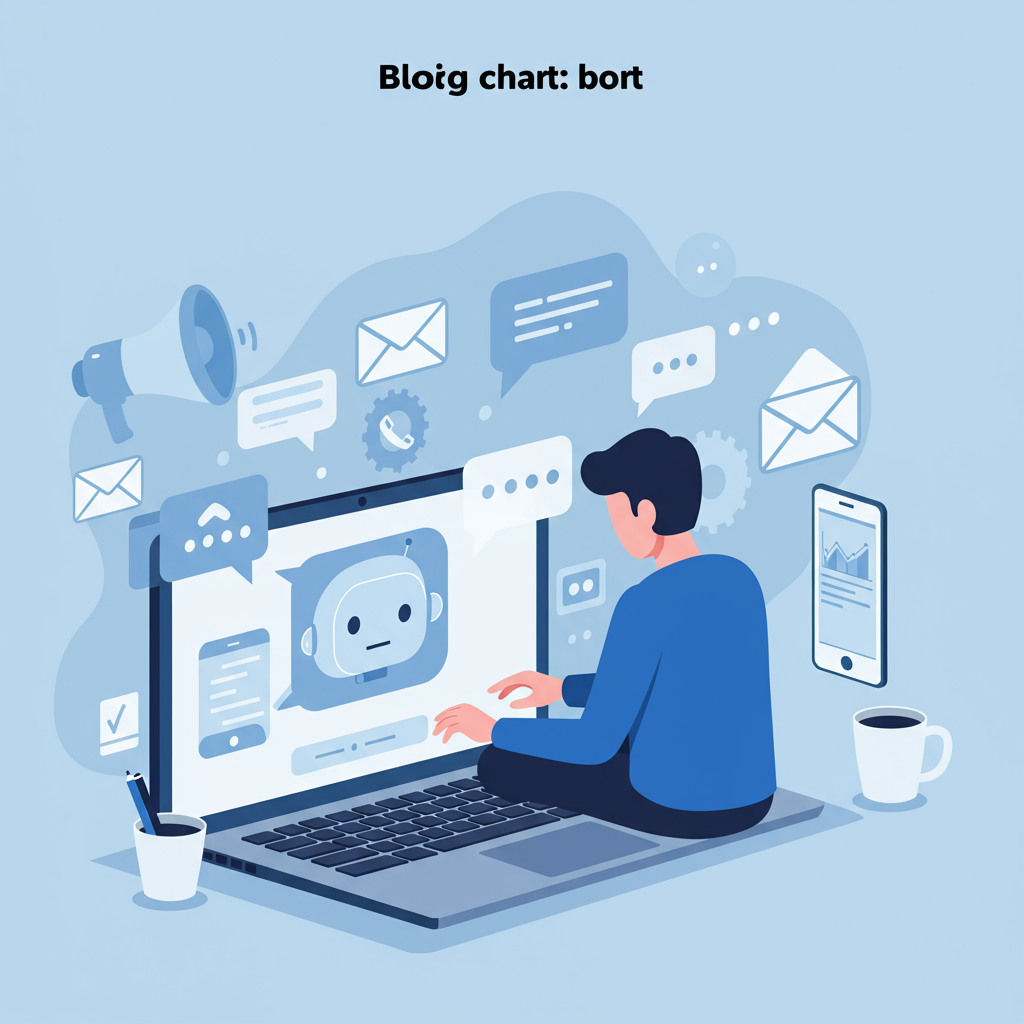
Discover how AI chatbots transform outbound marketing through real-time engagement, automated lead qualification, personalized conversations, and scalable outreach. Learn implementation strategies, key metrics, best practices, and future trends helping businesses boost conversions, efficiency, and customer relationships through conversational AI.
In today’s competitive marketplace, both B2B and B2C organizations struggle to maintain consistent, high-touch communication as the volume of outbound leads intensifies. Legacy tactics—mass email sends, generic phone outreach, and manual follow-ups—often fail to capture interest where and when it matters most. Gartner research shows that 80% of buyers expect faster responses than ever before yet 60% of organizations still take more than a day to reply Gartner.
Artificial intelligence–driven chatbots offer a solution that’s neither gimmick nor novelty. These digital assistants can engage prospects in real time, qualify leads based on dynamic criteria, and transfer hot conversations to human agents—all without sacrificing personalization. This post outlines how to architect and implement an AI chatbot strategy that propels outbound marketing from sporadic touches to 24/7 conversational experiences at scale.
Why Conventional Outbound Outreach Falls Short
Traditional outbound workflows typically rely on template-heavy emails or SDRs making sequential phone calls. Such methods suffer from delays, scalability constraints, and low reply rates. According to a Forbes survey, 45% of sales representatives cite slow response time as the top reason for lost deals (Forbes).
- Delayed Engagement: Manual triage of inbound inquiries can take hours or days, at which point prospect interest often wanes.
- Resource Bottlenecks: A single team can only manage a finite number of concurrent conversations, leaving many leads unaddressed.
- One-Size-Fits-All Messaging: Generic scripts fail to resonate, leading to low open rates and high opt-out percentages.
Clearly, businesses need a mechanism that combines immediacy with individualized interaction. AI chatbots fill this gap by delivering context-aware responses the instant a lead clicks, downloads content, or visits a pricing page.
The AI Chatbot Advantage
Chatbots powered by advanced natural language processing (NLP) and machine learning (ML) engines offer multiple benefits over purely human-driven outreach:
- Instantaneous Connections: Chatbots can respond to every trigger event—website visits, social media clicks, email link interactions—within seconds.
- Automated Qualification: Predefined logic flows guide prospects through budget, authority, need, and timeline (BANT) criteria, ensuring that only high-potential leads are escalated.
- Conversational Depth: Modern NLP models detect sentiment, discern intent, and adapt phrasing to match the brand voice, yielding human-like dialogue (see research by Stanford NLP Group).
- Cost and Time Efficiencies: Forrester estimates that organizations can lower sales development costs by up to 30% when early-stage qualification is offloaded to AI (Forrester).
- Round-the-Clock Coverage: Leads originating outside of core business hours receive immediate acknowledgement, boosting conversion likelihood by 17% on average (Harvard Business Review).
Building a Strategic Chatbot Integration Roadmap
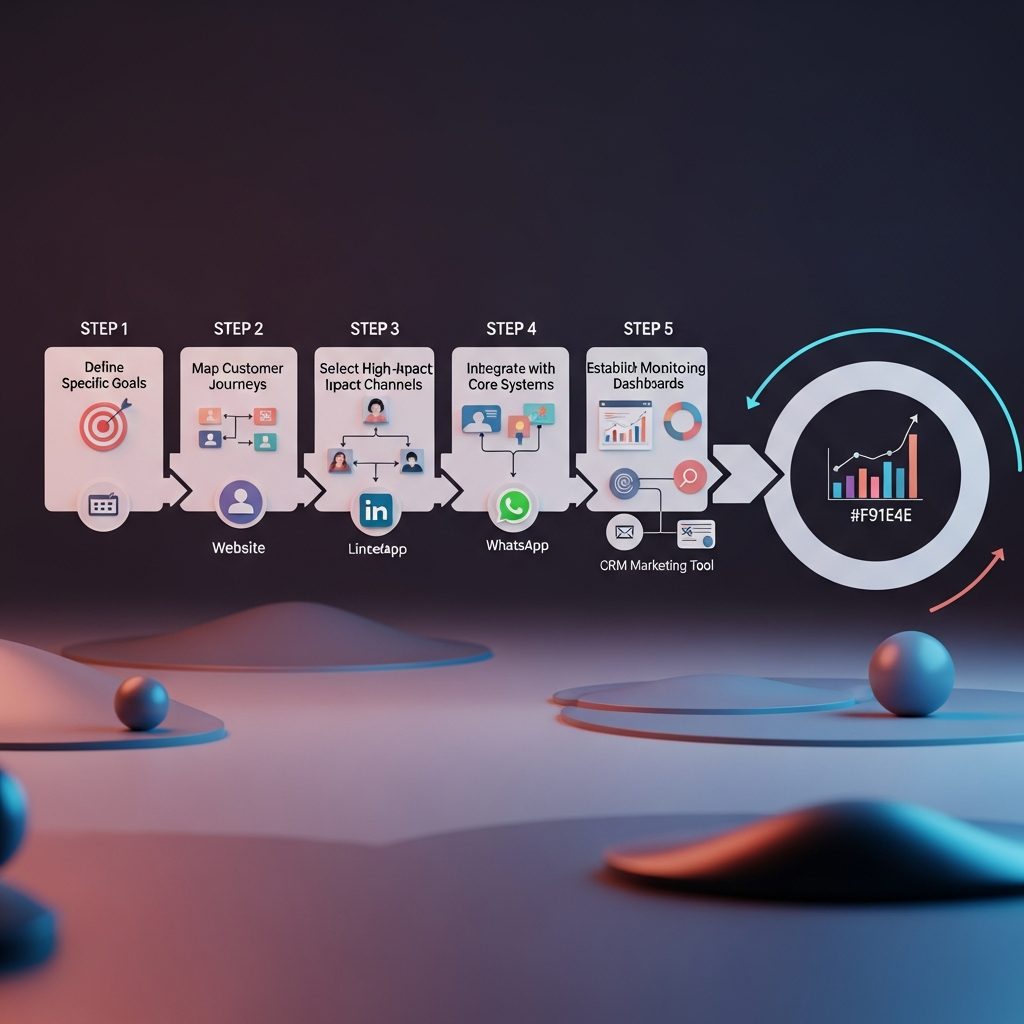
A successful rollout begins with clear objectives and cross-functional alignment between marketing, sales, and IT teams. Below is a five-step framework:
Define Specific Goals
Are you targeting faster demo scheduling, improved MQL-to-SQL ratios, or upsells within your existing customer base? Translate these aims into measurable KPIs such as “average response time under two minutes” or “15% lift in qualified leads.”
Map Ideal Customer Journeys
Break down each persona’s path—CIO, procurement manager, or small-business owner—and identify friction points (e.g., pricing page visits, product comparison downloads) where a chatbot can intervene.
Select High-Impact Channels
Decide whether to deploy on your website, LinkedIn Messaging, WhatsApp Business, or SMS. Channel choice should align with where your audience already engages (see Pew Research for messaging app usage by demographic: Pew Research).
Integrate with Core Systems
Ensure seamless bi-directional data flow between your chatbot platform and CRM (Salesforce, HubSpot) and marketing automation tools (Marketo, Pardot) to maintain a single source of truth for contact records.
Establish Monitoring Dashboards
Use BI tools like Power BI or Tableau to track in real time key metrics—including qualification rates, handoff times, and conversation drop-off points—for continuous optimization.
![A stylized chatbot-conversation mockup showing dialogue that converts: a friendly onboarding bubble saying “Hi [Name], I see you’re exploring our analytics toolkit. How can I help?”, followed by guided discovery question bubbles (“What’s your budget range?”), contextual personalization call-outs referencing past downloads, a prominent “Schedule a 20-minute demo” button, and a seamless handoff panel indicating transfer to a human agent with full chat transcript.](https://outboundmarketo.com/wp-content/uploads/2026/02/image-5.png-5.png)
Crafting Dialogue That Converts
Well-designed conversation flows blend scripted precision with adaptive branching:
- Friendly Onboarding: Start with a warm greeting that references the visitor’s journey, for example: “Hi [Name], I see you’re exploring our enterprise analytics toolkit. How can I assist you today?”
- Guided Discovery: Deploy conditional logic to ask targeted questions—budget range, implementation timeline, decision criteria—while customizing follow-up responses based on the prospect’s input.
- Contextual Personalization: Leverage CRM data to reference past touchpoints (e.g., “I know you downloaded our ROI whitepaper last week—ready to dive into pricing details?”).
- Clear Calls to Action: Provide unambiguous next steps—“Would you like to schedule a 20-minute demo with our solutions architect?”—and offer alternate resources (case studies, tutorials) if the lead is not yet ready.
- Seamless Escalation: When human expertise is required, transfer the conversation with full transcript and prospect metadata so reps can jump in without asking repetitive questions.
Technical Blueprint for a Future-Ready Bot
Your technical stack must deliver reliability, security, and extensibility:
- Platform Selection: Compare frameworks such as Microsoft Bot Framework, Google Dialogflow, or specialized vendors (Drift, Intercom) based on feature set, ease of integration, and support for custom ML models.
- NLP/ML Engine: Employ an engine capable of continuous learning, sentiment analysis, and multi-language support. Consider open-source solutions like Rasa for full control or managed services like AWS Lex.
- Data Governance and Compliance: Adhere to GDPR, CCPA, and industry-specific standards. Encrypt data at rest and in transit, follow NIST cybersecurity guidelines (NIST), and document a clear privacy policy.
- Scaling and Resilience: Host your infrastructure on cloud platforms (AWS, Azure, GCP) with auto-scaling groups and multi-zone failover to accommodate traffic surges during major campaigns or product launches.
Training, Testing, and Continuous Improvement
Iterative refinement is the hallmark of a successful AI deployment:
- Data Collection: Aggregate historical chat logs, support tickets, and call transcripts to build a robust training corpus.
- Intent and Entity Modeling: Define key intents (e.g., “Request Demo,” “Pricing Inquiry,” “Technical Support”) and annotate sample utterances to train classification algorithms.
- Beta Pilots: Run limited rollouts with internal stakeholders or select customer cohorts to gather early feedback on misunderstandings or uncommon queries.
- Feedback Loops: Monitor misclassification rates, deploy in-app surveys, and set up weekly model retraining cycles to improve intent accuracy and response relevancy.
- Knowledge Base Updates: Maintain a dynamic repository of FAQs, product specs, and compliance guidelines so the bot’s knowledge grows alongside your offerings.
Measuring Business Impact
Quantifying ROI is crucial for ongoing investment:
- Lead Velocity Rate (LVR): Track the speed at which new leads advance through the funnel when interacting with the chatbot versus traditional channels (Marketo defines LVR as a standard metric: Marketo).
- Cost Savings: Calculate hours saved by SDRs on qualification tasks and compare against chatbot operating expenses, using benchmarks such as those from TechValidate (TechValidate).
- Pipeline Contribution: Use multi-touch attribution to identify deals influenced by chatbot-assisted conversations and measure average deal size uplift.
- Engagement Metrics: Monitor chat engagement rate, average session length, and handoff success rate to gauge user satisfaction and operational efficiency.
Ethical Considerations and Best Practices
Maintaining trust and compliance should never be an afterthought:
- Transparency: Clearly disclose that users are interacting with an AI assistant and provide easy paths to human support.
- Data Minimization: Collect only essential information needed for qualification. Offer opt-out options and delete personal data upon request, following FTC guidelines.
- Accessibility: Design chat interfaces compliant with WCAG 2.1 to support screen readers and keyboard-only navigation.
- Messaging Cadence: Respect user preferences by limiting outreach frequency and honoring “Do Not Disturb” time windows to avoid overmessaging.
- Fairness and Bias: Periodically audit your training data and ML models to ensure they do not inadvertently discriminate against any group.
The Next Evolution: What Lies Ahead for Outbound Chatbots
Emerging trends are poised to further amplify chatbot capabilities:
- Generative Conversational AI: Large language models (e.g., GPT-4) will power more fluid, context-aware dialogues capable of generating custom content on the fly.
- Voice-Activated Outreach: Integrations with voice assistants like Amazon Alexa or Google Assistant will enable hands-free prospect engagement.
- Hyper-Personalization: Real-time signals—such as geolocation, browsing patterns, and third-party intent data—will trigger tailored offers and dynamic conversation paths.
- Omni-Channel Orchestration: Bots will coordinate seamlessly across chat, email, SMS, and social channels, preserving context and conversation history.
Responsible AI Frameworks: Stricter regulations and ethics guidelines will drive transparent, user-centric design, ensuring chatbots serve both business goals and user rights.
Common Mistakes to Avoid When Deploying AI Chatbots
Even advanced chatbot initiatives can fail when businesses overlook common implementation pitfalls. Avoiding these mistakes can dramatically improve performance and user trust.
Over-Automating Conversations
Not every interaction should stay with a bot. Complex questions, objections, or enterprise sales discussions often require human involvement. Failing to provide a human handoff can frustrate prospects and reduce conversions.
Ignoring Conversation Design
Many organizations focus on the AI engine but neglect dialogue flow. Poorly written prompts, robotic responses, and confusing decision trees can damage user experience more than help it.
Launching Without CRM Alignment
A chatbot operating outside your CRM or lead routing process creates data silos and missed opportunities. Integration should be foundational, not an afterthought.
Treating Chatbots as “Set and Forget” Tools
Successful bots require ongoing optimization. Without regular retraining, monitoring, and content updates, performance declines over time.
AI Chatbots for Different Outbound Marketing Use Cases
Chatbots can support far more than lead qualification. Their impact spans multiple outbound functions across the revenue funnel.
Lead Generation Campaigns
Bots can engage visitors from paid ads, gated content offers, and landing pages, qualifying prospects before routing them to sales.
Account-Based Marketing (ABM)
For B2B teams, chatbots can personalize interactions for target accounts, surface account-specific messaging, and accelerate high-value engagement.
Event and Webinar Outreach
Before, during, and after webinars or trade shows, bots can handle registrations, answer FAQs, book meetings, and nurture attendees toward pipeline opportunities.
Customer Expansion and Upselling
Outbound chatbots can also support existing customers by recommending upgrades, promoting renewals, or identifying cross-sell opportunities based on usage signals.
Choosing the Right KPIs for Chatbot Success
Beyond engagement metrics, organizations need a performance framework tied directly to revenue outcomes.
Operational Metrics
Track response speed, containment rate, escalation accuracy, and average handling time to evaluate efficiency.
Conversion Metrics
Measure demo bookings, qualified lead volume, meeting acceptance rates, and chatbot-assisted conversion rates.
Revenue Metrics
Connect chatbot interactions to the influenced pipeline, customer acquisition cost reduction, and revenue contribution.
Experience Metrics
Monitor satisfaction scores, sentiment trends, and conversation completion rates to ensure automation improves rather than harms user experience.
A balanced KPI model helps prove chatbot value beyond vanity metrics.
Real-World Examples of Brands Winning With AI Chatbots
Practical examples help illustrate what successful chatbot-driven outbound marketing looks like in action.
SaaS Companies
Software vendors use conversational bots to qualify trial users, recommend product tours, and route enterprise prospects to sales in real time.
E-Commerce Brands
Retail businesses deploy bots for product discovery, abandoned cart recovery, and personalized promotional outreach.
Financial Services Providers
Banks and fintech firms use AI assistants to answer product questions, pre-qualify prospects, and streamline onboarding conversations.
Healthcare and Professional Services
Appointment scheduling, consultation intake, and service qualification workflows are increasingly automated through conversational AI.
These examples show that chatbot-driven outbound engagement is not limited to one sector—it is becoming a cross-industry growth strategy.
Conclusion
AI-driven chatbots represent a transformative opportunity for outbound marketing teams to engage prospects faster, smarter, and more cost-effectively. By following a structured integration roadmap—defining objectives, mapping customer journeys, selecting the right channels and technology, and relentlessly optimizing through data-driven insights—organizations can turn every inbound click and cold outreach into a high-value conversation. As chatbot capabilities continue to grow, early adopters who balance innovation with ethical considerations will forge deeper customer connections and secure lasting competitive advantage in the evolving landscape of conversational marketing.
FAQs
1. How do AI chatbots improve outbound marketing performance?
AI chatbots improve outbound marketing by responding instantly to prospects, automating lead qualification, nurturing leads with personalized messaging, and routing high-intent prospects to sales teams. This reduces response time, increases engagement, and improves conversion rates while lowering manual workload.
2. Can AI chatbots qualify leads automatically?
Yes, AI chatbots can automate lead qualification using frameworks like BANT (Budget, Authority, Need, Timeline). They ask targeted questions, score leads based on responses, and pass qualified prospects to sales representatives, saving time and improving pipeline quality.
3. Which channels can businesses use chatbots for outbound marketing?
Businesses can deploy AI chatbots across websites, landing pages, WhatsApp, LinkedIn messaging, SMS, Facebook Messenger, and even email workflows. The best channel depends on where your audience is most active and how they prefer to engage.
4. What features should a good outbound marketing chatbot include?
A high-performing chatbot should include NLP capabilities, CRM integration, lead scoring, automation workflows, personalization, live agent handoff, analytics dashboards, multilingual support, and compliance controls. These features help maximize both user experience and marketing ROI.
5. How do AI chatbots personalize outbound conversations?
Chatbots use customer data, browsing behavior, past interactions, and CRM insights to tailor responses. They can recommend resources, adjust messaging by buyer stage, and deliver highly relevant offers or follow-ups based on user intent and behavior.
6. What metrics should be used to measure chatbot success?
Key chatbot KPIs include response time, lead qualification rates, conversion rates, engagement rate, handoff success rate, cost savings, lead velocity rate, and pipeline contribution. These metrics help measure operational efficiency and revenue impact.
7. Are AI chatbots suitable for B2B and B2C outbound campaigns?
Yes. In B2B, chatbots help with lead qualification, account-based marketing, and demo booking. In B2C, they support product recommendations, promotions, abandoned cart recovery, and customer engagement. Both models benefit from automation and personalization.
8. What common mistakes should businesses avoid when implementing chatbots?
Common mistakes include over-automating conversations, poor dialogue design, lack of CRM integration, ignoring compliance requirements, and failing to optimize after launch. A chatbot should evolve continuously based on data, user feedback, and performance insights.
9. Are AI chatbots secure and compliant for marketing use?
They can be when implemented properly. Businesses should follow privacy regulations such as GDPR and CCPA, use encryption, minimize unnecessary data collection, maintain consent mechanisms, and ensure chatbot interactions align with ethical AI and compliance standards.
10. What is the future of AI chatbots in outbound marketing?
The future includes generative AI, voice-driven outreach, hyper-personalization, predictive engagement, and omnichannel orchestration. Chatbots are evolving from support tools into intelligent revenue-driving assistants that can manage larger portions of the customer journey.