Intent Based Personalized Offers : Master Guide
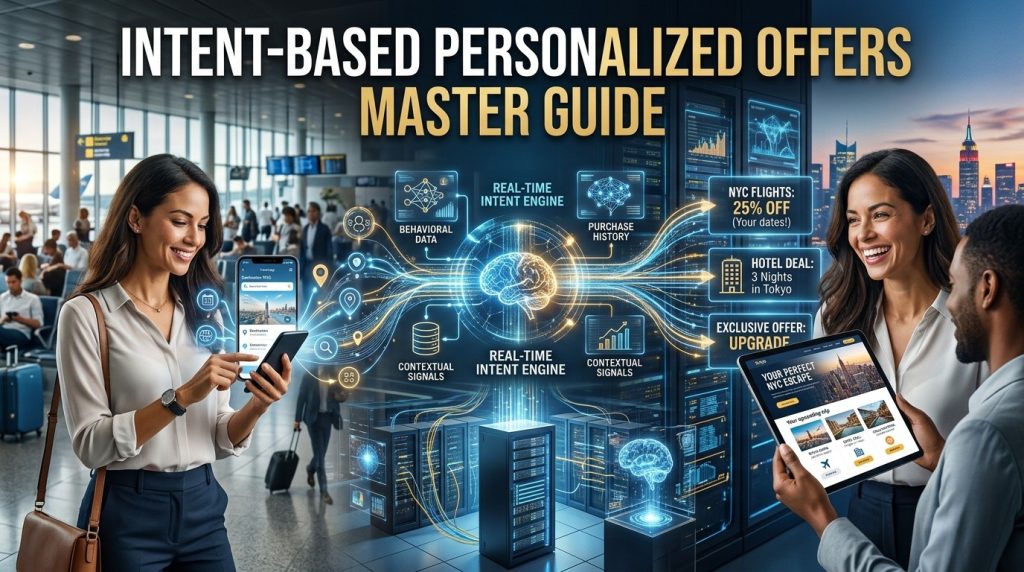
Intent Based Personalized Offers improve relevance by matching timing, behavior, and need, helping brands turn interest into action with clearer messages, stronger trust, and less wasted attention.
Intent Based Personalized Offers work because people respond more strongly when a message fits what they already want. A visitor who is researching is not looking for the same thing as a buyer who is ready to compare, and a returning customer is not thinking the same way as a first-time visitor. Intent Based Personalized Offers make that difference visible and actionable, which is why they often outperform broad, one-size-fits-all promotions. When the offer feels timely and specific, it is easier for the audience to pay attention without feeling interrupted.
Intent Based Personalized Offers also solve a major psychological problem: people ignore what feels generic. The more crowded the digital environment becomes, the more valuable it is to sound like the message was made for one situation rather than for everyone. Intent Based Personalized Offers reduce friction because they give the brain less work to do. The audience does not need to decode the message; they can immediately sense whether it fits their current goal. That is a huge advantage in any conversion journey.
Intent Based Personalized Offers are not just about better click-through rates. They help brands build a more respectful relationship with the audience. When the timing, proof, and call to action match the user’s intent, the message feels helpful instead of pushy. That change in tone often produces better engagement because people are more willing to continue when they feel understood. Intent Based Personalized Offers therefore sit at the center of modern relevance strategy.
What intent actually means in practice
Intent Based Personalized Offers become much easier to design when the team defines intent clearly. Intent is not only the final purchase decision. It includes early curiosity, active comparison, hesitation, urgency, and post-purchase behavior. Personalized Offers work because they respond to the stage the person is in right now. That stage determines how much information, reassurance, or incentive the person needs next.
Intent Based Personalized Offers should be based on observable behavior, not guesswork. Someone who visited a pricing page twice may need a different offer than someone who only opened a blog post once. Someone who keeps returning to product pages may be more likely to respond to urgency. Personalized Offers become sharper when those signals are interpreted carefully rather than treated as random clicks. The goal is to match the message to the likely mental state behind the behavior.
Intent Based Personalized Offers also need to recognize that intent shifts over time. A user can begin in research mode and move quickly into comparison mode after one strong interaction. Personalized Offers should therefore be flexible enough to change as the user’s readiness changes. That flexibility is what makes them feel intelligent rather than automated. The more the offer follows the journey, the more natural the experience feels.
Why generic messaging falls short
Intent Based Personalized Offers outperform generic messaging because generic messaging speaks to the average, while real buyers do not usually feel average in the moment they are deciding. A broad offer may attract attention, but it often fails to create the urgency or relevance needed for action. Personalized Offers narrow the gap between message and need, which makes the response more likely.
Personalized Offers also reduce the mental burden of sorting through options. People are constantly exposed to messages, and the brain tends to filter hard when something feels irrelevant. A generic message creates extra work because the person has to decide whether the offer applies to them. Intent Based Personalized Offers reduce that work by showing clear alignment from the start. That usually improves both trust and conversion.
Intent Based Personalized Offers also tend to build stronger memory. People remember messages that feel like they were written for a specific moment in their journey. That memory matters because the best marketing does not only win the first click; it also influences the next one. Personalized Offers can leave a stronger impression than broad promotions because they feel more like a conversation than a broadcast.
The role of audience structure

Intent Based Personalized Offers become more effective when the business has a clear structure for understanding different groups. That structure often starts with Audience Segmentation, which helps divide a larger audience into smaller groups that share similar needs, behaviors, or motivations. Intent Based Personalized Offers rely on this kind of structure because the message must fit a specific audience state, not just a vague general audience.
Intent Based Personalized Offers become much easier to plan when the audience is organized by stage. A brand may separate first-time visitors, repeat visitors, pricing-page viewers, cart abandoners, and existing customers. Personalized Offers can then reflect those different needs more precisely. A first-time visitor might need education, while an existing customer might respond better to an upgrade or loyalty incentive. That level of differentiation is often what makes the strategy work.
Intent Based Personalized Offers also benefit from fewer assumptions. The team should not simply guess what each segment wants. It should identify patterns, compare behavior, and then build offers around those patterns. Personalized Offers become stronger when the segmentation system is simple enough to use consistently and detailed enough to matter. That balance is what keeps relevance from becoming overcomplicated.
Signals are the foundation of good offers
Intent Based Personalized Offers are only as good as the signals behind them. A signal can be a page visit, a repeat interaction, a form submission, an email response, a product view, or a pause at a decision point. Personalized Offers become smarter when those signals are collected and interpreted together instead of alone. One action may not mean much, but several signals pointing in the same direction can reveal real readiness.
Intent Based Personalized Offers should also use Data Signals for Precise Message Tailoring. Those signals help the team decide whether to lean into education, trust, urgency, incentive, or reassurance. A buyer who reads comparison content may need contrast and proof. A buyer who has returned several times may need a stronger reason to act. Personalized Offers work best when the signal and the message feel aligned.
Intent Based Personalized Offers become even more useful when the team thinks about signal strength. Not every action carries the same meaning. A single click is weaker than repeated engagement. A long visit on a pricing page is different from a quick bounce. Personalized Offers should use that difference to decide how direct the message should be. Stronger signals usually justify stronger offers, while weaker signals may require a softer approach.
What makes an offer feel personal
Intent Based Personalized Offers feel personal when they speak to the user’s current problem, not just to the product’s general advantages. The more the offer mirrors the user’s specific concern, the more natural it feels. Personalized Offers are not necessarily about adding a name or a city to a message. They are about showing that the brand understands where the user is in the decision process.
Intent Based Personalized Offers also feel personal when the proof is relevant. A visitor who is worried about reliability should see proof that addresses reliability. A visitor who is comparing options should see a clear contrast or advantage. Personalized Offers should not try to say everything at once. They should give the user exactly enough information to take the next step without feeling overloaded.
Intent Based Personalized Offers also become more effective when the tone matches the level of intent. A person just starting to research may need a softer, more educational tone. A person already close to buying may respond better to urgency or a direct call to action. Personalized Offers do not need to sound dramatically different from one another; they just need to respect where the user is mentally. That respect is what makes them feel personally relevant.
Why timing matters so much
Intent Based Personalized Offers often succeed or fail based on timing. A strong offer shown too early may feel premature. A strong offer shown too late may miss the moment entirely. Personalized Offers work best when they align with the user’s current level of readiness. That means the same message can perform very differently depending on when it appears.
Intent Based Personalized Offers should therefore be tied to the journey rather than to a fixed campaign calendar. If a person has already shown a certain behavior, the offer should reflect that action. A timely offer feels like a response to the user’s movement, not a random interruption. Personalized Offers are more persuasive when they arrive after the user has demonstrated some level of interest.
Intent Based Personalized Offers can also benefit from micro-timing. A message shown immediately after a meaningful action can feel more relevant than one shown later. A discount, reminder, or reassurance can work differently depending on whether the user is fresh, distracted, or already committed. Personalized Offers become more precise when the team watches for those timing windows carefully.
A useful table for message design
| Intent signal | Likely need | Best message style |
|---|---|---|
| Early research | Education | Clear and informative |
| Comparison stage | Proof | Contrast and evidence |
| High interest | Urgency | Direct and action-focused |
| Cart or checkout | Reassurance | Simple and low-friction |
| Existing customer | Expansion | Upgrade or loyalty value |
Intent Based Personalized Offers become easier to apply when the team can see the pattern in this kind of table. It turns abstract behavior into practical messaging choices.
Why trust rises with relevance
Intent Based Personalized Offers can improve trust because people feel more respected when the brand does not waste their time. If the message reflects what they are actually trying to do, the brand appears more attentive and more useful. Intent Based Personalized Offers create that effect by reducing the feeling of being sold to blindly.
Intent Based Personalized Offers also help the user feel understood. That feeling matters because trust is not only about credibility; it is also about fit. When the message feels like it belongs in the user’s moment, the interaction becomes smoother. Intent Based Personalized Offers therefore work well in environments where trust is fragile or attention is limited.
Intent Based Personalized Offers can also reduce frustration. A person who sees an irrelevant promotion may become less willing to engage again. A relevant offer feels easier to accept and easier to remember positively. Intent Based Personalized Offers are valuable because they make the interaction feel more considerate, which can support longer-term brand perception.
How product, marketing, and sales should align

Intent Based Personalized Offers work best when the business is aligned internally. Marketing should understand the user signals, product should understand the behavior that matters, and sales should understand which offers move a person closer to a decision. Intent Based Personalized Offers become stronger when the entire team shares one view of what each stage means.
Intent Based Personalized Offers also require consistency across channels. If the email says one thing, the landing page says another, and sales says something else, the user loses confidence. Intent Based Personalized Offers need a connected story. That story should change in detail based on the signal, but it should not feel contradictory from one touchpoint to the next.
Intent Based Personalized Offers are easier to scale when the team has common definitions. Everyone should know what counts as interest, what counts as intent, and what kind of offer should follow. Without that shared language, the system becomes hard to manage. Intent Based Personalized Offers are most effective when the internal process is as clear as the external message.
Examples of referral behavior and what they teach
Intent Based Personalized Offers can be better understood by looking at referral systems. The Cash App Referral Program showed how a simple, easy-to-explain incentive can spread quickly when users feel the reward is clear and timely. Intent Based Personalized Offers follow the same logic: relevance and simplicity matter. When the offer aligns with the person’s current motivation, it is easier to act on.
Intent Based Personalized Offers can also be informed by community-driven systems like the Polymarket Referral Program. That model shows how trust, timing, and perceived fairness influence sharing. The lesson for Intent Based Personalized Offers is that people respond more positively when the reward feels connected to real behavior rather than forced promotion. That connection makes the offer feel more natural and less intrusive.
Intent Based Personalized Offers borrow from referral psychology because both depend on context. People share and respond when the value is understandable, the process is simple, and the action feels worthwhile. Intent Based Personalized Offers should therefore be designed to fit the same kind of practical logic. The more the offer feels like a helpful next step, the better it tends to perform.
Building the system step by step
Intent Based Personalized Offers should begin with a mapping exercise. The team needs to identify the key intent stages, the signals that suggest those stages, and the messages that fit each stage. Intent Based Personalized Offers become easier to manage when the process is built from the ground up instead of patched together later. The more deliberate the setup, the more consistent the results.
Intent Based Personalized Offers should also be tested in small batches first. A few well-designed offers are often more useful than a large library of mediocre ones. Intent Based Personalized Offers improve through observation, so the team should compare results carefully, refine the language, and then expand what works. That approach lowers risk and helps the brand learn more quickly.
Intent Based Personalized Offers should also include a clear review system. If the signals change, the offer should be updated. If one version performs better than another, the team should understand why. Intent Based Personalized Offers become more sustainable when there is a feedback loop that keeps the messaging aligned with the changing audience behavior.
Where many teams go wrong
Intent Based Personalized Offers can fail when the team over-personalizes without enough signal. If the message becomes too narrow too quickly, it can feel creepy or inaccurate. Intent Based Personalized Offers should be built on meaningful behavior, not random assumptions. The user should feel helped, not watched.
Intent Based Personalized Offers can also fail when the team treats every signal as equally important. A single page view is not the same as repeated engagement. A soft signal should not trigger an aggressive offer. Intent Based Personalized Offers work best when the team calibrates the message to the strength of the signal. That keeps the offer from feeling forced.
Intent Based Personalized Offers can also become weak when the brand tries to say too much. If the message contains too many benefits, too many CTAs, or too many incentives, the user may not know what matters most. Intent Based Personalized Offers need focus. The clearer the purpose of the offer, the easier it is for the audience to respond.
Why experimentation matters
Intent Based Personalized Offers improve through testing. The best message is rarely obvious from the start, because different audiences respond differently to tone, proof, urgency, and reward. Intent Based Personalized Offers should therefore be treated as a learning system. The team can test language, layout, timing, and offer type to see what resonates most strongly.
Intent Based Personalized Offers also benefit from comparing one segment against another. A message that works well for a low-intent audience may not work at all for a high-intent audience. That is not failure; it is information. Intent Based Personalized Offers become more valuable when the team uses those results to refine how each stage is handled. The process gets sharper with each test.
Intent Based Personalized Offers should be evaluated for both short-term performance and long-term fit. A message that boosts clicks but hurts trust may not be a real win. Intent Based Personalized Offers should aim for relevance that is sustainable, not just attention that is temporary. That is the real difference between a trick and a strategy.
Table of practical planning areas
| Planning area | What to decide | Why it matters |
|---|---|---|
| Audience stage | Early, mid, or late intent | Shapes tone |
| Signal strength | Weak, moderate, strong | Guides urgency |
| Offer type | Education, proof, incentive | Matches need |
| Timing | When to show it | Improves relevance |
| Measurement | What to track | Improves learning |
Intent Based Personalized Offers are easier to scale when these planning areas are decided before launch. That way the team avoids inconsistency and can create a more reliable system.
How to keep the system ethical

Intent Based Personalized Offers should respect the audience’s expectations. Relevance should not cross into manipulation. The line is simple: the message should help the user move forward, not pressure them into something they do not want. Intent Based Personalized Offers are most effective when they feel thoughtful and useful, because that creates trust.
Intent Based Personalized Offers should also be transparent where needed. If the offer is a discount, a trial, a reminder, or a recommendation, the user should understand the terms clearly. Hidden conditions make people cautious. Intent Based Personalized Offers work better when the value is obvious and the process is easy to follow.
Intent Based Personalized Offers should also be reviewed for fairness. Different audiences may receive different offers, but the logic should make sense. The team should be able to explain why one group sees one message and another group sees a different one. Intent Based Personalized Offers are easier to defend when the logic is user-centered rather than arbitrary.
Why this approach scales well
Intent Based Personalized Offers can scale because the underlying logic is repeatable. Once the brand understands which signals match which needs, the system can be expanded across pages, channels, and lifecycle stages. Intent Based Personalized Offers are not only a conversion tactic; they are a framework for making the whole customer journey more responsive.
Intent Based Personalized Offers also scale because they help the business spend attention more wisely. Instead of trying to speak to everyone in the same way, the brand can focus on the moments that matter most. Intent Based Personalized Offers give the team a way to prioritize the right message at the right time, which often leads to better efficiency.
Intent Based Personalized Offers become even stronger when the organization sees them as part of a larger customer experience strategy. The better the message matches the intent, the more likely it is to feel helpful. That kind of helpfulness tends to compound over time because users remember brands that seem to understand them.
Final perspective before the conclusion
Intent Based Personalized Offers are one of the most practical ways to improve relevance in modern marketing. They take the guesswork out of messaging by linking offers to real signals, real behavior, and real readiness. Intent Based Personalized Offers work because they reduce friction, increase trust, and make the next step feel more obvious. When the system is built carefully, it becomes easier to turn interest into action without wasting the user’s time.
Intent Based Personalized Offers also remind teams that good marketing is often about timing and fit, not just creative flair. The right offer delivered in the wrong moment may fail. The same offer delivered with the right signal can perform much better. That is why intent-based systems are so valuable: they make the message more human, more accurate, and more effective.
Conclusion
Intent Based Personalized Offers help brands respond to what people are actually trying to do, rather than sending the same message to everyone. When the team uses behavior, timing, and audience structure well, the offer feels more helpful and less generic. That improves trust, engagement, and conversion because the message fits the moment. Intent Based Personalized Offers also create a better internal system by giving marketing, product, and sales a shared way to understand readiness. The more clearly the business reads intent, the more naturally it can guide the user forward. That is what makes this approach valuable in competitive markets where relevance matters.
Frequently Asked Questions (FAQ)
1. What are Intent Based Personalized Offers?
Intent Based Personalized Offers are messages, incentives, or recommendations that change based on what the user is doing and how ready they appear to be.
2. Why are they effective?
They are effective because they match the user’s current goal, which makes the message feel more relevant and less distracting.
3. How do they relate to Audience Segmentation?
Audience Segmentation helps divide the audience into meaningful groups, and intent-based offers use those groups to deliver more relevant messages.
4. What are Data Signals for Precise Message Tailoring?
They are behavioral clues such as page visits, repeated interactions, or form actions that help determine which message is most appropriate next.
5. How do referral programs teach this idea?
The Cash App Referral Program and the Polymarket Referral Program both show how simple, timely, and trustworthy incentives can motivate action.
6. Can this approach feel too personal?
Yes, if the brand uses weak signals or assumes too much. Good intent-based marketing should feel helpful, not intrusive.
7. What should the team test first?
Start with the most important intent stage, then test different offers, tones, and timings to see what resonates best.
8. Does this only work for sales?
No. It works across the customer journey, including education, conversion, retention, and expansion.
9. What is the biggest mistake to avoid?
The biggest mistake is treating every signal as equally important or making the message too generic to feel relevant.
10. What is the main benefit long term?
The main benefit is a more useful and respectful customer experience that improves trust and makes conversions more likely over time.