Content Syndication: Bridging the Gap Between Inbound and Outbound Approaches

Content Syndication bridges inbound and outbound marketing by amplifying high-value content across targeted third-party platforms. It boosts reach, engagement, lead quality, and brand awareness while integrating webinars, product-focused assets, and viral strategies for measurable business impact.
Marketing strategies have historically been divided into two separate camps: inbound methodology that attracts prospects through valuable content, and outbound tactics that actively pursue potential customers. This division, while conceptually clean, creates unnecessary limitations for businesses seeking comprehensive market coverage. Content syndication emerges as the perfect bridge between these approaches, offering benefits of both worlds while minimizing their respective drawbacks.
Understanding the Hybrid Nature of Content Syndication
Content syndication involves republishing your existing content on third-party websites and platforms to reach audiences beyond your owned channels. This strategy occupies a fascinating middle ground in the marketing spectrum. Like inbound marketing, it leverages valuable content to attract interest. Yet similar to outbound strategies, it proactively places this content where target audiences already gather, rather than waiting for them to find you.
The beauty of this approach lies in its versatility. A thoughtfully crafted syndication strategy amplifies your inbound content investment while delivering the broader reach traditionally associated with outbound tactics. This combination proves particularly powerful in B2B environments, where decision-making cycles tend to be longer and require multiple touchpoints before conversion occurs.
The Evolution of Content Syndication
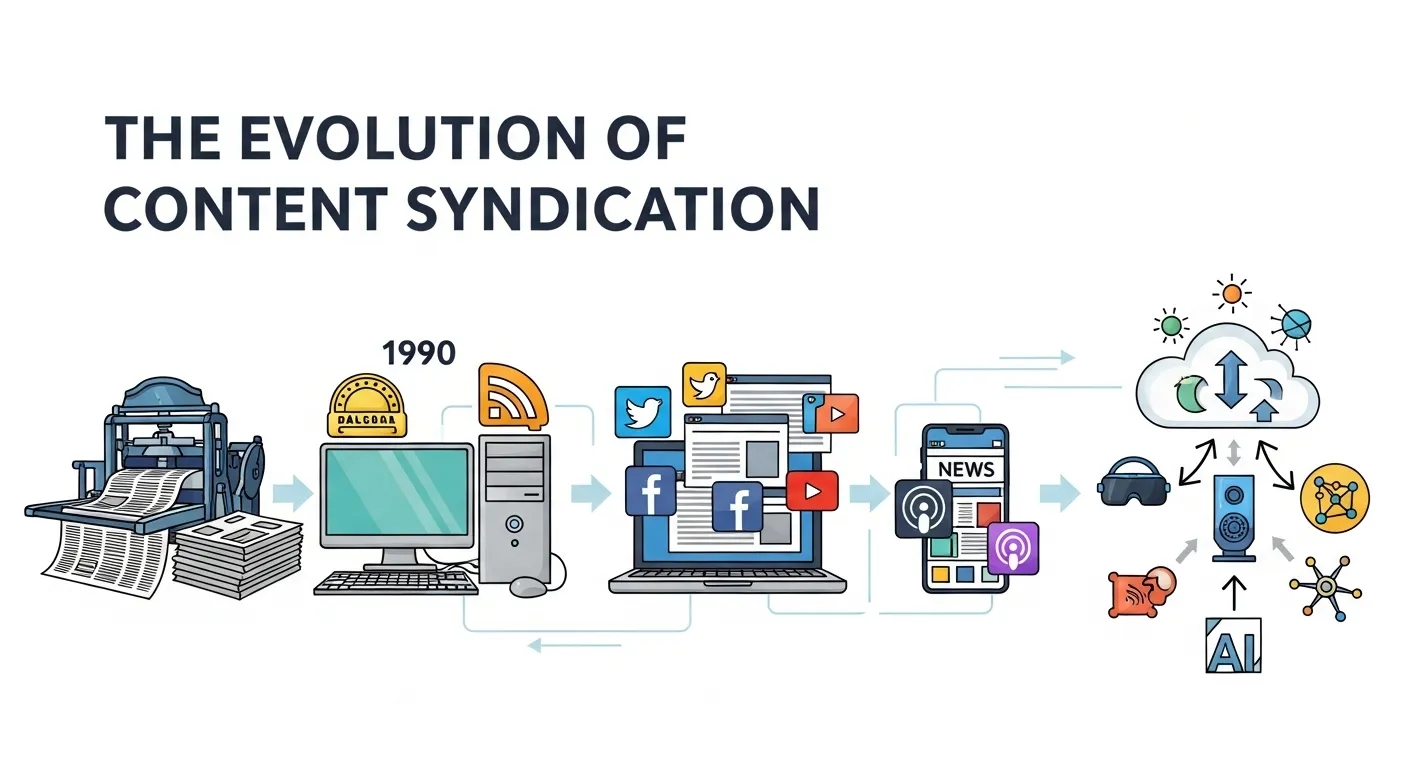
Content syndication itself has undergone remarkable transformation. Traditional syndication often meant simply republishing articles verbatim across different outlets. Today’s sophisticated approach encompasses a range of formats and distribution models tailored to specific business objectives.
Modern syndication partners offer increasingly granular targeting capabilities. Rather than simply placing content on relevant sites, today’s platforms can target based on company size, industry, geographical location, and even specific accounts—aligning perfectly with account-based marketing strategies. According to the Content Marketing Institute’s 2024 research, organizations implementing targeted syndication programs see an average 34% increase in qualified lead generation compared to those using only owned channels.
This evolution reflects broader shifts in digital consumer behavior. Business professionals increasingly research challenges and solutions across multiple platforms before engaging with vendors. Effective syndication ensures your expertise appears within these research journeys regardless of where they occur.
Strategic Implementation Considerations
Successful content syndication requires thoughtful planning rather than indiscriminate distribution. Begin by identifying which content assets perform strongest in your owned channels. These proven performers generally represent your best candidates for syndication.
Next, carefully select syndication partners whose audiences align with your ideal customer profile. Quality matters significantly more than quantity here. A single placement on a highly respected industry platform typically delivers greater value than numerous appearances on lower-tier sites. We’ve observed that strategic placement on three to five highly-relevant platforms typically outperforms scattershot distribution across dozens of general business sites.
Consider how content will be adapted for different platforms. While maintaining consistent core messaging, successful syndication often requires formatting adjustments, headline modifications, or supplementary elements to maximize engagement in each environment. The most effective programs treat syndication as content adaptation rather than simple republication.
Measuring Impact Across the Marketing Funnel
Content syndication delivers benefits throughout the marketing funnel, requiring measurement approaches that capture this multi-faceted impact. At awareness stages, expanded reach and improved brand visibility represent valuable outcomes. Mid-funnel, engagement metrics across syndication platforms provide insight into content resonance with different audience segments.
For lead generation purposes, attribution becomes crucial. Sophisticated syndication partners now offer robust tracking capabilities that integrate with major marketing automation platforms. These integrations allow marketers to follow prospects from initial content engagement through conversion processes, accurately assigning value to syndication investments.
The downstream quality of syndication-generated leads deserves particular attention. Analysis typically reveals these leads exhibit different behavior patterns than those originating from other channels. They often enter your ecosystem with greater awareness of specific challenges but may require different nurturing approaches to advance through decision stages.
Leveraging Webinars for Syndicated Content Impact

Webinars have evolved beyond simple live presentations—they now serve as powerful vehicles for extending the reach of syndicated content. By integrating webinars into your Content Syndication strategy, you create interactive opportunities to engage prospects in ways traditional articles or blog posts cannot. This approach turns passive readers into active participants, increasing brand recall, trust, and lead quality.
Webinars also bridge the gap between inbound and outbound marketing. While they attract participants organically through compelling topics (inbound), distributing webinar content across third-party platforms proactively places your expertise in front of audiences who may not yet know your brand (outbound). This dual advantage makes webinars a perfect tool in hybrid content strategies.
Key Advantages of Webinar Syndication
- Deeper Engagement: Live Q&A sessions, polls, and audience feedback foster two-way interaction. Participants are not just consuming content—they are interacting, asking questions, and building a stronger connection with your brand.
- Repurposable Content: Webinars can be converted into multiple content formats, such as short video clips, blog posts, transcripts, or infographics, creating additional opportunities for syndication. Each piece of repurposed content extends your reach and reinforces messaging across platforms.
- Extended Reach: By partnering with industry platforms and relevant third-party channels, your webinars gain exposure to audiences beyond your owned channels. This ensures your content reaches prospects who are actively researching solutions in your field.
- Authority Building: Hosting webinars on specialized topics positions your brand as an authority. Syndicating these sessions reinforces thought leadership across multiple domains, enhancing credibility.
- Long-term ROI: Unlike one-off events, webinars continue generating value over time. Syndicated webinars can attract leads months after the live session, amplifying your return on content investments.
| Benefit | Description |
|---|---|
| Engagement | Real-time interaction with the audience increases interest and trust |
| Multi-format reuse | Recordings, summaries, and clips expand the content lifecycle |
| Lead capture | Registration data feeds directly into CRM or marketing automation systems |
| Thought leadership | Positions brand as an industry expert |
| Long-term reach | Content continues to attract prospects well after the live session |
Best Practices for Webinar Syndication
- Select High-Value Topics: Choose subjects that address pressing challenges or questions your target audience faces. High-value content naturally attracts more viewers and shares across syndicated platforms.
- Optimize for Each Platform: Customize titles, descriptions, and thumbnails based on the syndication partner’s audience. A well-adapted webinar can perform significantly better than a simple repost.
- Integrate Lead Capture Mechanisms: Even when webinars are syndicated, ensure registration or follow-up forms capture leads to maintain the conversion pipeline.
- Leverage AI Tools for Personalization: AI can help create tailored clips or highlight reels for different audience segments, maximizing engagement and relevance.
- Track Performance Across Channels: Use marketing automation and analytics tools to monitor engagement metrics, from attendance and watch time to downstream conversion rates.
Webinars also allow marketers to align Content Syndication with broader marketing goals. For example, if your campaign targets specific industries or account-based segments, syndicated webinars can be strategically placed on niche platforms where those audiences are most active. This ensures every view has a higher likelihood of converting into a qualified lead.
For a detailed perspective on how AI and technology are shaping webinars, see the evolution of webinars. Syndicating webinar content allows you to harness the interactive appeal of live events while maintaining the broader distribution advantages of Content Syndication, delivering both immediate engagement and long-term marketing impact.
Optimizing Syndicated Content for Product Marketing

Content Syndication becomes especially powerful when aligned with product marketing initiatives. Beyond simply increasing reach, syndicated content can educate prospects, reinforce product value, and accelerate decision-making cycles. By strategically placing high-value content on third-party platforms, marketers ensure their product messaging reaches not only larger audiences but also more qualified prospects.
In today’s competitive landscape, buyers often conduct extensive research before engaging with sales teams. Syndicating product-focused content allows brands to appear in these critical decision-making journeys, ensuring prospects encounter your expertise and solutions early and often.
Key Benefits of Syndicating Product Marketing Content
-
Amplified Product Messaging: Syndicated content reinforces your product value proposition across multiple channels, making your brand top-of-mind when prospects are evaluating solutions.
-
Educated Prospects: Detailed resources like case studies, whitepapers, and how-to guides provide insights that help prospects understand how your product solves real-world problems.
-
Shortened Decision Cycles: By delivering valuable information to prospects in their preferred channels, syndication reduces friction in the evaluation process and speeds up conversions.
-
Improved Lead Quality: Syndication allows targeting by role, industry, company size, or geography, ensuring that your content reaches audiences most likely to convert.
Best Practices for Product-Focused Content Syndication
-
Highlight Use Cases: Focus on practical applications of your product. Real-world examples resonate more effectively with prospects than abstract features.
-
Segmented Syndication: Align content with specific audience segments, such as industry verticals, company size, or professional roles, to increase relevance and engagement.
-
Maintain Consistent Messaging: Keep core product benefits central to every syndicated asset, while adapting tone, format, or length for different platforms.
-
Optimize CTAs for Context: Include clear, tailored calls-to-action that guide prospects to the next step, whether it’s a demo, free trial, or further resources.
-
Measure Engagement Across Platforms: Use analytics to track how syndicated content performs in each channel, from page views and downloads to downstream conversions.
| Content Type | Ideal Syndication Approach |
|---|---|
| Whitepapers | Share with industry publications targeting decision-makers |
| Case Studies | Post on partner sites with aligned audience interests |
| How-to Guides | Syndicate on niche blogs to reach prospects seeking practical solutions |
| Product Demos | Host on partner platforms to attract targeted leads |
| Infographics | Use on social and content networks to increase visual appeal and sharing |
Integrating Content Syndication into product marketing ensures that your messaging reaches the right audience at the right stage of their buyer journey, turning informative content into actionable opportunities.
For marketers looking to refine their strategy, this guide provides deeper insights into applying Content Syndication to product-focused campaigns: Content Marketing for Product Marketers.
By combining strategic targeting, engaging content formats, and careful platform selection, brands can use syndicated content not just for visibility but as a conversion-driving engine that supports broader product marketing objectives.
Driving Virality and Awareness Through Syndication

While traditional Content Syndication expands reach, combining it with viral content strategies can amplify visibility exponentially. Syndicated content designed for share ability doesn’t just reach a broader audience—it engages new communities, creates organic amplification, and enhances brand awareness across channels. This approach ensures that your content doesn’t remain confined to your owned platforms but spreads where potential audiences are most active.
In today’s fast-paced digital environment, virality often hinges on emotion, relevance, and adaptability. By incorporating these principles into your syndicated content strategy, marketers can transform existing assets into powerful awareness engines that support both short-term engagement and long-term brand growth.
Key Considerations for Viral Syndication
- Emotion-driven storytelling: Content that evokes emotions—whether inspiration, empathy, humor, or curiosity—is more likely to be shared. Highlight human experiences, success stories, or impactful outcomes to increase shareability.
- Platform-specific adaptation: Tailor your syndicated content for each channel. Shorter snippets, catchy visuals, or platform-optimized headlines ensure maximum resonance with each audience segment.
- Partnership leverage: Collaborate with platforms or influencers that have established communities. Syndicating content through these channels increases credibility and significantly widens exposure.
- Interactive content formats: Quizzes, polls, and challenges encourage audience participation, boosting shares and engagement while driving traffic back to your website.
- Cross-promotion with evergreen content: Pair viral content with educational or product-focused content to maintain sustained interest while reinforcing messaging across the buyer journey.
| Strategy | Expected Outcome |
|---|---|
| Storytelling & case studies | Drives engagement, encourages sharing, and creates emotional connection |
| Visual content | Enhances click-through rates and improves social media traction |
| Social amplification | Syndication partners and influencers help spread content across networks |
| Interactive formats | Boosts audience participation and organic reach |
| Evergreen pairing | Sustains engagement beyond viral spike while reinforcing brand message |
Syndication also provides a controlled method to scale viral content without losing quality. By carefully selecting third-party platforms aligned with your audience demographics, you ensure that content reaches those most likely to engage, share, and convert.
For nonprofit or cause-driven campaigns, applying these principles can be especially transformative. Content designed for virality, when syndicated across relevant nonprofit networks, can amplify awareness, attract donors, and build community support. See viral content strategies for nonprofits and NGOs for practical insights on how syndication magnifies reach and influence.
Best Practices to Maximize Virality with Syndication
- Identify shareable elements: Focus on headlines, visuals, and storytelling hooks that naturally encourage clicks and shares.
- Leverage influencer and partner networks: Syndicate through credible voices to expand reach and credibility.
- Monitor performance metrics: Track shares, likes, comments, and traffic generated from each platform to refine your syndication strategy.
- Experiment with formats: Test videos, infographics, and interactive content to determine which performs best for different segments.
- Maintain brand alignment: Even highly viral content should reflect your brand values and core messaging to ensure long-term consistency.
By combining shareable content with a strategic Content Syndication approach, marketers can transform ordinary assets into high-impact campaigns that drive both brand awareness and meaningful engagement. This dual focus—reach plus resonance—ensures your content achieves both scale and quality impact across digital ecosystems.
Navigating Common Challenges
Despite its effectiveness, content syndication presents certain implementation challenges worth addressing proactively. SEO considerations rank among the most common concerns. When identical content appears across multiple domains, search engines must determine which version to prioritize in results. This potential cannibalization can be mitigated through proper canonical tagging and strategic decisions about which pieces receive full versus partial syndication.
Content control represents another consideration. Once syndicated, your content lives within environments where you have limited influence over surrounding context. Careful partner selection and clear usage agreements help maintain appropriate brand positioning.
Budget allocation also requires thoughtful approach. Unlike some marketing investments where results appear almost immediately, syndication typically delivers value over extended periods as content continues working across partner networks. This longer horizon necessitates patience in assessment and recognition of both immediate and cumulative impact.
Integrating With Broader Marketing Strategy
Content syndication delivers maximum value when integrated within comprehensive marketing frameworks rather than operating as an isolated tactic. The most successful implementations establish clear handoff processes between syndication-generated interest and subsequent nurturing programs.
Consider the perspective of Amanda Reynolds, director of demand generation at Techstrata Analytics, who recently noted: “Our syndication program fundamentally changed when we stopped viewing it as a lead generation tactic and recognized it as a content amplification strategy with lead generation benefits. This shift completely transformed our approach to measurement and integration.”
This perspective highlights the importance of appropriate expectations and strategic alignment. Organizations seeing the greatest syndication success recognize its dual nature – simultaneously extending content reach while capturing interest through lead generation mechanisms.
The Future Landscape
As marketing continues evolving, content syndication appears positioned for further growth and refinement. Several emerging trends suggest its increasing strategic importance in coming years.
First-party data limitations resulting from privacy regulations and cookie restrictions make syndication partnerships increasingly valuable as compliant ways to reach relevant audiences. Additionally, the rise of industry-specific content platforms creates opportunities for hyper-relevant placement that significantly outperforms generalist approaches.
Perhaps most significantly, artificial intelligence tools are transforming content adaptation capabilities, making it increasingly feasible to create platform-optimized variations that maintain core messaging while maximizing engagement in each specific environment. This evolution promises to further enhance syndication effectiveness while reducing implementation resource requirements.
Content syndication represents not simply a tactic but a strategic bridge connecting traditional marketing approaches. By thoughtfully implementing syndication programs that leverage your best content through carefully selected partnerships, organizations effectively transcend the artificial boundaries between inbound and outbound methodologies – creating integrated approaches that meet potential customers wherever they conduct their research and decision-making processes.
Frequently Asked Questions (FAQ) on Content Syndication and Marketing Strategies
1. What is content syndication, and how does it work?
Content syndication is the process of republishing your content on third-party platforms to reach a wider audience. Instead of relying solely on your website, syndication allows your articles, blogs, or webinars to appear where your target audience already spends time, increasing visibility and lead potential.
2. How does content syndication benefit B2B marketing?
In B2B marketing, decision cycles are often long and require multiple touchpoints. Syndicated content helps maintain brand presence across platforms, educates prospects on your solutions, and nurtures them through the funnel until they’re ready to convert.
3. Can content syndication improve lead quality?
Yes. By partnering with niche industry platforms and targeting specific audience segments, syndicated content attracts prospects who are more aligned with your ideal customer profile, improving the overall quality of generated leads.
4. How should content be adapted for syndication?
Content should be tailored to each platform’s audience. While core messaging stays consistent, format adjustments, headline tweaks, and platform-specific visuals ensure maximum engagement and relevance.
5. What types of content perform best for syndication?
High-value assets like whitepapers, case studies, webinars, how-to guides, and infographics typically perform well. These formats provide practical insights, showcase expertise, and encourage sharing across platforms.
6. How do I measure the success of a syndicated content campaign?
Success can be tracked using metrics like traffic generated, leads captured, engagement rates, and downstream conversions. Integrating syndication data with your CRM or marketing automation tool ensures you can attribute results accurately.
7. What’s the difference between inbound and outbound marketing in relation to syndication?
Inbound marketing attracts prospects through valuable content, while outbound marketing actively places content in front of potential buyers. Content syndication bridges both, amplifying reach while proactively targeting relevant audiences. Learn more about the differences what is inbound vs outbound product marketing.
8. How does syndication fit into product promotion campaigns?
Syndicated content can highlight product use cases, success stories, and features across relevant third-party platforms, accelerating awareness and interest. It complements traditional outbound tactics. See more outbound marketing for product promotion.
9. Can content syndication be integrated into a product promotion funnel?
Absolutely. Syndicated assets can nurture prospects at different funnel stages—from awareness to consideration—feeding them into targeted campaigns that guide them toward purchase. A detailed funnel approach is outlined here.
10. What are common challenges in content syndication and how to overcome them?
Challenges include SEO issues due to duplicate content, maintaining brand control, and selecting the right partners. Solutions involve using canonical tags, clear partner agreements, and focusing on quality platforms rather than quantity.