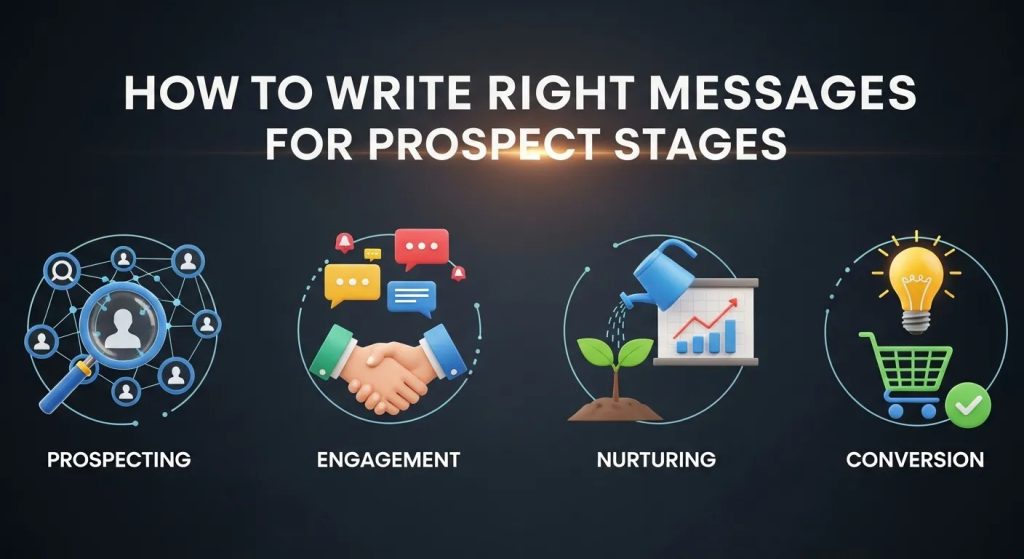
Learn how to shape timely, relevant prospect messages that match buyer intent, reduce resistance, and guide every conversation toward a clearer next step with more confidence and stronger replies.
Modern sales outreach works best when every message respects the buyer’s current mindset. That is the heart of Write Right Messages for Prospect Stages. Prospects do not move through a pipeline with identical needs, and they do not read outreach with the same attention at every step. When your words match the stage, the message feels useful instead of intrusive. Keep returning to Write Right Messages for Prospect Stages.
Early buyers want clarity. Mid-funnel buyers want comparison. Late-stage buyers want confidence. When you Write Right Messages for Prospect Stages, you are not simply writing copy; you are reducing friction, building trust, and making it easier for the prospect to answer with a real yes or no. Keep returning to Write Right Messages for Prospect Stages.
A stage-aware approach improves both conversion quality and team efficiency. It helps SDRs, founders, and marketers send cleaner communication, support a clean marketing database, and create sales ready leads for SDR teams without making every touch feel like a pitch. Keep returning to Write Right Messages for Prospect Stages.
Why stage-based messaging converts better
One of the biggest reasons outreach underperforms is simple mismatch. A prospect who is just becoming aware of a challenge should not receive the same message as someone already comparing vendors. To Write Right Messages for Prospect Stages, start by asking what the reader already knows, what they still doubt, and what they need next. Keep returning to Write Right Messages for Prospect Stages.
People respond when a message feels aligned with their situation. That is a psychological shortcut. It lowers mental effort and signals relevance. When a prospect feels understood, they are more likely to keep reading, more likely to reply, and more likely to accept the next step. Keep returning to Write Right Messages for Prospect Stages.
Stage-based messaging also keeps your outreach from feeling random. Instead of forcing every lead into one script, you can adapt tone, proof, and call to action based on where the buyer is. That is what gives messaging discipline and makes a high converting outreach strategy possible. Keep returning to Write Right Messages for Prospect Stages.
The core stages of a prospect journey
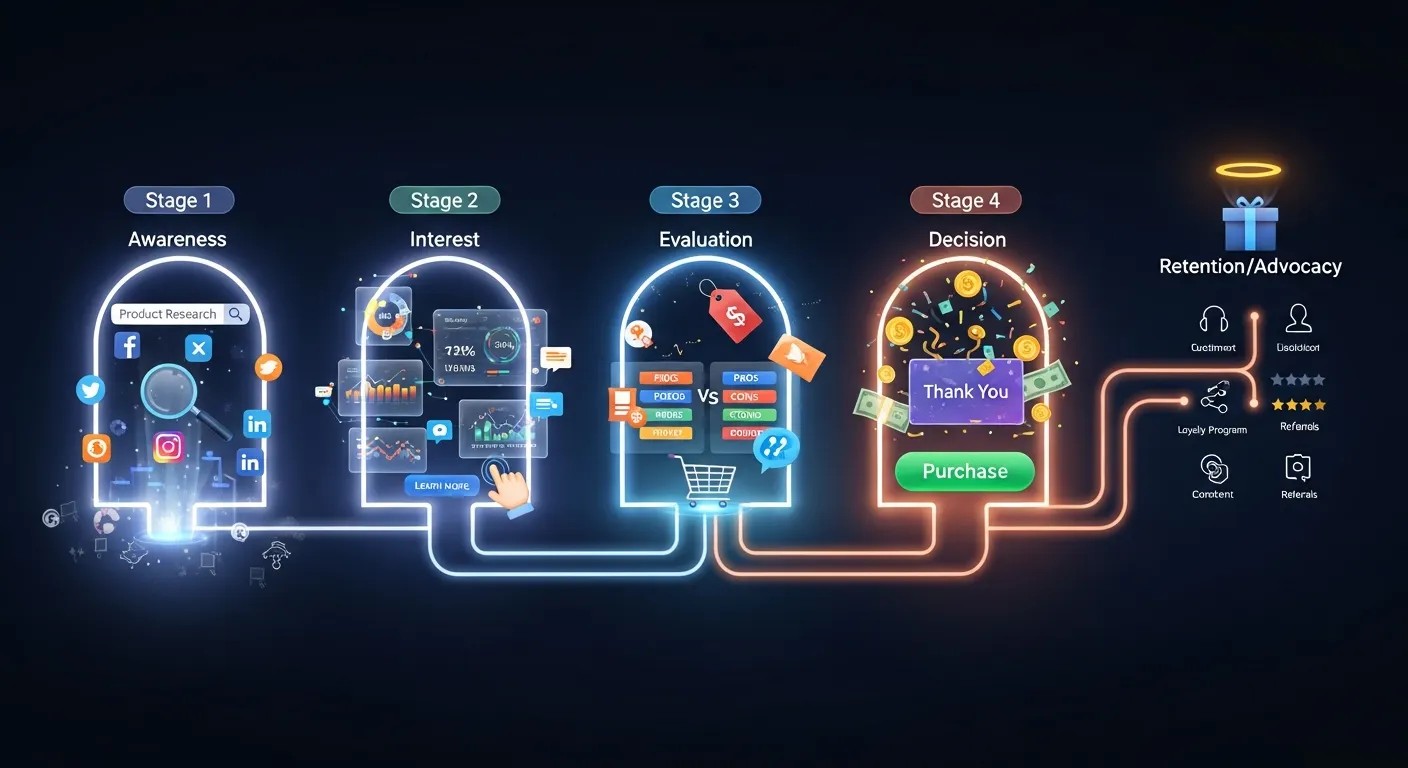
Most prospect journeys can be simplified into four practical stages: awareness, consideration, evaluation, and decision. You may name them differently in your CRM, but the behavioral pattern is similar. The prospect’s questions become more specific as they move forward, and your message should become more precise too. Keep returning to Write Right Messages for Prospect Stages.
At awareness, the prospect notices a problem. At consideration, they explore approaches. At evaluation, they compare choices. At decision, they look for confidence and speed. To Write Right Messages for Prospect Stages, you need to understand what changes in the buyer’s mind at each point, not just what changes in your sales process. Keep returning to Write Right Messages for Prospect Stages.
This framework is useful because it keeps writers from guessing. If you know the stage, you can choose the right angle, proof point, and next step. That is much more effective than sending generic copy and hoping the reader interprets it the same way you intended. Keep returning to Write Right Messages for Prospect Stages.
How to write the first line
The first line is not supposed to impress people. It is supposed to earn the second line. To Write Right Messages for Prospect Stages, start with something that feels true to the reader’s world: a pain point, a trigger event, a role-specific issue, or a direct observation that shows you understand the context. Keep returning to Write Right Messages for Prospect Stages.
Many outreach messages fail because they try too hard to be clever. Cleverness can be entertaining, but relevance is what creates response. A strong opening line makes the prospect think, “This might matter to me,” and that is enough to keep the message moving. Keep returning to Write Right Messages for Prospect Stages.
When in doubt, keep the opening plain, clear, and stage-specific. That approach works because it matches the buyer’s mental load. Early-stage readers want light insight. Later-stage readers want direct usefulness. To Write Right Messages for Prospect Stages, your first line should reduce uncertainty rather than add to it. Keep returning to Write Right Messages for Prospect Stages.
How to use proof without sounding pushy
Proof matters, but timing matters more. If you show too much proof too early, the message can feel heavy or salesy. If you wait too long, the prospect may never see a reason to trust you. To Write Right Messages for Prospect Stages, use one proof point that matches the prospect’s level of awareness. Keep returning to Write Right Messages for Prospect Stages.
At the awareness stage, a useful insight may be enough. At consideration, a brief example or outcome can help. At evaluation, one clear case result or implementation detail may be persuasive. At decision, proof should support confidence and make the next step feel safer. Keep returning to Write Right Messages for Prospect Stages.
Do not overload the reader with stats, claims, and case studies in one message. Choose the proof that best answers the silent question behind the stage. That is how relevance grows while friction falls. Keep returning to Write Right Messages for Prospect Stages.
Matching tone to buyer state
Tone changes the meaning of the same sentence. A message can sound helpful, aggressive, distant, or warm depending on how it is framed. To Write Right Messages for Prospect Stages, think about the emotional state of the buyer before you think about the features of your offer. Keep returning to Write Right Messages for Prospect Stages.
Awareness-stage tone should feel educational. Consideration-stage tone should feel useful and informed. Evaluation-stage tone should feel calm and credible. Decision-stage tone should feel clear, respectful, and easy to act on. This alignment helps the reader stay open instead of defensive. Keep returning to Write Right Messages for Prospect Stages.
Tone is one of the simplest ways to improve response rates because it changes how safe the message feels. And in outreach, safety often matters more than brilliance. Keep returning to Write Right Messages for Prospect Stages.
Building a reusable message framework
A reusable framework saves time and keeps quality high. The best frameworks do not remove humanity; they protect it. To Write Right Messages for Prospect Stages, give your team a simple pattern they can adapt rather than a rigid script they have to copy. Keep returning to Write Right Messages for Prospect Stages.
One practical structure is: identify the stage, name the core pain or goal, choose the emotional angle, add one proof point, and end with one clear next step. This sequence works because it mirrors how buyers process information. Keep returning to Write Right Messages for Prospect Stages.
If the reader is early, the framework should be educational. If the reader is mid-funnel, it should be comparative. If the reader is late, it should be decisive. That flexibility is what makes the framework useful across different prospect groups. Keep returning to Write Right Messages for Prospect Stages.
What changes in the message at each stage
The main message element that changes by stage is not only the wording; it is the job the message is doing. Awareness messages clarify the problem. Consideration messages orient the reader. Evaluation messages reduce risk. Decision messages trigger movement. To Write Right Messages for Prospect Stages, decide the job first, then write the sentence. Keep returning to Write Right Messages for Prospect Stages.
Awareness messages should avoid product overload. Consideration messages should explain why your approach is worth attention. Evaluation messages should address trust and differentiation. Decision messages should make action feel easy. Each stage asks for a different kind of help. Keep returning to Write Right Messages for Prospect Stages.
A simple table can help teams keep this straight. When everyone knows what the message should accomplish, it becomes easier to edit drafts and protect consistency. Keep returning to Write Right Messages for Prospect Stages.
How to build human empathy into outreach
Empathy is what keeps stage-based messaging from sounding mechanical. To Write Right Messages for Prospect Stages, do not just map the stage; map the likely emotion behind the stage. Is the buyer uncertain, overloaded, skeptical, or ready to move? The emotional answer should shape your copy. Keep returning to Write Right Messages for Prospect Stages.
If a prospect feels uncertain, your message should lower ambiguity. If they feel overloaded, your message should simplify. If they feel skeptical, your message should show evidence. If they feel ready, your message should remove friction. That is how empathy turns into stronger performance. Keep returning to Write Right Messages for Prospect Stages.
Prospects are more likely to answer a message that respects their pace than one that tries to force speed. Good outreach does not demand attention; it earns it. Keep returning to Write Right Messages for Prospect Stages.
How SDR teams can use stage-based messages
SDRs sit at a crucial point in the buyer journey, so their wording has to be sharp. To Write Right Messages for Prospect Stages, they should treat each touch as a test of relevance. The goal is not to send the most messages; it is to send the most appropriate ones. Keep returning to Write Right Messages for Prospect Stages.
Early leads may need a light educational note. Mid-stage leads may need a short comparison. Late-stage leads may need reassurance and a simple CTA. When SDRs adapt to this rhythm, their outreach starts to feel like guided selling instead of a generic follow-up chain. Keep returning to Write Right Messages for Prospect Stages.
A well-organized library of templates can help, especially when it is built by stage, objection, trigger, and industry. That kind of system helps teams move faster without sounding automated. Keep returning to Write Right Messages for Prospect Stages.
How to create a high converting outreach strategy
A high converting outreach strategy is not built on volume alone. It is built on fit, timing, and message discipline. To Write Right Messages for Prospect Stages, start by defining the audience, then map the likely stage, and only then write the message. Keep returning to Write Right Messages for Prospect Stages.
Teams often send too many messages that are not relevant enough. Better performance usually comes from a smaller number of better-aligned touches. The right copy in the wrong stage still underperforms. The wrong copy in the right stage can do the same. Keep returning to Write Right Messages for Prospect Stages.
Strategic outreach also depends on learning. Watch which messages get replies, meetings, and conversions. Keep what works. Remove what does not. That is how outreach becomes a system rather than a series of guesses. Keep returning to Write Right Messages for Prospect Stages.
Using data without losing humanity

Data helps you target. Humanity helps you connect. To Write Right Messages for Prospect Stages, use data to understand timing, role, and likely interest, but do not let automation erase the human side of the message. Keep returning to Write Right Messages for Prospect Stages.
A clean marketing database makes this easier. When your records are organized, your stage assumptions become more accurate and your messaging becomes more relevant. Clean data supports clean decisions. Keep returning to Write Right Messages for Prospect Stages.
Still, data should inform the message, not replace the message. The prospect is not a spreadsheet cell. They are a person with priorities, pressure, and a limited attention span. Keep returning to Write Right Messages for Prospect Stages.
How to personalize without sounding fake
Real personalization is subtle and specific. To Write Right Messages for Prospect Stages, avoid generic flattery and focus on signals that matter to the reader’s situation: role, timing, likely business pressure, or an observed change in their environment. Keep returning to Write Right Messages for Prospect Stages.
Adding a company name is not enough. Mentioning a real challenge is better. Referencing a probable goal is better. Showing that you understand their stage is even better. This is how outreach feels tailored instead of templated. Keep returning to Write Right Messages for Prospect Stages.
The best personalization usually does not look dramatic. It looks obvious once the reader sees it. That quiet relevance is often more persuasive than loud customization. Keep returning to Write Right Messages for Prospect Stages.
How to test and improve your copy
Testing keeps your messaging honest. To Write Right Messages for Prospect Stages, test one variable at a time whenever possible. Try a different opening line, proof point, or call to action, then compare the results across the same stage. Keep returning to Write Right Messages for Prospect Stages.
Do not rely on open rates alone. Replies, meetings, and pipeline quality matter more. A message with fewer opens but stronger replies may be the better one. Looking at the full funnel keeps your conclusions accurate. Keep returning to Write Right Messages for Prospect Stages.
Over time, build a library of patterns that win. Note which stage, tone, and CTA combination performs best. That record becomes a durable asset for your team. Keep returning to Write Right Messages for Prospect Stages.
Why simple language usually wins
Simple language is not weak language. It is efficient language. To Write Right Messages for Prospect Stages, use words the reader can understand quickly. That reduces effort and makes the message feel more direct. Keep returning to Write Right Messages for Prospect Stages.
Long, abstract sentences often hide the point. Shorter, concrete ones reveal it. When the prospect can understand the core value with one read, you have done your job well. Keep returning to Write Right Messages for Prospect Stages.
Simple language also improves consistency across teams. Writers, SDRs, and managers can all evaluate the message more easily when it is clear and direct. Keep returning to Write Right Messages for Prospect Stages.
How to create better calls to action
The call to action should match the stage. To Write Right Messages for Prospect Stages, make the next step feel proportionate to the buyer’s level of interest. A prospect who is early in the journey should not be pushed as hard as someone who is ready to evaluate. Keep returning to Write Right Messages for Prospect Stages.
Early-stage CTAs can be lightweight: a quick reply, a question, or a resource. Mid-stage CTAs can invite a brief look or conversation. Late-stage CTAs can ask for a meeting or walkthrough. Keep returning to Write Right Messages for Prospect Stages.
The best CTA is easy to say yes to. It should reduce pressure and make the next step feel like a natural continuation of the conversation. Keep returning to Write Right Messages for Prospect Stages.
How to avoid sounding generic
Generic outreach happens when messages speak to everyone and therefore land with no one. To Write Right Messages for Prospect Stages, narrow the audience, narrow the stage, and narrow the problem you are discussing. Keep returning to Write Right Messages for Prospect Stages.
Do not write for an imaginary average buyer. Write for the real one in front of you. The closer the message gets to their likely context, the more human it feels. Keep returning to Write Right Messages for Prospect Stages.
That is why stage-specific messaging works so well. It adds natural boundaries that force the copy to become more precise and more useful. Keep returning to Write Right Messages for Prospect Stages.
A simple operational workflow
A practical outreach workflow keeps messaging consistent. First, define stage criteria. Second, attach the most likely buyer question to each stage. Third, write a message template. Fourth, review performance. Fifth, improve based on the results. Keep returning to Write Right Messages for Prospect Stages.
This workflow is simple, but it scales well because it reduces confusion. Teams know what the message is supposed to do, and they know when to update it. Keep returning to Write Right Messages for Prospect Stages.
The more consistently you use the workflow, the easier it becomes to Write Right Messages for Prospect Stages without overthinking every line. Keep returning to Write Right Messages for Prospect Stages.
How to think about buyer confidence
At every stage, the hidden question is often, “Can I trust this?” To Write Right Messages for Prospect Stages, your copy should answer that question in the way that makes sense for the stage. Keep returning to Write Right Messages for Prospect Stages.
Awareness needs enough clarity to stay engaged. Consideration needs enough usefulness to continue. Evaluation needs enough evidence to reduce risk. Decision needs enough simplicity to move forward. Keep returning to Write Right Messages for Prospect Stages.
When confidence rises, resistance falls. That is why stage-aware communication often works better than feature-heavy pitching. Keep returning to Write Right Messages for Prospect Stages.
Why consistency matters
Consistency is what turns messaging into a repeatable system. To Write Right Messages for Prospect Stages, make sure the same stage logic shows up across email, call scripts, LinkedIn, and follow-up touches. Keep returning to Write Right Messages for Prospect Stages.
Mixed signals confuse buyers. If one message is educational and the next is aggressively selling, the prospect can lose trust. Consistency makes your brand feel steadier and easier to understand. Keep returning to Write Right Messages for Prospect Stages.
Teams that stay consistent usually improve faster because they can compare results more cleanly and learn what actually works. Keep returning to Write Right Messages for Prospect Stages.
How to support the sales handoff
The handoff from marketing to sales works best when the message already fits the buyer’s stage. To Write Right Messages for Prospect Stages, make sure the SDR inherits context, not just contact details. Keep returning to Write Right Messages for Prospect Stages.
If a lead is early, the rep should continue to educate. If the lead is mid-funnel, the rep should continue to clarify. If the lead is late, the rep should continue to reduce risk and push toward a next step. Keep returning to Write Right Messages for Prospect Stages.
When the handoff is aligned, conversations feel smoother and less repetitive. That makes the buyer experience better and the sales process more efficient. Keep returning to Write Right Messages for Prospect Stages.
Advanced ways to increase relevance

One advanced way to improve relevance is to use trigger-based timing. Events such as hiring, funding, product launches, or role changes can make a message feel timely. To Write Right Messages for Prospect Stages, connect the trigger to the stage and the likely business concern. Keep returning to Write Right Messages for Prospect Stages.
Another way is to offer a micro-commitment. Instead of asking for a full meeting immediately, ask for a small yes, a quick reply, or a short exchange. Smaller asks often create easier momentum. Keep returning to Write Right Messages for Prospect Stages.
You can also vary the proof point depending on the stage. Early-stage buyers may like insight. Mid-stage buyers may like comparison. Late-stage buyers may like a concrete outcome or Practical Outreach Workflow Process detail. Keep returning to Write Right Messages for Prospect Stages.
Pulling the system together
The goal is not to become more verbose. The goal is to become more relevant. To Write Messages for Prospect Stages, build your process around the buyer’s pace, the buyer’s question, and the buyer’s confidence level. Keep returning to Right Messages for Prospect Stages.
Once your team learns the pattern, messages become easier to write and easier to improve. That is how outreach turns from guesswork into a dependable revenue activity. Keep returning to Right Messages for Prospect Stages.
The best teams do not write for inbox volume. They write for meaning, timing, and motion. Keep returning to Right Messages for Prospect Stages.
Quick stage reference table
| Stage | Main buyer question | Message goal | Suggested tone |
|---|---|---|---|
| Awareness | What problem am I facing? | Clarify the issue | Helpful |
| Consideration | What are my options? | Show a useful angle | Specific |
| Evaluation | Why this approach? | Reduce risk | Confident |
| Decision | Why act now? | Trigger the next step | Direct |
This reference can help a team stay aligned during daily writing. It keeps the stage logic visible and makes it easier to review copy before sending.
Conclusion
Great outreach is not about sounding clever. It is about sounding relevant, timely, and easy to trust. When you write to the prospect’s stage, the message becomes less like a pitch and more like a helpful response to real buyer pressure. That is why stage awareness improves replies, meetings, and conversion quality. Build your copy around the buyer’s current question, support it with one useful proof point, and end with a simple next step. Then keep testing and refining. Over time, your messaging will become clearer, your team will become faster, and your prospect conversations will become much stronger overall.
Frequently Asked Questions (FAQ)
1. What does stage-based messaging mean?
It means writing each message to match the prospect’s current buying stage, so the copy feels more relevant and easier to act on.
2. Why does matching the stage matter so much?
Because people think differently at different points in the journey, and messages that match that mindset usually get better responses.
3. How long should a prospect message be?
As short as possible while still being clear. Different stages may require different lengths, but clarity matters most.
4. Should I personalize every message?
Yes, but focus on meaningful personalization such as role, trigger, pain point, or stage instead of random details.
5. What is the biggest mistake teams make?
They send the same message to everyone, which makes the copy feel generic and lowers response rates.
6. How do I know which stage a lead is in?
Use behavior, intent, engagement history, and CRM notes to make the best stage call you can.
7. Can stage-based messaging improve reply rates?
Yes, because relevance usually increases trust, and trust makes replies more likely.
8. Do SDRs need special templates?
They benefit from stage-specific templates because those templates help them move faster without sounding robotic.
9. How often should messages be updated?
Review them regularly so they stay aligned with buyer behavior, market changes, and performance data.
10. What is the simplest improvement I can make today?
Write one shorter message for one specific stage and make the call to action easier to answer.