Real-Time Personalization in Outbound Marketing

Real-time personalization helps businesses deliver relevant, timely messages using live data and user behavior. It boosts engagement, improves conversions, and enhances customer experience. By combining analytics, CRM insights, and automation, marketers can align content with buyer intent while ensuring data privacy and compliance in modern outbound marketing strategies.
Understanding Real-Time Personalization
Real-time personalization transforms outbound marketing by dynamically tailoring messages to each prospect based on their most recent interactions, demographic information, and contextual signals. Unlike traditional segmentation, which relies on batch processing and static lists, real-time personalization updates content on the fly. This ensures that outreach adapts instantly to an individual’s current behavior—whether they have just downloaded a resource, visited a product page, or engaged with customer support.
Inside a robust real-time personalization framework, data from multiple touchpoints flows into a central engine. Website clicks, email opens, CRM lead scores, and third-party intent signals are aggregated in milliseconds. Then, algorithms evaluate that data to select the most relevant offers, subject lines, and call-to-action buttons. These dynamic elements populate email templates, ad creatives, or SMS messages just before delivery, giving recipients the impression of a one-to-one conversation.
Implementing real-time personalization demands a solid technical foundation to handle streaming data and deliver timely messages. Many organizations turn to a Customer Data Platform (CDP) to unify customer profiles, a Marketing Automation Platform (MAP) to execute trigger-based workflows, and a Data Management Platform (DMP) to integrate third-party insights. For best practices on securing real-time data pipelines, consult resources like the National Institute of Standards and Technology (NIST).
At its core, real-time personalization relies on three pillars: data collection, rule-based or predictive decisioning, and seamless content delivery. Data collection streams interactions into the system. Decisioning applies business logic or machine learning models to predict next steps. Finally, content delivery ensures the right template, imagery, and messaging reach each individual. Together, these layers create a feedback loop where new interactions refine future outreach in minutes rather than hours or days.
Ultimately, real-time personalization shifts the focus from broad, impersonal blasts to meaningful, context-aware conversations. By connecting behavioral triggers with customized content, marketers can capture attention, build trust, and guide prospects toward the next ideal action, setting a new standard for outbound engagement in this year (2026).
Why Real-Time Personalization Matters in Outbound Campaigns
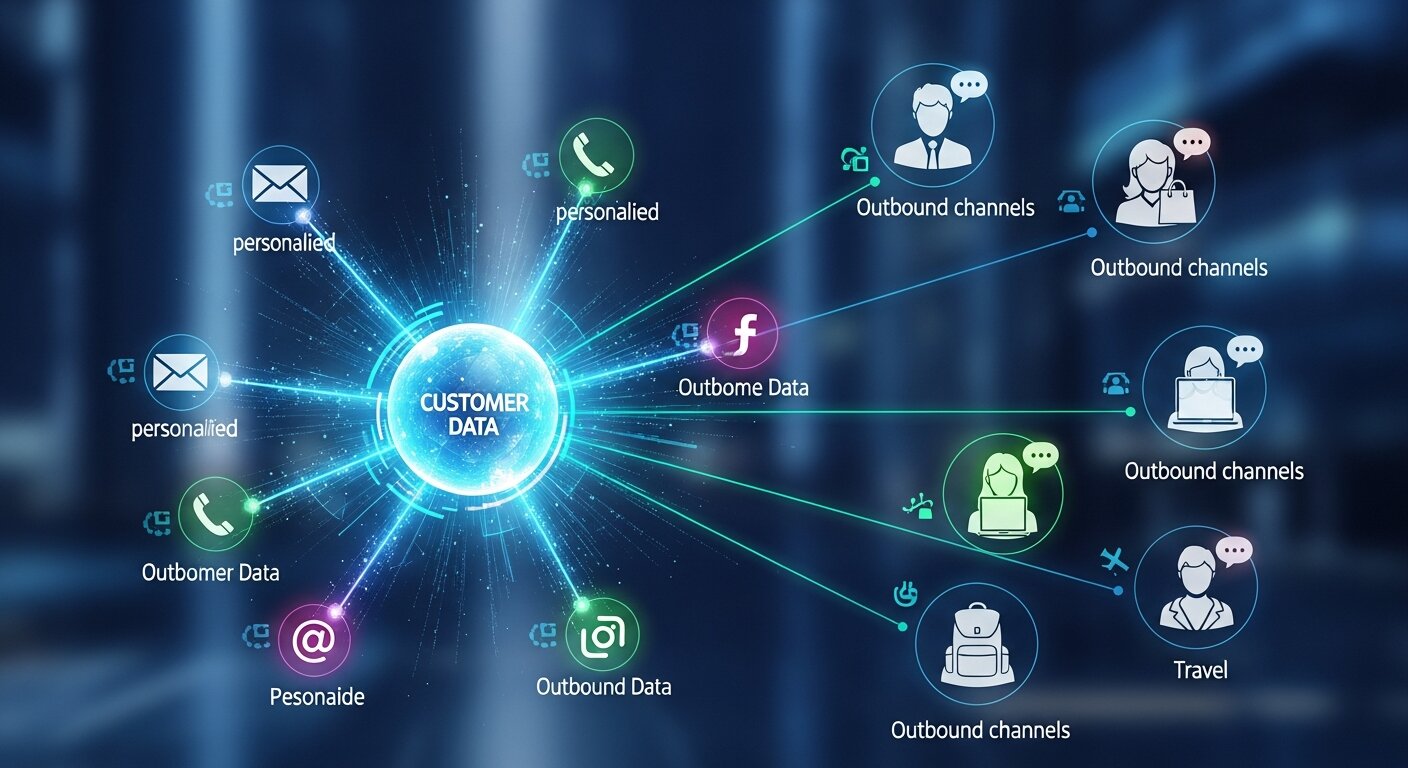
In today’s marketplace, outbound marketing can be perceived as intrusive when messages miss the mark. Generic cold emails, impersonal ads, and irrelevant direct mail often struggle to capture attention. By contrast, real-time personalization ensures every outreach reflects a prospect’s latest behavior, making interactions feel timely and valuable. This targeted approach helps overcome resistance and positions your brand as attentive and solution-oriented rather than intrusive.
Personalized subject lines and dynamic content can lift open rates by nearly 50%, while contextually relevant offers boost click-through rates and conversions. When a prospect receives an email referring to a resource they just downloaded or an SMS highlighting an abandoned cart, they are more likely to engage. Such improvements in engagement metrics translate directly into higher pipeline velocity and revenue growth.
Real-time personalization also enhances brand reputation and credibility. Prospects appreciate messages that demonstrate understanding of their challenges and current interests. A message acknowledging a specific action—such as attending a live webinar—signals that your organization values the individual’s time and goals. Over time, this fosters trust and establishes a positive perception, making it easier to nurture relationships and drive long-term loyalty.
Moreover, dynamic targeting reduces wasted marketing spend. Traditional outbound tactics cast a wide net, often delivering messaging to low-intent audiences. With real-time personalization, you can focus resources on high-intent prospects who exhibit key behavioral indicators. This precision lowers acquisition costs and increases return on ad spend (ROAS), ensuring budgets are allocated efficiently.
Finally, integrating real-time personalization into your outbound strategy enables continuous optimization. By monitoring performance data—such as open rates, response times, and conversion metrics—you can refine triggers, update dynamic segments, and adjust messaging logic. These iterative improvements help maintain momentum and allow marketers to capitalize on emerging trends in the digital environment.
Building Blocks for Dynamic Outreach
Creating an effective real-time personalization workflow requires a cohesive technology stack that connects data, decision-making, and message delivery. The core components include a Data Management Platform (DMP), Customer Data Platform (CDP), Marketing Automation Platform (MAP), real-time analytics engine, and dynamic content tools. Each element plays a distinct role in capturing, processing, and activating personalized content in outbound messages.
A robust DMP aggregates data from first-party and third-party sources—website interactions, CRM records, and behavioral signals—into a unified repository. It handles streaming data and batch imports, ensuring that incoming events feed into segmentation rules without delay. Organizations often consult guidelines from the NIST to maintain data integrity and security across real-time pipelines.
Your CDP then stitches together customer profiles, resolving identities and enriching records to create a single source of truth. This unified view lets marketers define precise audiences and dynamic segments. Meanwhile, a powerful MAP automates workflows by triggering emails, SMS messages, or ad placements when prospects meet predefined conditions, such as viewing a pricing page or downloading a whitepaper.
Complementing these platforms, a real-time analytics engine monitors user actions and computes insights in milliseconds. It fuels conditional logic within dynamic content tools, which generate personalized email templates or ad creative by injecting live data—names, product recommendations, usage statistics, or account manager details—just before deployment. By combining predictive models with rule-based triggers, teams can experiment with next-best-offer recommendations and A/B tests for continuous optimization.
When selecting vendors and tools for real-time personalization, prioritize solutions with open APIs and robust developer support. Integration platforms like middleware can unify data silos, accelerate onboarding, and simplify maintenance. Look for systems that offer low-latency data transfer, built-in security certifications, and scalable architectures to handle both peak traffic and expanding data volumes.
Successful real-time personalization also depends on cross-functional collaboration between marketing, sales, IT, and analytics teams. Shared ownership of data governance, trigger definitions, and content templates ensures consistency and avoids miscommunication. Regular alignment meetings and documentation of processes help maintain momentum and drive ongoing improvements in outbound personalization initiatives.
Implementing a Real-Time Personalization Strategy

To begin implementing real-time personalization in outbound marketing, start with an audit of existing data sources and technology infrastructure. Identify key touchpoints—website visits, email interactions, CRM events—and assess whether your systems can capture and process events in real time. Ensure your Data Management Platform (DMP) and Customer Data Platform (CDP) are configured to accept API streams, webhook payloads, and batch uploads with minimal latency. Investing time in data governance, cleansing, and mapping at this stage will pay dividends when triggers fire accurately and messaging aligns with prospect behavior.
Next, define high-value triggers and segmentation criteria that reflect buyer intent. Consider actions such as visiting a pricing page, returning multiple times in a short period, or adding items to a cart without purchasing. Create dynamic segments in your MAP that listen for these events and automatically initiate personalized workflows. For more advanced use cases, leverage predictive scoring models to prioritize prospects most likely to convert, and set triggers to deliver tailored content at critical decision points.
Develop dynamic content templates that accommodate personalized variables and conditional logic. Use placeholders for recipient names, company details, recent activities, or recommended products. For example, an email template might swap out product recommendations based on the prospect’s industry or usage history. Include fallback content for scenarios where no data is available to prevent empty fields. Collaborate with copywriters and designers to ensure templates align with brand guidelines while maximizing personalization impact.
Choose the most effective channels for delivering real-time personalized messages. Email remains a cornerstone, but supplementing with SMS, push notifications, personalized landing pages, or direct mail can reinforce the message and improve recall. For instance, send an SMS alert when a prospect’s free trial reaches a usage threshold, followed by a targeted email with a special offer. Multi-channel orchestration helps maintain engagement without overloading a single medium.
Finally, establish a culture of testing and continuous optimization. Run A/B tests on subject lines, dynamic content blocks, and timing windows to identify winning variations. Monitor key metrics—open rates, click-through rates, conversion rates, and unsubscribe rates—to gauge performance and uncover areas for improvement. Document insights and iterate on triggers and templates regularly. By refining your real-time personalization strategy based on data-driven feedback, you can enhance both efficiency and effectiveness across outbound campaigns.
Measuring Success and Optimizing Performance
Evaluating the impact of real-time personalization is essential to justify investment and drive continuous improvement. Focus on metrics that reflect both engagement and business outcomes. Key performance indicators include open rate lift, click-through rate (CTR), conversion rate, time-to-response, and unsubscribe or opt-out rates. By tracking these metrics over time and comparing personalized versus generic outreach, marketing teams can quantify the value of dynamic content and refine strategies to maximize returns.
One of the most immediate indicators of success is open rate lift. Personalized subject lines and timely context can increase open rates by up to 50%. Use A/B testing to compare traditional send times with real-time triggers and examine how variations in messaging influence recipient behavior. Consistent improvements in open rates validate the effectiveness of your personalization logic and segmentation criteria.
Click-through rates and conversion rates offer deeper insights into how prospects interact with dynamic content. Monitor click maps within emails or landing pages to understand which personalized elements drive engagement. Attribute conversions—such as form submissions or trial sign-ups—to specific triggers to calculate return on investment. Connecting these outcomes to pipeline metrics allows revenue operations teams to assess how real-time personalization contributes to growth.
Time-to-response measures how quickly prospects engage after receiving a personalized message. Shorter response windows indicate that messages resonated with recipients at the right moment. Track this metric in real-time analytics dashboards and adjust trigger thresholds or delivery timing to optimize engagement velocity. Faster responses often correlate with higher intent and a stronger likelihood of conversion.
It’s also critical to monitor unsubscribe or opt-out rates to prevent outreach fatigue. Excessive real-time triggers can overwhelm prospects and damage brand perception. Set daily or weekly caps on message frequency and implement cooling-off periods for prospects who show signs of fatigue. Balancing personalization with respect for user preferences fosters trust and sustains long-term engagement.
Finally, leverage performance insights to fuel ongoing optimization. Regularly review metrics at the campaign, segment, and individual level. Share findings across teams to inform trigger selection, template design, and content strategy. Incorporate lessons learned into new experiments and refine your real-time personalization framework. Over time, this data-driven approach ensures that your outbound marketing remains agile, efficient, and aligned with evolving prospect needs.
FAQ
What is real-time personalization?
Real-time personalization dynamically tailors content based on a prospect’s most recent interactions, demographic data, and contextual signals. It uses streaming data and decisioning engines to deliver customized messages at the exact moment of engagement.
Which technologies are required for real-time personalization?
Key technologies include a Data Management Platform (DMP), Customer Data Platform (CDP), Marketing Automation Platform (MAP), real-time analytics engine, and dynamic content tools. These components work together to collect data, make decisions, and deploy personalized messages.
How do I measure the success of real-time personalization?
Track metrics such as open rate lift, click-through rate, conversion rate, time-to-response, and unsubscribe rates. Use A/B testing to compare personalized versus generic campaigns and attribute revenue outcomes to specific triggers.
How often should I update personalization triggers?
Regularly review performance data and adjust triggers based on engagement trends. Quarterly or monthly audits, combined with ongoing A/B tests, help maintain relevance and prevent trigger fatigue.
Conclusion
In today’s competitive environment, real-time personalization has become a cornerstone of successful outbound marketing. By harnessing live data, dynamic content, and precise triggers, organizations can move beyond generic blasts to deliver timely, relevant messages that resonate with each prospect. This approach not only boosts engagement metrics—such as open rates, click-through rates, and conversion rates—but also strengthens brand perception and optimizes marketing spend.
Implementing real-time personalization requires a strong technology foundation, including a Data Management Platform, Customer Data Platform, Marketing Automation Platform, real-time analytics, and dynamic content tools. Cross-functional collaboration, data governance, and a commitment to privacy and compliance further underpin success. Marketers should begin with pilot programs, track key performance indicators, refine triggers and templates, and scale gradually to maximize impact.
As you embark on or expand your real-time personalization efforts this year, remember to test continuously, respect your audience’s preferences, and iterate based on performance insights. By adopting a strategic, data-driven approach, your team can elevate outbound campaigns from generic outreach to hyper-relevant dialogues that drive measurable business results. With persistence, creativity, and a focus on delivering genuine value at every interaction, you can build lasting relationships and unlock the full potential of real-time personalization in your outbound marketing initiatives.