Is Push Marketing the Same as Outbound Marketing?
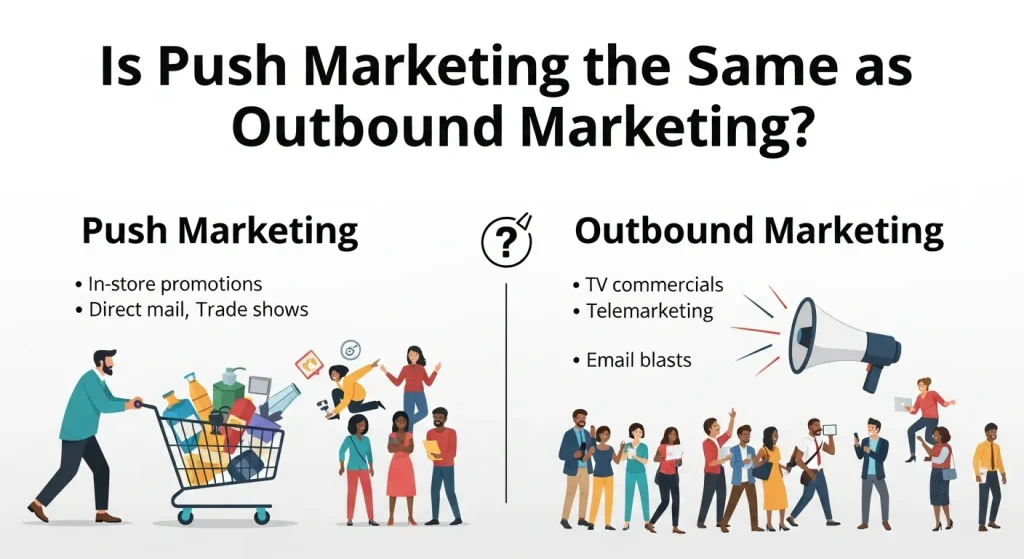
Marketing terminology sometimes creates confusion with overlapping concepts that appear similar yet contain subtle but important distinctions. Push marketing and outbound marketing represent a perfect example of this phenomenon. While many professionals use these terms interchangeably, understanding their nuances can significantly impact your marketing strategy development.
The Foundation of Outbound Marketing
In today’s fast-paced digital marketplace, marketers face an overwhelming number of strategies, channels, and techniques to reach their audience effectively. Among these, push marketing and outbound marketing often spark confusion because they both involve businesses actively reaching out to potential customers rather than waiting for them to come. While the terms sometimes appear interchangeable, their scope, execution, and objectives differ in important ways that directly influence campaign results.
At its core, push marketing refers to strategies that “push” products toward the audience through direct promotional efforts. The main objective is to create immediate visibility and encourage product movement through distribution channels. This approach doesn’t rely solely on consumer demand; instead, it proactively generates awareness and purchase intent. Whether through retail partnerships, promotional displays, or direct advertising, push marketing serves as a driving force to ensure a product reaches consumers at the right time and place.
In contrast, outbound marketing covers a broader spectrum of tactics designed to reach potential customers through external communication channels. These efforts include television commercials, cold calls, trade shows, and paid digital campaigns. Both approaches share the same proactive nature, but their focus points differ. Push marketing emphasizes the supply chain and distribution process, while outbound marketing centers on audience engagement and lead conversion.
Understanding the relationship between these two marketing approaches is crucial for building an integrated promotional strategy. Marketers who can clearly distinguish between push marketing and outbound methods gain a significant advantage when designing campaigns that align with business objectives, audience psychology, and long-term brand positioning. In the sections ahead, we’ll dive deeper into how push marketing works, how it compares to outbound tactics, and how both can coexist effectively in modern business environments.
Understanding Push Marketing
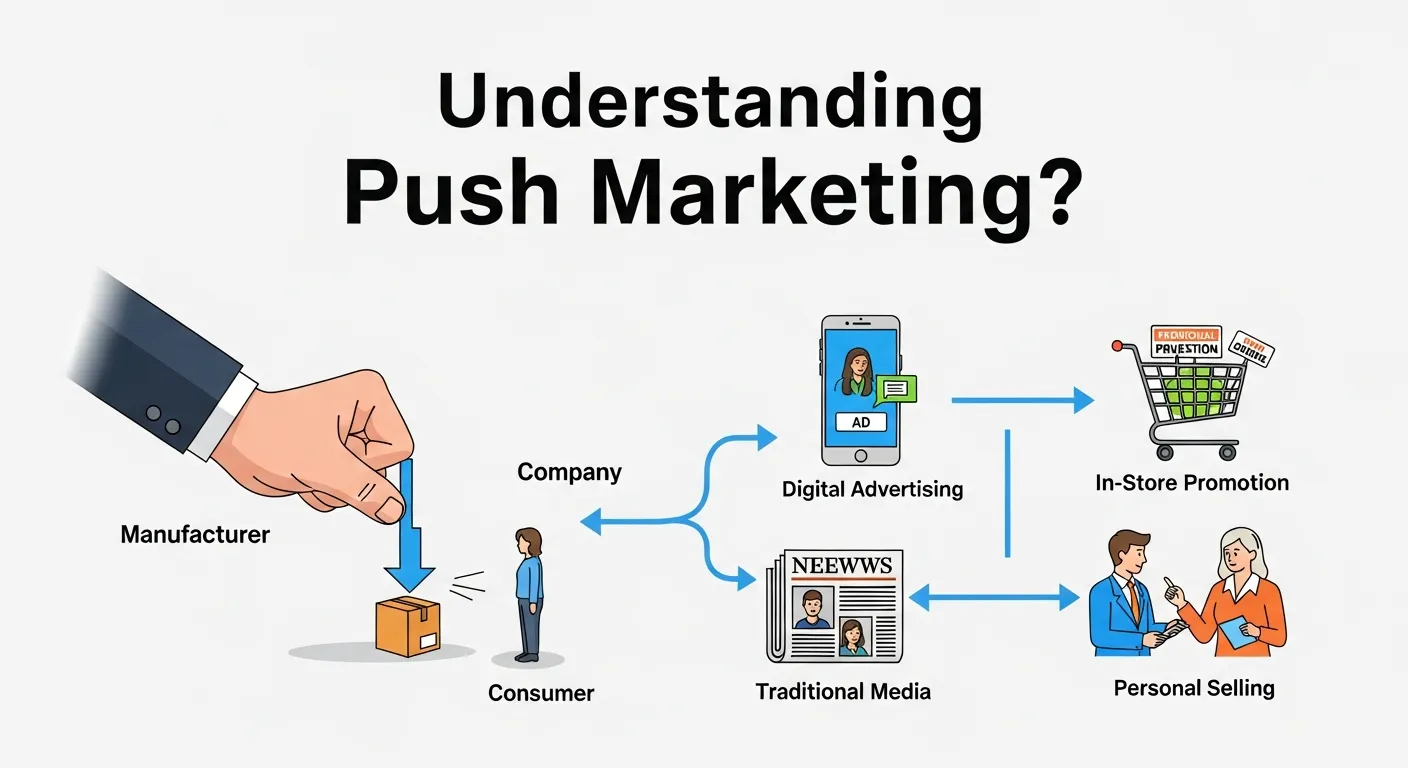
To understand how push marketing truly works, it helps to look at its fundamental concept: pushing a product or service directly toward consumers through carefully planned distribution and promotional tactics. This approach relies on actively “pushing” messages to audiences rather than waiting for them to express interest. The essence of push marketing lies in visibility, timing, and consistency — ensuring that products appear right where customers are most likely to notice and act.
Businesses often implement push marketing through retailer promotions, trade discounts, point-of-sale displays, and other techniques that drive immediate sales. For example, a beverage company might offer a temporary price reduction to retailers, encouraging them to stock and promote its product more prominently. This process doesn’t only influence end consumers but also motivates intermediaries — wholesalers, distributors, and retailers — to participate in moving the product through the channel.
Unlike inbound or pull strategies, push marketing doesn’t depend on long-term content nurturing or organic discovery. Instead, it thrives on creating short-term momentum and visibility. A well-executed push marketing plan ensures that the product remains top-of-mind during the consumer’s purchasing decision. The approach works best when targeting mass markets, launching new products, or reviving interest in existing offerings that face high competition.
In digital environments, push marketing has evolved beyond traditional promotions. With today’s tools, marketers can reach audiences through programmatic advertising, mobile notifications, and sponsored placements — all designed to push the message directly into the user’s experience. Whether through a social media marketing or a retail app, push marketing captures attention in moments that matter most. This proactive outreach remains a vital component of modern promotional strategy, bridging the gap between awareness and action in both B2B and B2C markets.
Understanding Outbound Marketing
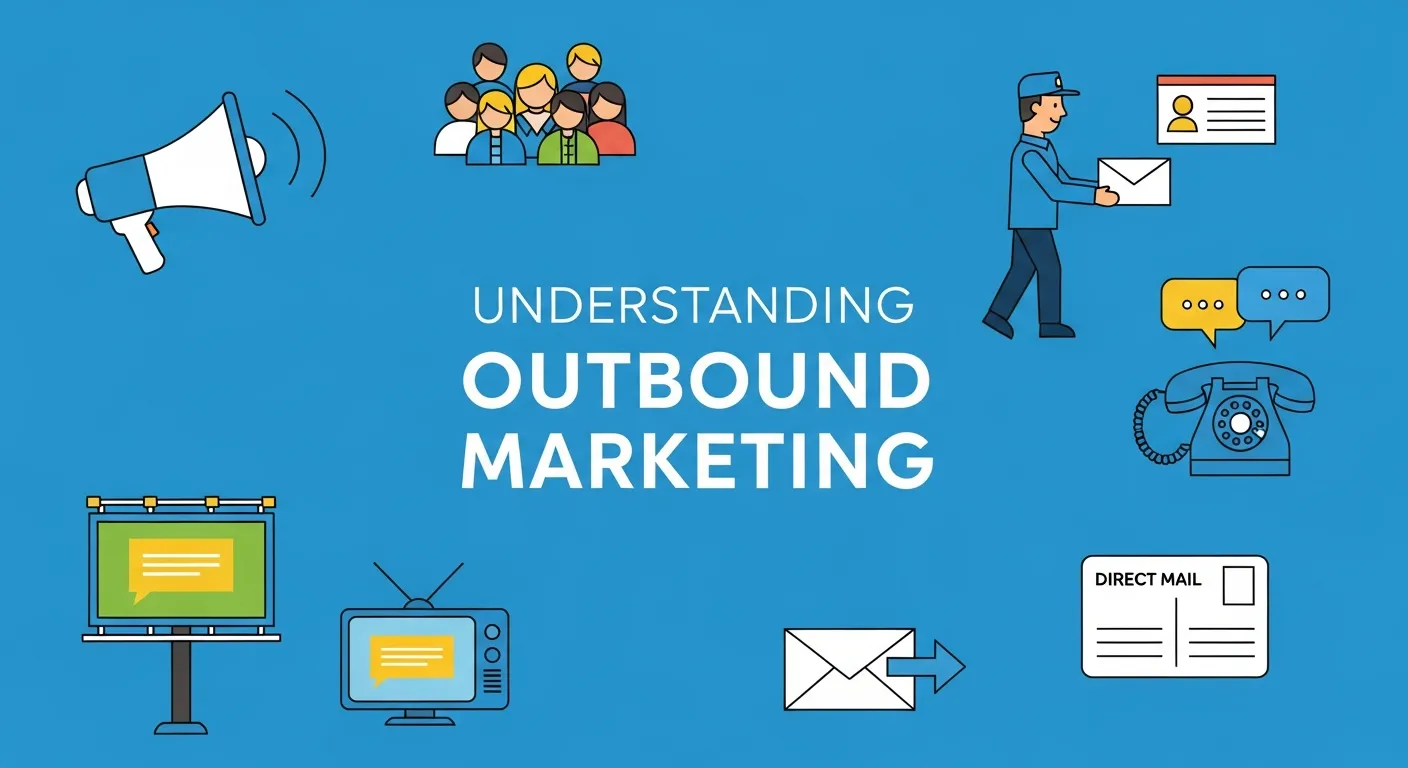
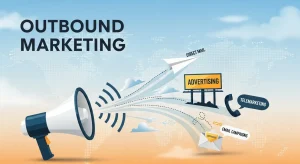
Outbound marketing refers to any promotional strategy in which a business initiates contact with potential customers through external communication channels. Unlike inbound methods that depend on drawing audiences through valuable content, outbound tactics are designed to reach out and deliver messages directly — whether through traditional media or digital platforms. This form of marketing has been around for decades, forming the backbone of classic advertising and sales operations.
Traditional outbound marketing includes channels like television commercials, print ads, cold calling, trade shows, and direct mail. In the digital era, these techniques have evolved to include paid search advertising, display ads, and social media outreach. The primary goal remains consistent: to proactively deliver a marketing message to a targeted audience with the intent of generating immediate awareness, leads, or conversions. While inbound methods attract through value, outbound approaches persuade through repetition, reach, and exposure.
Many professionals often confuse push marketing with outbound efforts because both strategies involve proactive communication. However, there’s a nuanced difference. Outbound marketing typically focuses on reaching the end customer directly, while push marketing often targets intermediaries such as distributors or retailers to move products through the supply chain. The distinction lies in the audience and execution — outbound aims to sell directly to consumers, while push marketing seeks to stimulate product flow within the distribution network.
Despite the rise of digital channels, outbound marketing continues to play a crucial role in comprehensive marketing strategies. It helps brands generate rapid awareness, maintain competitive visibility, and reach audiences who might not actively search for their product marketing . When integrated with modern technology and analytics, outbound campaigns can achieve precision targeting, measurable outcomes, and alignment with broader push marketing efforts. Understanding these fundamentals lays the groundwork for comparing both methods and determining how they can complement each other in achieving business growth.
Key Differences Between Push and Outbound Marketing
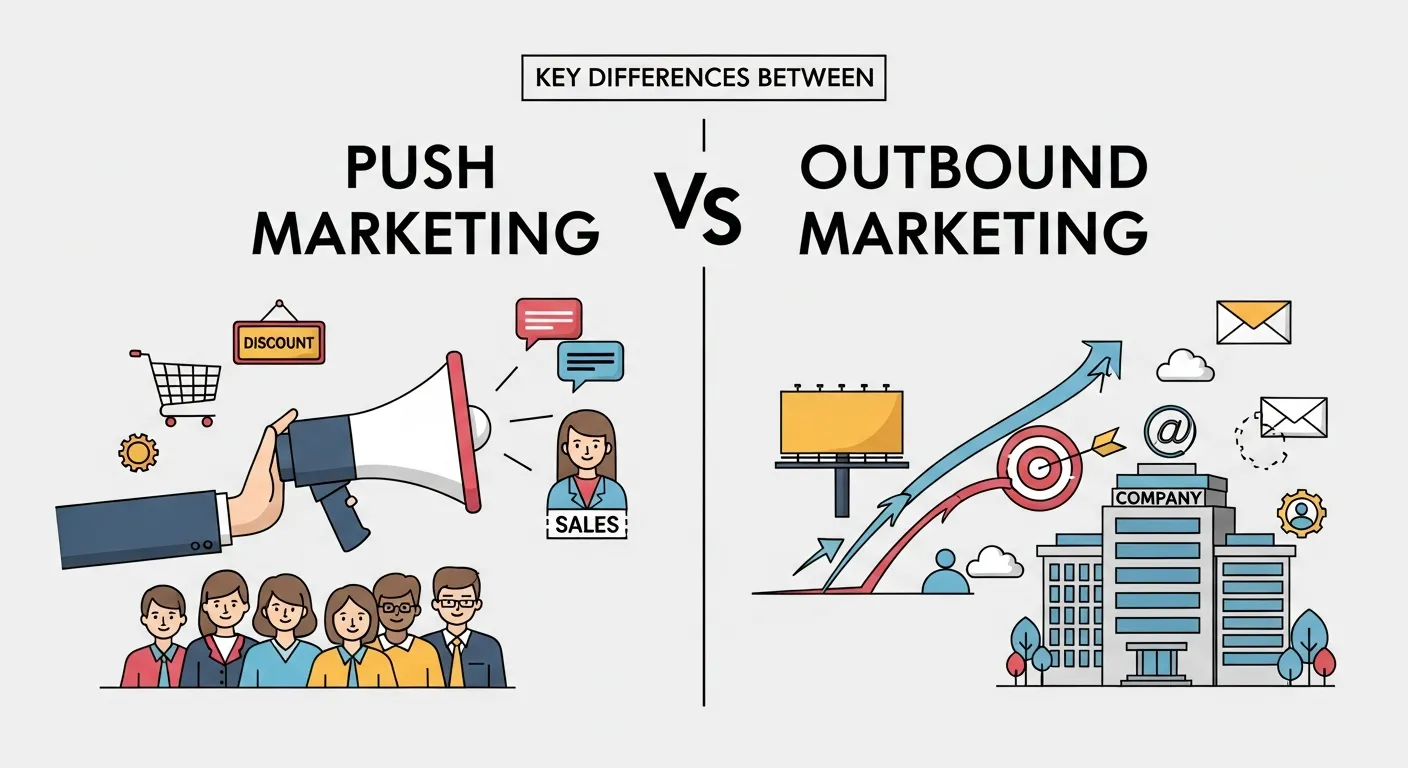
At first glance, push marketing and outbound marketing may seem identical because both involve proactive efforts where the business takes the first step to communicate with potential buyers. However, while they share this fundamental trait, the core focus, execution, and intended outcomes differ in subtle yet impactful ways. Understanding these differences allows marketers to choose the most effective strategy for specific business objectives and audience types.
The simplest way to view the distinction is this: push marketing concentrates on “pushing” products through distribution channels to ensure they are available and visible to consumers, while outbound marketing focuses on “pushing” messages to target audiences to generate awareness or conversions. One manages supply-side momentum; the other manages demand-side attraction.
Comparison Between Push Marketing and Outbound Marketing
| Aspect | Push Marketing | Outbound Marketing |
|---|---|---|
| Primary Focus | Product distribution and visibility | Direct communication with potential customers |
| Target Audience | Retailers, distributors, and intermediaries | End consumers or decision-makers |
| Main Objective | Move products through sales channels | Generate awareness and conversions |
| Common Tactics | Trade promotions, shelf displays, reseller incentives | Ads, cold calls, TV, social media outreach |
| Measurement | Product availability, retailer participation | Lead generation, ROI, engagement rates |
| Time Frame | Short-term, sales-driven | Medium to long-term, brand-driven |
| Dependency | Relies on channel partners | Relies on audience response and targeting accuracy |
The distinction becomes even clearer when analyzing marketing goals. Push marketing thrives when companies want to accelerate product turnover or gain stronger control over retail positioning. It ensures that a brand’s offering gets immediate attention at the point of sale or within distribution pipelines. Outbound marketing, on the other hand, is more consumer-centric — it builds awareness and stimulates demand through communication, persuasion, and exposure.
Modern marketers often find success by blending the two. For instance, a push marketing campaign can generate product placement momentum in retail environments, while outbound advertising drives end-user awareness. Together, they create a continuous flow of demand and supply movement — ensuring that once consumers decide to buy, the product is already available. Recognizing when and how to combine these methods is essential for maximizing both market reach and sales effectiveness.
How Push Marketing Works in Modern Channels
The evolution of marketing technology has transformed how brands execute push marketing strategies in the digital era. While the core principle remains the same — actively “pushing” products or messages toward consumers — the execution has become far more data-driven, personalized, and dynamic. Modern push marketing is no longer confined to trade discounts or in-store displays; it thrives across digital channels that allow real-time targeting and measurable impact.
1. Programmatic Advertising and Automation
One of the strongest examples of push marketing in today’s landscape is programmatic advertising.
Marketers use intelligent algorithms to automatically buy ad placements based on user behavior and demographics.
This allows messages to appear exactly when and where consumers are most likely to act.
Key strengths of programmatic push marketing:
- Automated ad buying based on data and behavior
- Real-time targeting across websites, apps, and social feeds
- Efficient use of budget through predictive audience modeling
- Continuous optimization for higher ROI
Through these technologies, push marketing becomes smarter and more efficient — ensuring every impression serves a strategic purpose.
2. Mobile and App-Based Push Strategies
Mobile devices have made push marketing even more immediate. Notifications, SMS campaigns, and location-based alerts allow brands to reach customers at precisely the right moment.
A restaurant, for example, can send a discount when a user is near one of its outlets — a prime example of geo-targeted push marketing.
Mobile push marketing applications:
- Time-sensitive offers via SMS or push notifications
- Personalized coupons based on browsing or purchase history
- Geo-fenced promotions triggered by location
- Cross-channel coordination with in-store experiences
These methods merge convenience and relevance, keeping audiences connected to the brand.
3. Social Media Advertising as Push Channels
Social networks now serve as powerful push marketing environments. Platforms such as Facebook, Instagram, and LinkedIn allow brands to “push” content, ads, and offers to segmented audiences based on interests or behaviors.
Social push marketing advantages:
- Precision targeting through user data and engagement history
- Real-time feedback through reactions and comments
- High visibility during launches or limited-time promotions
- Integration with influencer and video campaigns
By blending creative storytelling with analytics, social media maintains the urgency and visibility that define push marketing.
4. B2B and Channel-Partner Push Strategies
In B2B markets, push marketing takes the form of partner programs and co-branded efforts.
Manufacturers collaborate with distributors and retailers to increase product visibility, often through incentives or shared promotions.
Common B2B push marketing tactics:
- Trade discounts and reseller incentives
- Joint marketing campaigns with partners
- Branded display materials for retail environments
- Digital catalogs and automated stock updates
This ensures consistency across both physical and digital channels, strengthening relationships and boosting product movement.
5. Why Push Marketing Still Matters
Despite evolving technologies, push marketing remains essential because it:
- Builds instant awareness through proactive outreach
- Strengthens control over distribution and messaging
- Complements inbound efforts by creating immediate visibility
- Aligns with omnichannel strategies that connect offline and online experiences
Push marketing continues to bridge the gap between awareness and purchase intent — driving measurable results in a fast-paced, attention-driven world.
The Role of AI-Driven Personalization in Outbound Marketing
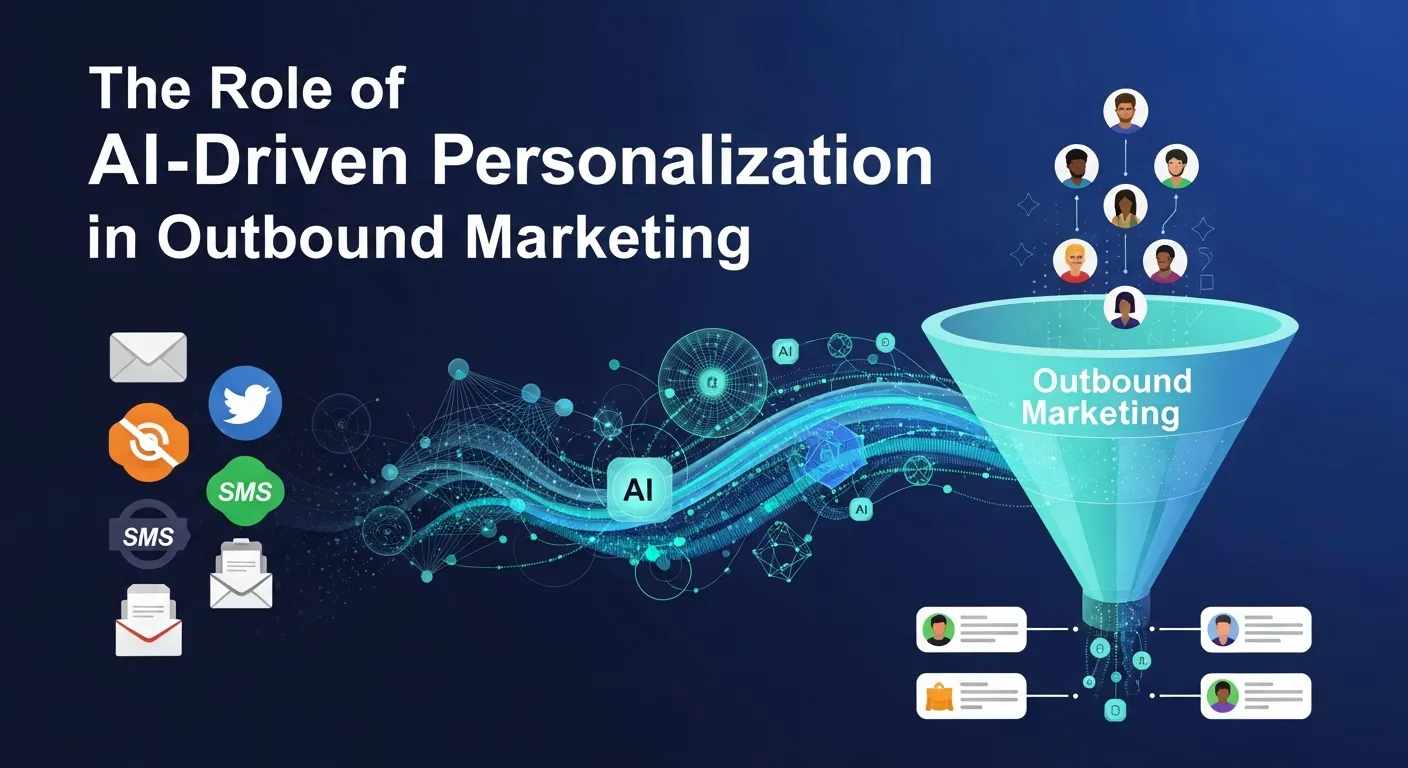
As digital transformation accelerates, ai-driven-personalization-outbound-marketing has become a game changer. AI tools analyze customer data to create hyper-targeted outbound campaigns that increase response rates and engagement. Modern outbound marketing is no longer about sending the same message to everyone. With the rise of ai-driven-personalization-outbound-marketing, businesses can analyze customer behavior and create customized outreach that resonates more deeply.
Key Benefits of AI-Driven Personalization:
- Predicts buyer intent and timing with machine learning.
- Automates personalized messaging across channels (email, ads, SMS).
- Increases engagement rates and reduces wasted ad spend.
| Traditional Outbound | AI-Driven Outbound |
|---|---|
| One-size-fits-all messaging | Personalized outreach based on data |
| Limited tracking and optimization | Real-time performance insights |
| Reactive targeting | Predictive customer modeling |
By combining push marketing’s channel strategies with AI-enhanced outbound campaigns, companies can ensure their messaging reaches both retailers and end consumers with unprecedented precision.
Outdoor Advertising: The Oldest Yet Evolving Outbound Channel
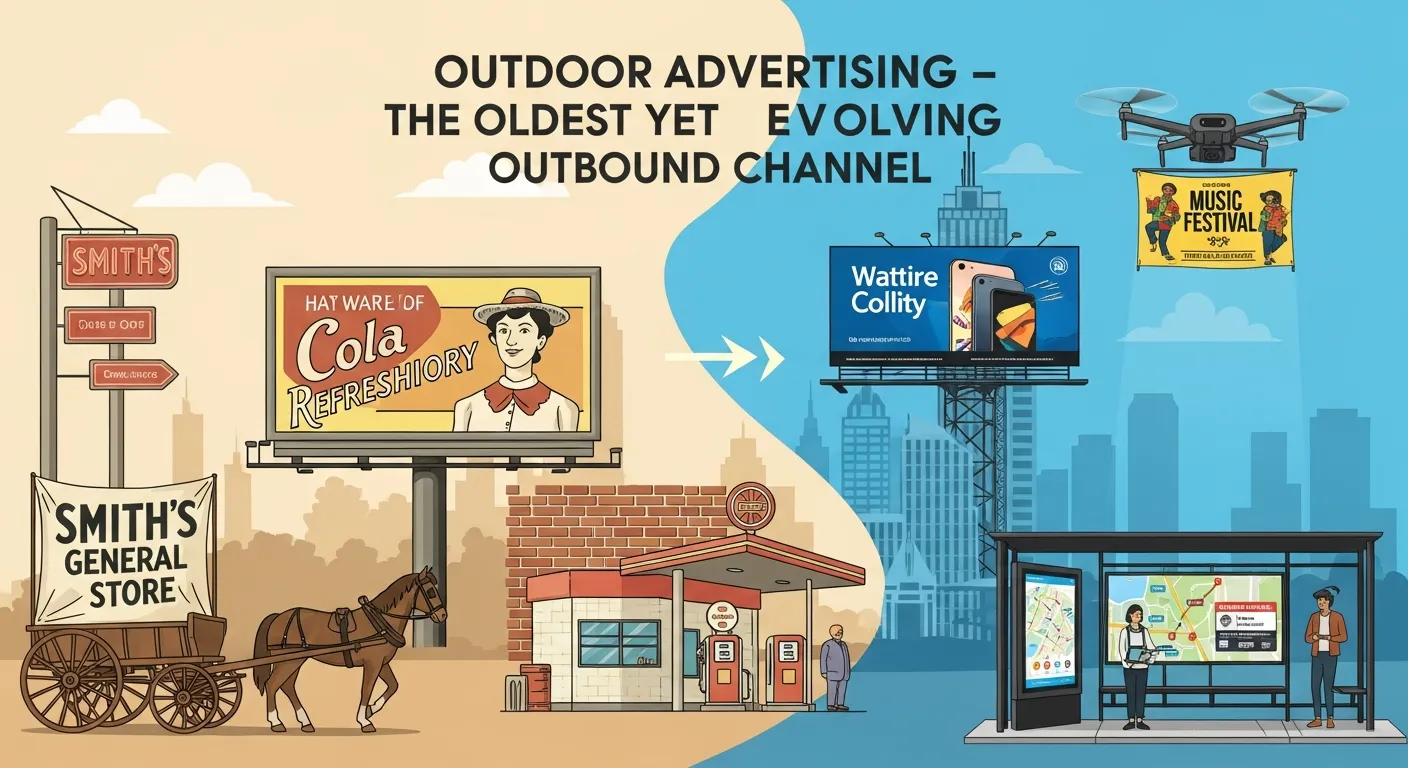
Outdoor advertising remains a cornerstone of outbound strategies. From billboards to digital displays, it helps brands stay visible in high-traffic areas. As discussed in what-is-outdoor-advertising-a-complete-guide-for-marketers, physical visibility continues to drive brand recognition despite digital dominance.
Even in the digital age, outdoor advertising remains one of the most effective outbound channels. As explored in what is outdoor advertising a complete guide for marketers, billboards, transit ads, and digital displays continue to play a major role in brand visibility.
Why Outdoor Advertising Still Works:
- Builds strong brand recall through repeated exposure.
- Reaches diverse demographics beyond digital audiences.
- Supports integrated campaigns with offline touchpoints.
| Type | Example | Best For |
|---|---|---|
| Traditional Billboard | Highway advertising | Mass awareness |
| Transit Ads | Buses, trains, airports | Commuter targeting |
| Digital OOH (Out-of-Home) | LED screens, mall displays | Dynamic messaging |
Combining outdoor advertising with digital outbound campaigns enhances consistency — ensuring your brand is visible both online and in the physical world.
When to Use Each Approach
For businesses selling through distribution channels like retail stores or value-added resellers, push marketing remains essential regardless of digital transformation. Even direct-to-consumer brands increasingly recognize the value of strategic retail partnerships supplemented by effective push marketing.
Outbound marketing serves nearly every business in some capacity, though its prominence within marketing strategy varies widely based on business model, industry, and target audience characteristics. B2B enterprises with clearly defined prospect universes often maintain significant outbound programs despite inbound marketing’s growing popularity.
At outboundmarketo.com, we’ve found that integrating both push elements and broader outbound tactics often creates synergistic effects, particularly for businesses with complex distribution models.
The Future of Outbound Marketing: Smarter, Integrated, and Data-Driven
The future of outbound marketing lies in convergence — blending traditional tactics with smart automation, personalization, and analytics. Outbound campaigns are evolving from generic blasts to intelligent, contextual interactions.
Emerging trends include:
- Omnichannel integration: Syncing email, social, and outdoor media.
- Personalized messaging: Tailored outreach using AI and data insights.
- Sustainability-focused communication: Eco-conscious consumers value transparent messaging.
Partnering with the best-outbound-marketing-services helps businesses implement these innovations effectively, ensuring their strategies remain competitive in a data-first world.
For businesses selling through distribution channels like retail stores or value-added resellers, push marketing remains essential regardless of digital transformation. Even direct-to-consumer brands increasingly recognize the value of strategic retail partnerships supplemented by effective push marketing.
Outbound marketing serves nearly every business in some capacity, though its prominence within marketing strategy varies widely based on business model, industry, and target audience characteristics. B2B enterprises with clearly defined prospect universes often maintain significant outbound programs despite inbound marketing’s growing popularity.
At outboundmarketo.com, we’ve found that integrating both push elements and broader outbound tactics often creates synergistic effects, particularly for businesses with complex distribution models.
Developing an Integrated Approach
Understanding the relationship between push vs outbound marketing and outbound marketing allows marketers to develop more cohesive strategies. Rather than viewing them as separate entities, consider how they can reinforce each other:
Coordinated messaging across both channel partners and end consumers creates powerful reinforcement effects. When distributors hear the same value propositions they’re delivering to customers in your direct advertising, it strengthens their confidence in your brand positioning.
Understanding the relationship between push vs outbound marketing and outbound marketing allows marketers to develop more cohesive strategies. Rather than viewing them as separate entities, consider how they can reinforce each other:
- Align channel partner messaging with consumer campaigns.
- Share promotional calendars and co-branded assets.
- Use data from outbound performance to strengthen channel incentives.
This integrated approach ensures that both intermediaries and consumers receive consistent brand communication, enhancing trust and sales performance.
Similarly, outbound marketing that acknowledges and leverages channel partners can enhance those relationships while simultaneously building consumer awareness. For instance, retail-specific landing pages mentioned in broadcast advertising can direct consumers to appropriate purchase channels while supporting retailer traffic goals.
Measuring Success Appropriately
Different strategic approaches require appropriate measurement frameworks. Push vs outbound marketing performance indicators typically include metrics like distribution breadth (percentage of potential retailers carrying products), share of shelf, retailer promotion participation, and channel partner satisfaction.
Outbound marketing metrics focus more on customer acquisition costs, lead generation volume, conversion rates, and brand awareness metrics. Recognizing these different measurement requirements helps marketing teams avoid misapplying metrics across categories.
The distinction between push vs outbound marketing and outbound marketing ultimately matters most in strategic planning and performance measurement. While conceptual overlap exists, the practical implementation differences significantly impact resource allocation and success evaluation.
For businesses seeking to optimize their marketing approach, understanding both concepts and their interrelationship provides a stronger foundation for comprehensive strategy development.