Is Google Ads Outbound or Inbound?
This blog explains whether Google Ads is inbound or outbound, highlighting its dual nature across search, display, and video campaigns. It explores hybrid strategies, sales impact, and product launch tactics, showing how Google Ads drives awareness, engagement, and long-term growth.
If you’re involved in digital marketing, you’ve likely heard of Google Ads. This powerful advertising platform allows businesses to reach potential customers using targeted, highly effective online campaigns. But a common question that emerges is: Are Google Ads considered outbound or inbound marketing?
While Google Ads straddle boundaries and serve unique roles depending on their implementation, understanding their classification can help businesses create more intentional strategies. This blog will highlight what outbound and inbound marketing entail and answer the question of where Google Ads fits within these two categories. You’ll also gain valuable tips on leveraging Google Ads effectively in your marketing mix.
Outbound vs. Inbound Marketing: What’s the Difference?
Before classifying Google Ads, it’s essential to grasp the fundamental differences between outbound and inbound marketing. Each strategy allows businesses to connect with their target audience, but they differ in approach and execution.
What Is Outbound Marketing?
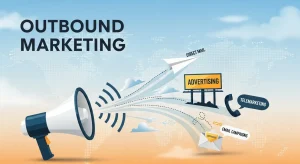
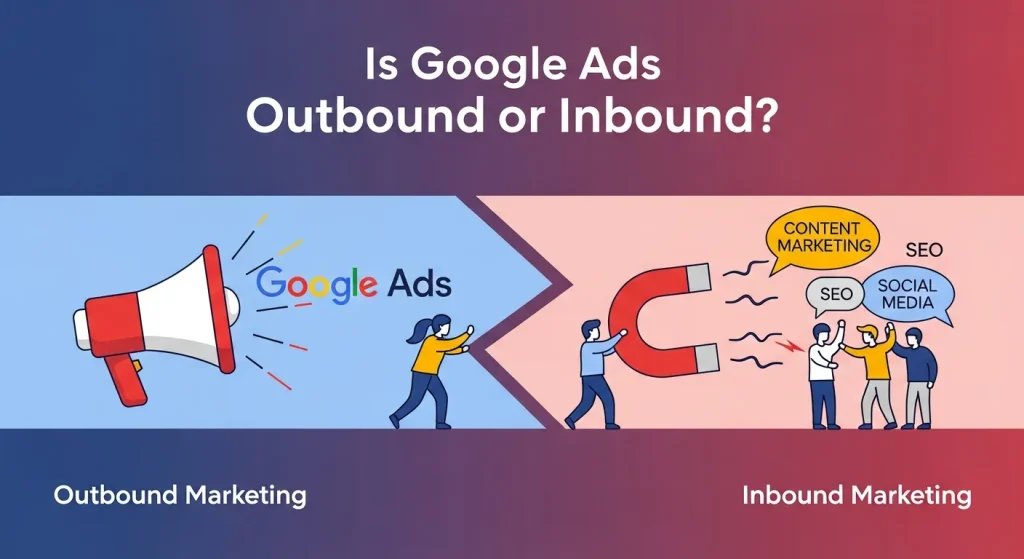
Outbound marketing is often referred to as “interruptive” marketing. This approach involves pushing your brand’s message out to potential customers, regardless of whether they expressed interest.
Some common examples include:
- Television and radio ads
- Display ads, including billboards
- Cold calling or emailing
- Direct mail campaigns
While outbound marketing can create widespread visibility, it can also be perceived as intrusive, particularly when the content reaches an uninterested audience.
What Is Inbound Marketing?
On the other hand, inbound marketing focuses on drawing potential customers in by creating and sharing content that’s valuable, relevant, and tailored to their needs. The goal is to educate, entertain, or solve problems so that prospects naturally find and engage with your brand.
Examples include:
- Blog posts and informative articles
- eBooks and whitepapers
- SEO-optimized website content
- Social media engagement
- Free tools, calculators, or templates
Inbound marketing prioritizes relationship-building and fostering trust with audience members on their terms, making it less interruptive than outbound tactics.
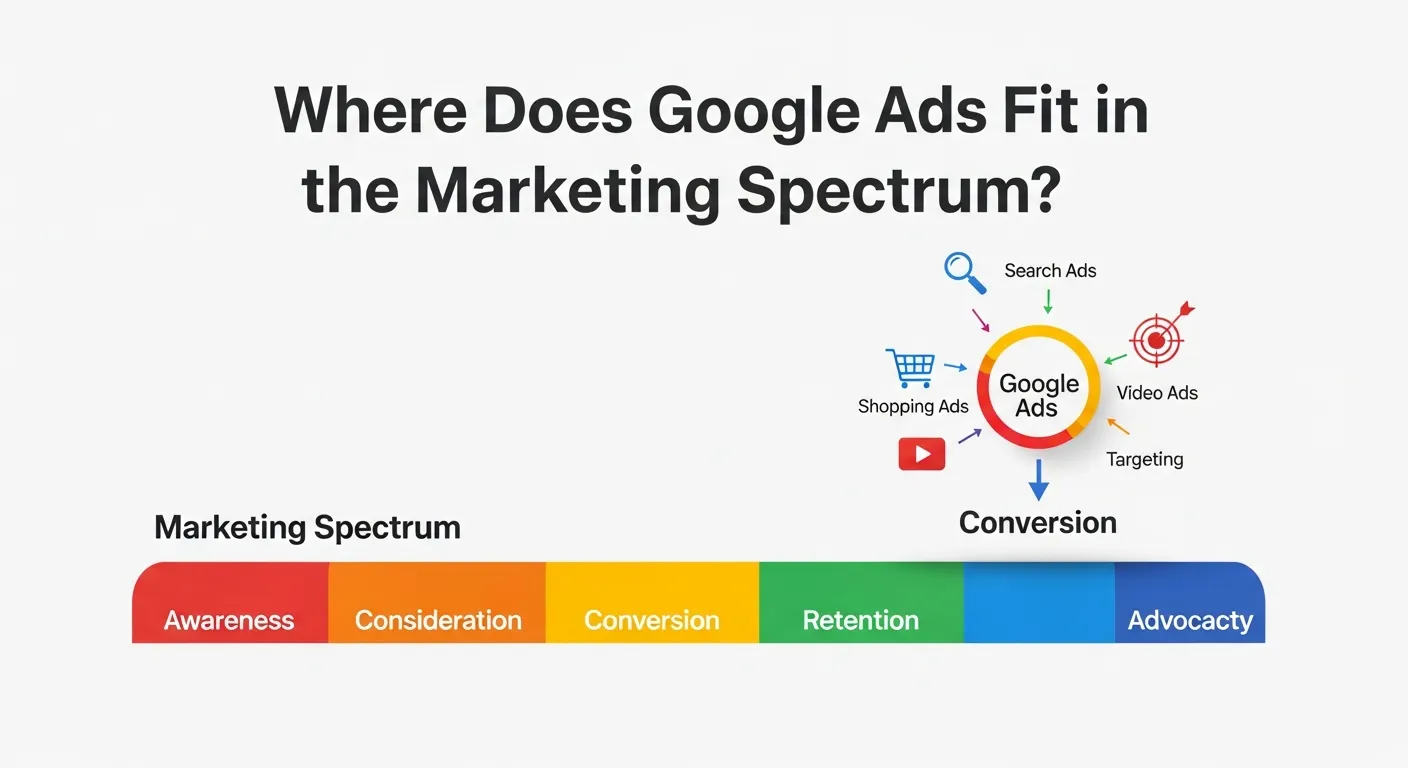
Where Does Google Ads Fit in the Marketing Spectrum?
Are Google Ads Outbound Marketing?
Google Ads, in certain contexts, aligns closely with outbound marketing characteristics. For example:
- Display Ads and YouTube Ads are served to users who may not have demonstrated explicit intent to engage with a product or service. These ads function similarly to traditional interruptive marketing tactics, aiming to capture attention even when users aren’t actively searching for solutions.
- Remarketing Campaigns, which target users based on previous site visits, also push messaging out to potential leads who may or may not be prepared to take action.
Are Google Ads Inbound Marketing?
Google Ads also has inherent traits that align with inbound marketing, especially with Search Ads. Here’s how:
- Search Campaigns leverage user intent by targeting individuals actively searching for specific products, services, or solutions. For instance, if someone searches “best coffee maker for small kitchens,” an ad for your compact coffee maker can appear right when they need it.
- Search Ads make it easier for potential customers to find and choose you over a competitor, which is a core characteristic of an inbound marketing strategy.
A Hybrid Approach
Ultimately, Google Ads exists in a unique space that overlaps outbound and inbound techniques.
Its categorization largely depends on implementation. Outbound strategies may rely heavily on pushing display ads to wider audiences, while inbound strategies can focus on search-based campaigns with high intent.
Understanding the Sales Impact of Google Ads
When deciding whether your Google Ads campaign should be inbound or outbound, your starting point should always be your sales objective. Are you aiming to generate broad awareness, capture intent-driven leads, or nurture prospects into paying customers? The answer determines how your campaigns should be structured and which ad formats deliver the highest impact.
Outbound ads excel at generating awareness and creating top-of-funnel momentum. They push your message into the market — building visibility and shaping brand perception among audiences who might not yet be actively searching for you. On the other hand, inbound ads are ideal for converting warm leads who are already exploring their options. They meet users where intent is strongest, leading to higher-quality conversions and more efficient sales pipelines.
A successful digital advertising funnel finds balance between these two forces — proactive outreach and reactive engagement. This balance reflects the essence of outbound marketing strategies sales, which focuses on aligning brand awareness with measurable revenue outcomes. By designing your Google Ads around both audience awareness (outbound) and intent capture (inbound), you create a sales engine that sustains growth over time.
How Google Ads Drive the Sales Funnel
Google Ads can map directly to your sales funnel, supporting each stage from awareness to conversion:
Top of Funnel (TOFU) — Awareness & Reach
- Use Display and YouTube Ads to introduce your brand to new audiences.
- Focus on visually engaging content that captures attention quickly.
- Objective: Generate impressions, build familiarity, and increase recognition.
Middle of Funnel (MOFU) — Interest & Engagement
- Run Search Ads targeting high-intent keywords related to your product or service.
- Offer educational content, free trials, or solution comparisons.
- Objective: Build trust and position your product as a credible solution.
Bottom of Funnel (BOFU) — Conversion & Retention
- Implement Remarketing Ads to re-engage prospects who visited your site but didn’t convert.
- Use urgency-driven CTAs like limited offers or social proof (reviews, testimonials).
- Objective: Convert interest into sales and strengthen customer loyalty.
This funnel-based approach ensures every click contributes to a larger growth strategy rather than operating as an isolated campaign.
Key Points to Remember
- Outbound = Awareness, Reach, Impressions
Outbound campaigns serve as your digital billboard — perfect for establishing brand presence and attracting new eyes to your business. - Inbound = Engagement, Conversions, Long-Term Trust
Inbound ads engage people who are actively looking for solutions, turning curiosity into commitment. - Hybrid = Sustainable Growth and Continuous ROI
Combining both allows you to move prospects smoothly through the buying journey — from seeing your brand to choosing it.
By blending outbound visibility with inbound precision, you create a performance-driven system that nurtures leads and generates consistent revenue flow.
Sales-Oriented Google Ads Matrix
| Approach | Goal | Example | Sales Outcome |
|---|---|---|---|
| Outbound (Display / YouTube) | Brand Awareness | Video ad introducing your brand or showcasing values | Higher recognition and market visibility |
| Inbound (Search Ads) | Lead Generation | Keyword-targeted ad focused on user intent (“best CRM for startups”) | Increased conversions and qualified leads |
| Hybrid (Remarketing + Search) | Nurture & Retarget | Display ads reminding users of recently viewed products | Improved ROI, reduced customer acquisition cost |
Turning Clicks into Conversions
To maximize your Google Ads sales impact, treat every campaign as part of a broader ecosystem that nurtures customer relationships. Here’s how to elevate performance across inbound and outbound stages:
-
Craft Clear Messaging for Each Funnel Stage
Outbound ads should inspire curiosity, while inbound ads should answer specific questions or problems. -
Optimize for Intent Signals
Use audience insights, keyword intent, and behavioral data to distinguish between awareness-stage users and conversion-ready leads. -
Create Consistent Cross-Channel Experiences
Align your Google Ads with email, landing pages, and social campaigns. A unified message reinforces trust and improves conversion rates. -
Measure What Matters
Don’t just track clicks — measure assisted conversions, engagement depth, and lifetime customer value (LCV). These reveal the real influence of inbound or outbound campaigns on long-term growth. -
Iterate and Refine
Use performance data to adjust bidding strategies, creative assets, and audience targeting. Continuous optimization ensures your campaigns evolve with your sales objectives.
Bringing Strategy and Sales Together
The power of Google Ads lies in its adaptability — whether you’re building brand awareness or closing high-value sales. Outbound ads open doors; inbound ads close deals. Together, they form a continuous cycle of attraction, engagement, and conversion that fuels sustainable growth.
By integrating outbound marketing strategies sales principles into your Google Ads planning, you transform each campaign from a short-term promotion into a long-term sales asset. The result is a marketing system that not only captures attention but also converts it into measurable business success.
Google Ads in Product Launches
When launching a new product, the question of inbound or outbound marketing becomes even more critical. A launch isn’t just about showcasing a product — it’s about generating attention, establishing credibility, and creating demand in a short timeframe. During this stage, visibility is everything, and this is exactly where Google Ads’ flexibility and targeting power shine brightest.
A well-executed launch requires both reach and relevance. Outbound tactics like display and video campaigns ensure your brand gets noticed by large audiences, while inbound strategies such as search ads convert curiosity into action. The perfect launch blends both — proactive outreach and intent-driven engagement — to accelerate awareness and adoption.
Why Outbound Matters in a Product Launch
Every successful launch starts by making sure people know your product exists. That’s why outbound marketing should be part of every product launch plan. These campaigns push your message into the marketplace — even before customers realize they need your solution.
Outbound Google Ads, particularly Display and YouTube campaigns, help brands:
-
Create buzz before the official launch date.
-
Introduce the product to new audience segments.
-
Position the brand as innovative and industry-leading.
-
Drive pre-launch sign-ups, waitlists, or demo requests.
When strategically executed, outbound ads build emotional connection and recognition, setting the stage for the next phases of your marketing funnel.
Why Inbound Completes the Equation
While outbound generates attention, inbound campaigns capture intent. As your audience becomes aware of your product, they start researching — and that’s where Search Ads play a vital role.
Inbound Google Ads allow you to meet users exactly when they’re seeking answers. For instance:
- A user searches “best project management tool for freelancers” — your product ad appears at the top.
- A viewer who saw your YouTube ad now clicks your branded keyword campaign to learn more.
This synergy between outbound and inbound creates a powerful cycle: awareness fuels curiosity, curiosity triggers searches, and searches drive conversions.
Integrating Product Marketing with Google Ads
To achieve sustainable marketing performance, your Google Ads strategy shouldn’t exist in isolation — it should connect seamlessly with your broader product marketing initiatives. When paid campaigns are synchronized with your product’s positioning, lifecycle, and audience insights, they become far more powerful.
Understanding what is outbound product marketing is key to this alignment. Outbound product marketing focuses on proactively promoting your product to targeted audiences through deliberate, message-driven outreach — the digital equivalent of reaching out first. This approach is ideal for new product launches, brand awareness, and market penetration, where speed and visibility are critical.
In contrast, inbound product marketing emphasizes attraction. It involves creating educational, helpful, or inspiring resources that naturally draw potential customers to your product. Think of blog posts, comparison guides, or how-to videos that inform purchase decisions — all supported by strategic inbound or outbound ad campaigns to accelerate reach.
When these two disciplines work together, Google Ads becomes a bridge — driving awareness at the top of the funnel and capturing high-intent leads at the bottom.
How to Integrate Google Ads with Product Marketing
Blending Google Ads with product marketing ensures your advertising resonates at every stage of the customer journey — from discovery to decision-making. Here’s how to create a cohesive strategy:
- Develop Ad Copy that Reflects Your Product’s Value Proposition
Clearly articulate what makes your product different and why it matters to your audience. Ensure your ad headlines, descriptions, and extensions align with the core messaging of your product marketing materials. - Use A/B Testing to Optimize Creatives and Messaging
Test different variations of ad copy, visuals, and calls to action. This helps identify which message best communicates your product’s benefits, ensuring your ad spend supports your strongest creative concepts. - Align Campaign Goals with Broader Marketing Initiatives
Your Google Ads shouldn’t operate in a silo. If your product marketing team is running a seasonal campaign or feature launch, mirror those themes within your ad groups to reinforce brand consistency and increase conversion rates. - Combine Outbound Display Campaigns with Inbound Search Ads for Full-Funnel Coverage
Display campaigns generate awareness among audiences who may not yet know they need your solution (outbound). Meanwhile, search ads capture demand from users actively seeking solutions (inbound). Together, they create a balanced funnel that nurtures awareness into action. - Leverage Audience Insights for Smarter Targeting
Use Google’s audience segmentation tools — such as custom intent or affinity audiences — to ensure your outbound ads reach likely prospects and your inbound ads connect with those already displaying buying intent. - Refine Using Analytics and Attribution
Analyze how each campaign type contributes to conversions. Outbound ads may assist early-stage awareness, while inbound ads often drive final conversions. Tracking this relationship enables smarter budget allocation.
Google Ads and Product Marketing Alignment Table
| Strategy Type | Core Focus | Google Ads Example | Ideal Use Case |
|---|---|---|---|
| Outbound Product Marketing | Push new product awareness | Display Ad introducing a new feature | New product launches, event promotions |
| Inbound Product Marketing | Pull interested users through intent | Search Ad for a solution-based query | Established product lines, problem-solving content |
| Hybrid | Engage both new and existing users | Combined campaign strategy with remarketing | Continuous growth cycles and customer retention |
Why Integration Matters
By connecting inbound or outbound marketing strategies with product marketing insights, businesses achieve consistent brand messaging and stronger ROI. Every ad, keyword, and creative element becomes part of a unified customer experience — guiding prospects naturally from awareness to purchase.
This integrated approach also helps:
- Maintain alignment between marketing and sales teams.
- Shorten customer decision-making time.
- Increase conversion rates through relevant, audience-specific messaging.
- Build brand equity across all touchpoints — from search results to display placements.
In today’s competitive digital landscape, Google Ads isn’t just a performance tool — it’s a storytelling platform. When infused with strong product marketing direction, your campaigns do more than attract clicks; they build lasting connections that convert audiences into loyal customers.
How Can You Leverage Google Ads Effectively?
Whether you lean toward an outbound or inbound approach, Google Ads offers flexibility to amplify your campaigns. Here’s how to make the most of it:
1. Identify Your Marketing Goal
Establish a clear objective before launching a campaign. Are you focused on brand awareness (often outbound), or are you targeting warm leads ready to convert (inbound)? Google Ads offers tools to help you align with these distinct goals.
2. Segment Your Audience
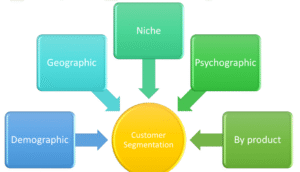
Use Google Ads’ robust data targeting to segment audiences by location, demographics, interests, or even past search behavior. This level of precision ensures that your outbound or inbound ads reach the ideal potential customers.
3. Optimize for Intent
If you’re adopting an inbound approach with search ads, emphasize keywords that align with high search intent. Tools like Google’s Keyword Planner help you find the right keywords to capture users actively seeking solutions.
4. Use Compelling Creatives
For display or video ads (outbound leaning tactics), focus on capturing attention quickly and conveying your message concisely. Incorporating eye-catching visuals and strong calls to action can improve click-through rates.
5. Leverage Conversion Tracking
Google Ads provides comprehensive analytics to track performance. Whether you’re driving awareness or conversions, robust key performance indicators will help you pivot and refine strategy over time.
Why Choose Google Ads in Your Marketing Strategy?
Whether used as an outbound powerhouse, as an inbound sales magnet, or as a blend of both, Google Ads is a game-changer for businesses that aim to connect with their audience online. Here are its key benefits:
- Global Reach and Precision Targeting allow marketers to engage tens of thousands (or millions) of relevant customers efficiently.
- Scalable Budgets support small businesses, even with tight ad-spend constraints.
- Measurable Results equip advertisers with actionable insights for real-time optimization.
- Customizable Campaign Types flex to fit diverse goals, from increasing brand awareness to driving sales.
Wrapping It Up
Is Google Ads outbound or inbound? The answer lies in how you use it. Search ads tend to align with inbound methodologies by targeting existing intent, while display and video ads lean more toward outbound marketing due to their interruptive nature.
The real magic of Google Ads lies in its flexibility. By combining both inbound and outbound strategies, businesses can reach new customers while also nurturing engaged prospects.
Ready to start optimizing your advertising campaigns? Whether you’re aiming to capture clicks or cultivate relationships, Google Ads offers unparalleled capabilities for both. Take the leap today and tap into this invaluable resource to drive growth for your business.
Frequently Asked Questions (FAQs)
1. Is Google Ads considered outbound or inbound marketing?
Google Ads can be both outbound and inbound depending on how you use it.
- Search Ads typically align with inbound marketing because they target users who already have intent (e.g., actively searching for a product or solution).
- Display and YouTube Ads, on the other hand, behave like outbound tactics because they actively push your content to users who might not yet be aware they need it.
In practice, the strongest strategies use a hybrid approach — combining outbound awareness with inbound intent capture. For a deeper exploration of this topic, see: is google ads outbound or inbound
2. How do outbound and inbound marketing differ?
Outbound marketing involves pushing messages outward — reaching audiences regardless of whether they’ve expressed prior interest. Examples include display ads, TV commercials, and cold outreach. In contrast, inbound marketing focuses on attracting customers by delivering helpful content that aligns with their needs — like blogs, SEO, and educational resources.
The major difference lies in intent and timing:
- Outbound interrupts and introduces
- Inbound satisfies and converts
3. Can SEO be classified as outbound marketing?
No — SEO is generally not considered outbound marketing. Outbound tactics push messages outward to external audiences, whereas SEO is a pull-based strategy that helps users discover you when they’re actively searching. Good SEO increases organic visibility by optimizing content for relevance and intent rather than interrupting user activity.
For a focused discussion on this distinction, see: is seo outbound marketing
4. Why is it important to balance inbound and outbound marketing strategies?
Balancing inbound and outbound allows you to both:
- Attract targeted audiences at moments of high intent (inbound), and
- Grow overall awareness among broader but relevant audiences (outbound).
This balance ensures you’re not just reaching people who already know you, but also introducing your brand to new prospects — essential for sustained growth, especially in competitive markets.
5. How does outbound marketing shape a business’s reputation?
Outbound marketing goes beyond generating visibility — it influences brand perception. Thoughtfully executed outbound campaigns can:
- Position your brand as a category leader
- Increase trust through repeat exposure
- Strengthen associations between your brand and certain values or solutions
Read more about how intentional outbound efforts shape overall reputation and influence customer perception here: how outbound marketing shapes your business reputation.
6. What role do remarketing campaigns play in inbound or outbound strategies?
Remarketing exists at the intersection of inbound and outbound:
- It re-engages users who have already shown interest (inbound characteristic)
- It pushes ads proactively to those users across networks (outbound characteristic)
Because of this hybrid nature, remarketing is one of the most effective ways to shorten conversion cycles and recover potentially lost traffic.
7. Which Google Ads campaign types are best for brand awareness?
Campaigns that maximize reach, visibility, and recognition are best for awareness. Examples include:
- Display ads across the Google Display Network
- YouTube video ads
- Discovery ads on partner placements
These formats introduce your brand to audiences during early decision stages — a core goal of outbound marketing.
8. Which Google Ads campaign types drive the most qualified traffic?
Campaigns that align with user intent tend to drive higher-quality traffic:
- Search campaigns targeting relevant keywords
- Shopping ads for product-specific queries
- Localized search ads for nearby business intent
These are typically considered more inbound-focused because they target users actively looking for solutions or products.
9. How does Google Ads support product launches?
During a product launch, Google Ads can:
- Drive awareness quickly through display and YouTube campaigns (outbound)
- Capture intent-driven audiences through search ads (inbound)
- Retarget users who interacted with launch assets but didn’t convert
This multi-phase approach grows visibility first, then directs high-intent users down the conversion funnel.
10. How do you measure success when using both outbound and inbound Google Ads?
Success is measured through a mix of top-level reach metrics (impressions, reach, view-through rate) and conversion-oriented metrics (click-through rate, conversion rate, cost per conversion, ROI). Modern analytics tools also allow marketers to track assisted conversions to see how outbound ads contribute indirectly to conversions that occur through inbound channels.