Automation vs Human Outreach : Finding the Balance
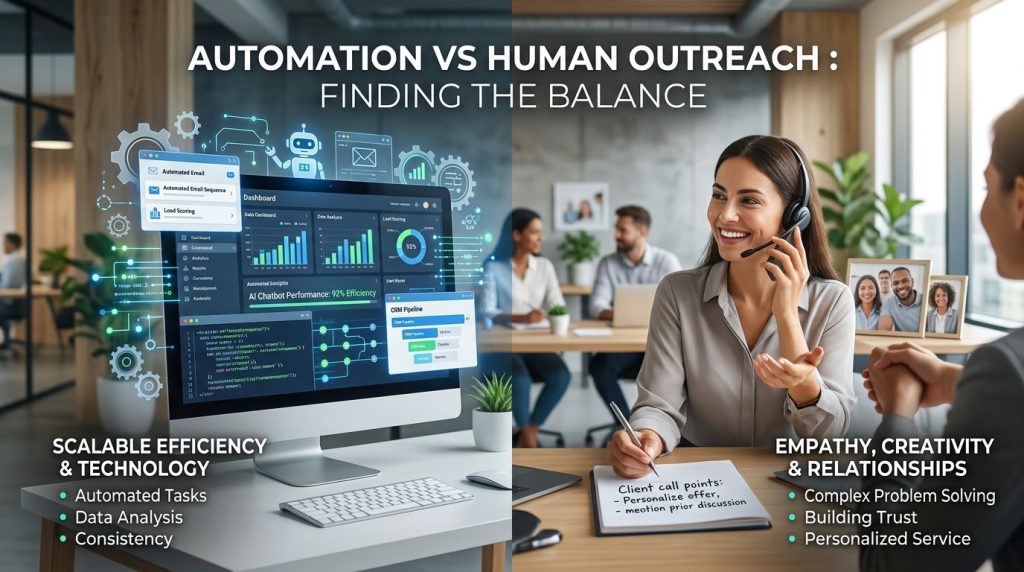
Balanced growth starts when Automation vs Human Outreach is treated as a system for choosing the right channel at the right moment. The smartest teams use software for speed and people for trust, timing, and nuance.
Automation vs Human Outreach begins with a simple truth: not every task deserves the same type of effort. Data-heavy follow-up, routing, and reminders can be automated, while relationship moments still need a person who can listen and respond with context. That keeps the workflow practical and humane.
Automation vs Human Outreach becomes clearer when teams define the job of each channel. Automation should handle consistency, while people should handle emotion, judgment, and the conversations that shape trust over time. This balance reduces friction without losing personality.
Automation vs Human Outreach is not about choosing a side. It is about reducing waste, so teams can spend less energy on repetitive work and more energy on the parts of outreach that truly move buyers. It also helps the team prioritize better.
Automation vs Human Outreach works best when leaders treat it like an operating principle. That means the process should be designed around efficiency, empathy, and measurable results instead of habit or personal preference. Good systems make good conversations easier.
What automation does well
Automation vs Human Outreach often starts with the fear that automation will feel cold. That fear is understandable, because many buyers can tell when a message was sent without thought. Yet automation only feels cold when it ignores context. Cold messages usually fail on relevance, not speed.
Automation vs Human Outreach can actually improve consistency. A well-built workflow makes sure every lead gets a timely response, every task gets logged, and no important handoff gets forgotten during a busy week. Stable follow-up builds confidence over time.
Automation vs Human Outreach helps teams avoid bottlenecks. When simple routing and reminders run automatically, people can focus on deeper conversations instead of spending hours on repetitive admin work. Less admin means more room for judgment.
Automation vs Human Outreach is strongest when automation removes friction rather than personality. The machine should clear the path, not replace the human voice that builds credibility. A clean process is easier to trust.
What human outreach does better
Automation vs Human Outreach also depends on knowing what humans do better. People are far better at reading hesitation, noticing objections, and adapting tone when a prospect needs reassurance instead of a scripted sequence. That skill becomes especially valuable when the buyer is uncertain, cautious, or comparing several options at once.
Automation vs Human Outreach becomes more effective when reps are trained to use judgment. They should know when to pause a sequence, when to call directly, and when to send a message that sounds thoughtful rather than mechanical. Good judgment turns raw activity into a better conversation, which is what sales ultimately depends on.
Automation vs Human Outreach supports empathy because real conversations reveal details that software alone cannot capture. A buyer’s tone, timing, and context often matter more than a single click or open. Software may capture signals, but people still interpret the emotional weight behind those signals.
Automation vs Human Outreach becomes strategic when human outreach is reserved for moments that matter. That may include complex objections, high-value accounts, renewal conversations, or any situation where trust is more important than speed. High-value moments deserve human care because the relationship may shape the decision far beyond one email.
Mapping the buyer journey
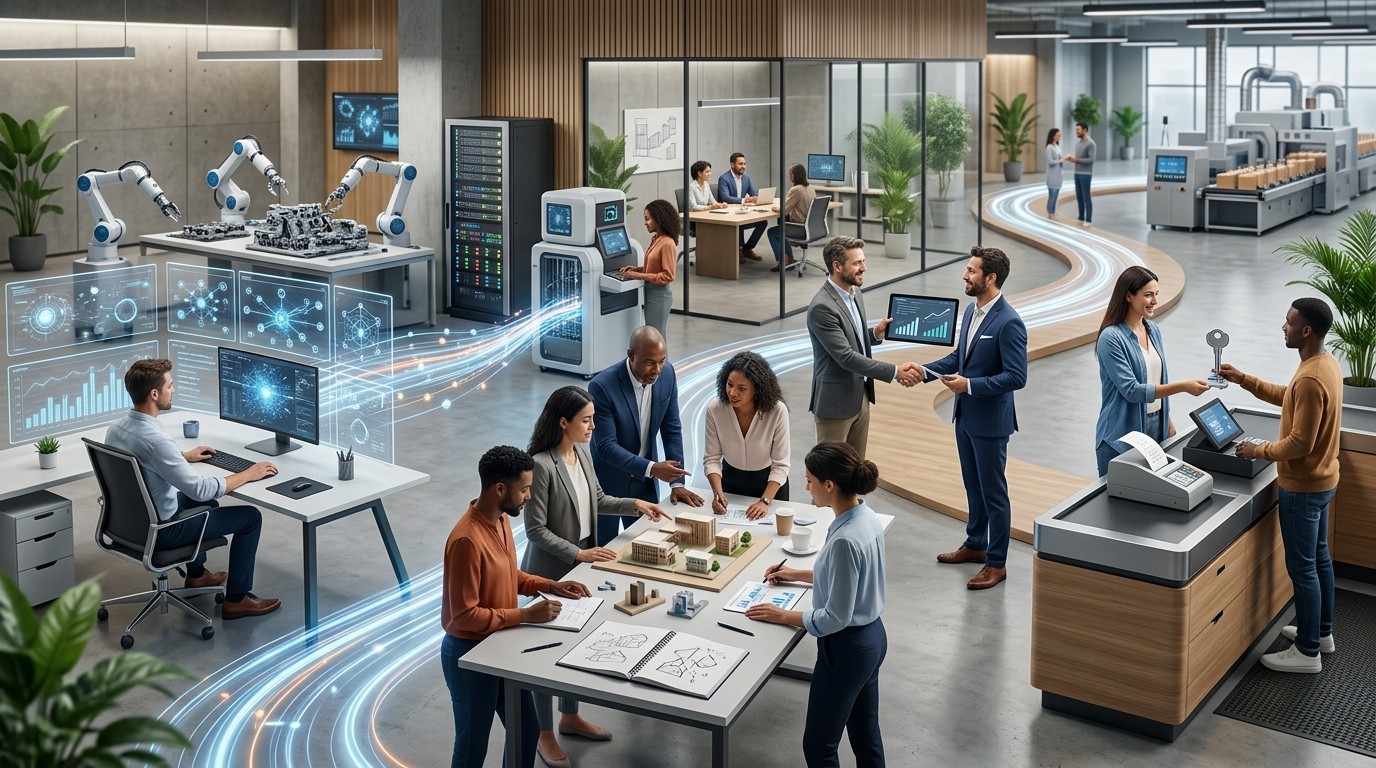
Automation vs Human Outreach should be designed around the buyer journey, not around internal convenience. People in early research need education, mid-stage buyers need proof, and late-stage buyers need direct guidance from someone who understands the stakes. When the journey is mapped well, buyers feel guided instead of pushed, and that lowers resistance.
Automation vs Human Outreach is rarely one-size-fits-all because buyers move at different speeds. Some contacts want self-serve information, while others prefer a conversation. Good systems respect those differences instead of forcing the same path on everyone. Different speeds are not a problem; they are a reason to build a more flexible system.
Automation vs Human Outreach becomes more accurate when signals are interpreted in context. A click from a curious reader is different from a reply from a decision-maker, and the response should reflect that difference. Context helps the team avoid overreacting to shallow engagement and underreacting to serious intent.
Automation vs Human Outreach works when automation handles the predictable stages and humans step in at the moments where emotion, risk, or complexity becomes visible. Predictable stages deserve structure, but the emotional inflection points deserve a real conversation.
Funnel design and timing
Automation vs Human Outreach is easier to balance when the team maps the funnel carefully. Awareness can be automated more heavily, while consideration and decision stages often deserve a stronger human presence because the stakes are higher. The funnel becomes easier to manage when each stage has a clear owner and a clear purpose.
Automation vs Human Outreach also improves when the team understands buying committees. An inbox may belong to one person, but the decision may involve several stakeholders who care about different proof points. Buying committees create complexity, so the outreach has to account for multiple voices and priorities.
Automation vs Human Outreach should help the brand stay present without becoming pushy. That usually means gentle reminders, relevant content, and a human follow-up when interest starts to deepen. The right cadence keeps interest alive.
Automation vs Human Outreach becomes more valuable when each stage has a purpose. Automation keeps the journey moving, while people make sure the conversation feels relevant and respectful. Purposeful stages create a healthier rhythm because the team knows what is supposed to happen next.
Communication quality over volume
Automation vs Human Outreach is not only about communication volume; it is about communication quality. A fast reply that says nothing useful can be worse than a slower reply that answers the buyer’s real concern. Quality shows up in relevance, not just in the number of messages sent each day.
Automation vs Human Outreach should encourage smarter timing. Some prospects respond quickly to structured workflows, while others need a softer, more deliberate touch from a person who can adjust to the situation. Timing is often the difference between feeling supported and feeling chased, especially in longer cycles.
Automation vs Human Outreach works when teams decide which tasks are mechanical and which are relational. Logging, scheduling, tagging, and scoring are good candidates for automation, while discovery calls and objection handling are usually better handled by people. Not every task needs a person, but every important relationship does need a person somewhere in the loop.
Automation vs Human Outreach becomes a strength when both sides inform each other. Automation surfaces the right moment, and human outreach gives that moment meaning. Shared signals make the system easier to trust because each side can see why the other side acted.
Measurement and proof
Automation vs Human Outreach should be measured by outcomes, not by ideology. If automation improves speed but hurts reply quality, the system needs adjustment. If human effort builds trust but wastes time, the process needs a smarter workflow. That keeps the discussion practical.
Automation vs Human Outreach is easier to defend when metrics show better conversion, cleaner routing, and lower response delay. Those results make the tradeoff visible and keep the discussion practical. Stable numbers usually make the debate calmer too.
Automation vs Human Outreach also benefits from comparing before and after performance. Teams often discover that the healthiest system is a blended one, not a purely manual or purely automated one. Good systems make good conversations easier.
Automation vs Human Outreach becomes more credible when leaders review what actually changed in pipeline quality, not just what changed in activity volume. That keeps the team focused on business impact rather than busywork.
Testing and learning
Automation vs Human Outreach should include testing because assumptions about buyers are often incomplete. What seems friendly to a team may feel generic to a prospect, and what seems efficient internally may feel robotic externally. Testing small changes protects the team from big assumptions that may look smart but fail in practice.
Automation vs Human Outreach improves when teams run small experiments. They can compare direct human follow-up with automated sequences, or test different response timings to see which combination earns more engagement. A single adjustment can reveal whether the problem is message, timing, or audience fit.
Automation vs Human Outreach becomes more precise when the team watches behavior across multiple touchpoints. The same person may ignore a sequence but respond warmly to a personal note, or the reverse. Behavior across touchpoints often exposes hidden preferences that one channel alone would never reveal.
Automation vs Human Outreach is best treated as a learning loop, where every campaign teaches the team a little more about when technology helps and when a person matters more. A learning loop keeps the strategy honest and prevents the team from repeating the same mistake.
What referral systems teach us
Automation vs Human Outreach has a lot to learn from referral dynamics. Gamified Referral Marketing shows that people respond strongly when sharing feels visible, rewarding, and socially meaningful rather than purely transactional. Referral behavior becomes more reliable when the message feels easy to share and worth sharing.
Automation vs Human Outreach also benefits from studying the Dropbox Referral Case Study. That example shows how a simple, useful reward can drive participation when the invite path is easy and the value is obvious. Simple rewards work because they reduce friction and make the action feel obvious to the participant.
Automation vs Human Outreach becomes smarter when Audience Segmentation is used to separate likely advocates from passive contacts. The right audience receives the right prompt, which makes outreach feel more natural. The right segment makes the right ask.
Automation vs Human Outreach works even better when Crafting Personalized Offers matches the message to the person’s stage, behavior, and likely motivation. Relevance is stronger than volume because the right offer reaches the right person at the right time.
Trust and consistency

Automation vs Human Outreach should help teams build trust before scale. A contact is more likely to respond to a thoughtful message when the brand has already shown that it understands the problem and respects the buyer’s time. Respecting time is one of the fastest ways to earn credibility in any sales conversation.
Automation vs Human Outreach becomes stronger when follow-up feels human even if the sequence is automated. That can mean using plain language, relevant examples, and a tone that sounds like a real person wrote it. Automation can sound human when it uses plain language, a useful next step, and a calm tone.
Automation vs Human Outreach also depends on consistency. A brand that shows up the same way across email, chat, and calls feels more reliable than one that shifts tone every time. Consistency across channels helps the brand feel like one organization instead of a collection of disconnected messages.
Automation vs Human Outreach is most persuasive when the human layer is visible. People do not want to feel processed; they want to feel understood. Understanding matters because people engage more deeply when they sense the brand is paying attention.
Feedback loops
Automation vs Human Outreach should include a feedback culture. Sales should tell marketing which messages create good conversations, and marketing should tell sales which patterns bring the best leads. Shared feedback shortens the distance between what the market says and what the team builds next.
Automation vs Human Outreach becomes easier when the team shares context instead of hiding it in separate tools. That way, automation improves coordination instead of creating another silos problem. Context becomes more valuable when everyone can use it instead of one person owning the insight alone.
Automation vs Human Outreach works better when the team reviews lost deals honestly. Sometimes the issue is timing, sometimes fit, and sometimes the first message failed to connect. Lost deals often teach the most, especially when the review focuses on facts rather than blame.
Automation vs Human Outreach becomes a growth engine when the organization learns from both the automated paths and the human conversations that follow. Learning from both systems and people makes the entire revenue process more adaptable.
High-consideration sales
Automation vs Human Outreach is especially important in account-based and high-consideration sales. In those environments, a prospect may need multiple touches before trust appears, and not every touch should be automated. Complex deals reward patience because the decision often depends on many small steps of trust.
Automation vs Human Outreach should support account awareness by keeping the right people informed at the right time. Automation can surface the signal, but a human should decide how to respond to it. Signal awareness helps the right stakeholder receive the right message without unnecessary delay.
Automation vs Human Outreach also helps when a rep needs to personalize the next step for a strategic account. That moment is too important to hand off blindly to a generic sequence. Strategic accounts deserve special treatment because the upside justifies a more thoughtful response.
Automation vs Human Outreach becomes a performance advantage when complex deals get the human attention they deserve while routine tasks stay efficient. Efficient routines create the space needed for deeper personalization where it matters most.
Documentation and process clarity
Automation vs Human Outreach is easier to manage when workflows are documented. A clear playbook shows what gets automated, what gets reviewed, and what gets escalated to a human immediately. Documentation reduces guesswork and gives the process a stable foundation as the team grows.
Automation vs Human Outreach should be transparent enough that new team members can understand the logic. That prevents confusion and helps the system scale without becoming brittle. Transparency matters because people use systems more confidently when they understand the logic behind them.
Automation vs Human Outreach becomes a lot more effective when timing rules are explicit. For example, a fast lead may receive immediate routing, while a slower lead may need education before a personal call. Explicit timing rules make it easier to act quickly without sacrificing good judgment.
Automation vs Human Outreach works when everyone knows the purpose of each step and understands why that step belongs to a machine or a person. Clear ownership keeps small mistakes from becoming large process failures.
Brand perception
Automation vs Human Outreach also affects brand perception. A company that automates every message can sound efficient but distant, while a company that relies only on people can sound warm but slow. A measured experience often feels more premium than an aggressive one because it respects the buyer’s pace.
Automation vs Human Outreach creates the strongest impression when it feels measured. The right amount of automation signals professionalism, and the right amount of outreach signals care. Brand tone is part of trust, especially when customers compare multiple vendors that sound similar.
Automation vs Human Outreach can make the buyer’s experience feel easier. The prospect gets the information they need quickly, then gets a real conversation when the relationship deserves it. Quick information can be reassuring when it is followed by a real person who can answer harder questions.
Automation vs Human Outreach becomes memorable when buyers feel the brand respects their time without sacrificing personality. Respect often becomes memorable because it stands out from the usual pressure buyers experience.
Leadership and tradeoffs
Automation vs Human Outreach is finally a leadership decision about tradeoffs. Every business has limited time, limited staff, and limited attention, so the team has to decide where human energy is worth the most. Deliberate tradeoffs create better systems.
Automation vs Human Outreach should push repetitive work toward systems and meaningful work toward people. That division creates a healthier process for both sides. The healthiest workflows are intentionally mixed.
Automation vs Human Outreach works best when leadership encourages both efficiency and warmth. If either value dominates completely, the customer experience becomes lopsided. Warmth without speed can frustrate buyers, and speed without warmth can alienate them.
Automation vs Human Outreach becomes sustainable when the company sees automation as support and outreach as connection, not as competing philosophies. Sustainability comes from seeing automation as infrastructure and outreach as a relationship, not a contest.
Where the balance lands in practice

Automation vs Human Outreach is strongest when the team accepts that no single approach works for every situation. The right answer depends on stage, value, urgency, and emotional complexity. The best teams build flexible rules instead of rigid dogma, which lets them respond faster without sounding robotic.
Automation vs Human Outreach improves when the company thinks in terms of moments. Some moments are best handled by systems, such as reminders, scoring, and routing. Other moments are best handled by people, such as reassurance, negotiation, and strategic persuasion. Deliberate design keeps the system balanced.
Automation vs Human Outreach gives buyers a smoother experience when the right combination is used at the right time. People feel respected when they get quick help and thoughtful follow-up. That combination helps teams move without stress.
Automation vs Human Outreach is easier to sustain when leadership keeps reviewing both efficiency and empathy. The brand feels stronger when both sides fit. Good balance is easier to sustain.
Practical checklist for teams
Automation vs Human Outreach becomes more usable when the team follows a few simple habits. First, automate the work that repeats often and adds little relational value. Second, reserve human attention for conversations that depend on judgment, trust, or nuance. Third, review the results regularly so the balance can change with the market.
Automation vs Human Outreach also benefits from clear ownership. Someone should decide what gets automated, what gets personal follow-up, and what needs escalation. That keeps the process from drifting into either chaos or over-automation. Good ownership protects quality during growth.
Automation vs Human Outreach works best when the team remembers that every message is part of a relationship, not just a transaction. If the process respects that truth, it becomes easier to scale without losing character.
Automation vs Human Outreach is not a one-time decision. It is a living balance that improves when the business learns from buyers, from data, and from the people doing the work every day.
Conclusion
Successful demand teams do not force a false choice between machines and people. Automation vs Human Outreach works when automation clears away repetitive friction and human outreach protects the relationship where it matters most. That balance improves response speed, strengthens trust, and keeps the pipeline moving without making buyers feel processed. The best strategy is usually the one that blends efficiency with empathy, because buyers notice both. When leaders measure outcomes honestly, test continuously, and keep the customer experience central, the system becomes more resilient. In that kind of model, technology supports the conversation, and people give the conversation meaning.
Frequently Asked Questions (FAQ)
1. What is the main idea behind Automation vs Human Outreach?
Automation vs Human Outreach is about using automation for repetitive, scalable tasks and human outreach for moments that need judgment, empathy, and trust.
2. Should everything be automated?
No. Automation vs Human Outreach works best when routine work is automated and relationship-heavy work stays human.
3. Why does automation sometimes feel cold?
Automation vs Human Outreach can feel cold when messages ignore context, timing, or relevance. Relevance usually matters more than speed alone.
4. How does human outreach help conversion?
Automation vs Human Outreach improves conversion when humans step in for objections, strategic accounts, and conversations that require reassurance.
5. Can automation still feel personal?
Yes. Automation vs Human Outreach can feel personal when messages are well-timed, relevant, and written in plain, human language.
6. What role does testing play?
Automation vs Human Outreach gets better through testing because teams learn which combinations of timing, channel, and follow-up work best.
7. How do referrals connect to this topic?
Automation vs Human Outreach can borrow lessons from Gamified Referral Marketing, the Dropbox Referral Case Study, Audience Segmentation, and Crafting Personalized Offers.
8. How do teams know the balance is right?
Automation vs Human Outreach is balanced well when response speed improves, trust stays strong, and pipeline quality does not suffer.
9. Is this approach useful for small teams?
Yes. Automation vs Human Outreach helps small teams stay efficient while still making important conversations feel thoughtful.
10. What should leaders focus on first?
Automation vs Human Outreach should start with the most repetitive tasks, then move human energy toward the highest-value conversations.