Crafting Personalized Offers Based on Buyer Intent
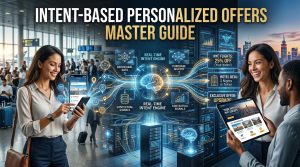
Crafting Personalized Offers starts with understanding what buyers want right now, then shaping the message, timing, and proof so the offer feels useful, timely, and easy to trust.
Crafting Personalized Offers is not about stuffing a name into an email or changing a headline for the sake of personalization. It is about reading intent, understanding urgency, and responding with an offer that feels like a helpful next step rather than a sales push. Buyers move through different mental states, and each state needs a different kind of message.
When a person is only browsing, they need clarity. When they are comparing options, they need differentiation. When they are ready to buy, they need confidence and low friction. Crafting Personalized Offers means matching the offer to that mental state instead of assuming all visitors are equal.
Many brands lose conversions because they treat every visitor like a first-time learner. Others push discounts too early, which weakens perceived value. Crafting Personalized Offers gives you a smarter path: let intent decide the message, let context decide the proof, and let timing decide the format.
Understanding the Psychology Behind Intent
Crafting Personalized Offers works because people naturally respond to signals that reduce uncertainty. Buyers do not simply ask, “Is this good?” They ask, “Is this for me?” and “Will this work in my situation?” A well-shaped offer answers both questions before doubt grows.
Trust grows when a buyer feels understood. That feeling is not created by generic praise or overly polished copy. It is created by relevance. Crafting Personalized Offers uses relevance as a psychological shortcut. The buyer sees language that mirrors their problem, examples that mirror their context, and an outcome that mirrors their goal.
There is also a strong fear of loss in buying decisions. If the offer seems too broad, the buyer fears making the wrong choice. If the offer seems too rigid, they fear being trapped. Crafting Personalized Offers reduces both fears by making the offer feel specific, flexible, and aligned with real intent.
Intent often appears in small signals
A buyer may not say, “I am ready to purchase now,” but their behavior can say it clearly. Multiple visits to the pricing page, repeated time on a comparison page, form starts without completion, product feature checking, and return visits after an email all suggest different levels of readiness. Crafting Personalized Offers becomes stronger when you notice these patterns and interpret them correctly.
The Building Blocks of a Better Offer
Crafting Personalized Offers needs a clear structure. Without structure, personalization becomes random and hard to scale. With structure, you can create offers that feel custom without rebuilding everything from zero every time.
| Building Block | Purpose | What It Affects |
|---|---|---|
| Intent signal | Shows what the buyer wants | Message angle |
| Audience context | Shows who the buyer is | Tone and relevance |
| Pain point | Shows what hurts most | Offer framing |
| Desired outcome | Shows what success means | Value proposition |
| Proof type | Shows what builds confidence | Testimonials, demos, stats |
| Friction reducer | Shows how to make action easier | CTA, trial, guarantee |
Crafting Personalized Offers improves when these blocks work together. If you know the pain point but not the intent signal, your message may feel vague. If you know the intent signal but not the desired outcome, your offer may feel incomplete. Strong personalization is not one tactic; it is a system.
Audience Segmentation That Respects Buyer Mood

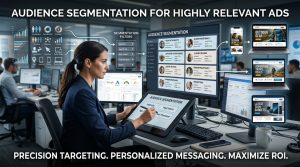
Audience Segmentation is one of the most useful ways to support Crafting Personalized Offers because it separates buyers by readiness, need, and behavior instead of forcing one message on everyone. The strongest segments are not always demographic. They are often intent-based.
You might segment by new visitor, repeat visitor, content reader, high-intent page viewer, cart abandoner, or returning lead. Each group needs a different version of Crafting Personalized Offers. A new visitor may need education. A repeat visitor may need proof. A cart abandoner may need reassurance. A warm lead may need urgency.
The key is to avoid creating segments that are too broad. “Small businesses” is usually too wide. “Small business owners who viewed pricing twice and downloaded a guide” is much more actionable. Crafting Personalized Offers becomes far more accurate when the segment reflects the buyer’s current stage, not just their identity.
Useful intent-based segment examples
| Segment | Likely Buyer Mindset | Best Offer Angle |
|---|---|---|
| New visitor | Curious, cautious | Educational starter offer |
| Content reader | Researching, comparing | Guide, checklist, or demo |
| Pricing page visitor | Evaluating value | Trial, calculator, consultation |
| Cart abandoner | Hesitant, distracted | Reminder, bonus, reassurance |
| Returning lead | Nearly convinced | Limited-time incentive |
Crafting Personalized Offers should feel helpful inside each segment. The goal is not to manipulate. The goal is to remove the mismatch between what the buyer wants and what the brand is showing.
Data Signals for Precise Message Tailoring
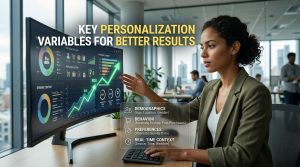
Data Signals for Precise Message Tailoring help you translate behavior into meaning. Raw data alone does not convert. Interpretation does. Clicks, scroll depth, page depth, device type, referral source, email engagement, and past purchases all reveal something about what the buyer may want next.
For example, a buyer who comes from a comparison article may be looking for differentiation. A buyer who lands from a remarketing ad may already know the brand and only need reassurance. A buyer who spends time on implementation details may care more about ease than price. Crafting Personalized Offers uses those signals to shape the next move.
The better your signal reading, the less you need to guess. That matters because guessing creates generic offers. Generic offers create friction. Crafting Personalized Offers removes that chain of weakness by building from evidence instead of assumptions.
Not every signal should carry equal weight. A single click is not as strong as repeated behavior. A long session on a high-intent page matters more than a brief home-page visit. Crafting Personalized Offers becomes more precise when you rank signals by strength and use them in combination.
Signal hierarchy to think about
- Strong signals: pricing visits, checkout starts, demo requests, reply clicks
- Medium signals: comparison reads, return visits, product feature views
- Light signals: social visits, short page views, first session clicks
When you use Data Signals for Precise Message Tailoring, you improve the odds that the offer lands at the right level of readiness. That is one of the biggest advantages of Crafting Personalized Offers.
The Right Offer Type for the Right Intent
Crafting Personalized Offers works best when the format of the offer matches the buyer’s intent. Some buyers need information, others need reassurance, and others need a fast decision path. The same coupon or demo will not serve all of them equally well.
A cold buyer may respond better to a useful guide or a low-pressure sample. A warm buyer may respond to a consultation or tailored bundle. A hot buyer may respond to urgency, convenience, or a risk-free guarantee. Crafting Personalized Offers becomes stronger when the offer feels like the natural next step, not an arbitrary promotion.
Offer matching guide
| Intent Level | Buyer Question | Best Offer Type |
|---|---|---|
| Early research | What is this? | Guide, checklist, explainer |
| Mid research | Which one is better? | Comparison, case study, demo |
| Late research | Is this worth it? | Trial, guarantee, bundle |
| Ready to act | Can I do this now? | Fast checkout, limited incentive |
One mistake brands make is overusing discounts. Discounts can work, but they are not the only way to convert. Crafting Personalized Offers can use time savings, convenience, exclusive access, onboarding support, or proof-based reassurance as the real value driver.
Trust Signals and Why Proof Matters
Crafting Personalized Offers is not complete without trust. The more tailored the message, the more the buyer expects evidence that the offer is credible. That is why proof must be matched to intent too. Different buyers trust different forms of evidence.
Some buyers want numbers. Others want a visual example. Some want a story from someone similar to them. Some want a simple guarantee. Crafting Personalized Offers works better when you pair the offer with the proof that fits the buyer’s mental stage.
This is where video proof for building faster credibility can be especially powerful. A short demo, testimonial clip, or walkthrough can help buyers feel the offer is real before they need to read a long explanation. Video proof for building faster credibility reduces uncertainty because it shows the experience rather than only describing it.
Social proof placement matters too. Heatmap Secrets for Social Proof Placement can reveal where buyers pause, where they hesitate, and where they need confidence most. When you place testimonials, ratings, or proof near the highest-friction decision points, this approach becomes easier to believe and easier to act on.
Trust assets that support intent
- Testimonials for reassurance
- Screenshots for clarity
- Case studies for detailed evaluation
- Short videos for quick credibility
- Guarantees for fear reduction
- Reviews for social validation
Crafting Personalized Offers should never feel like a claim without evidence. The stronger the proof, the less mental effort the buyer must spend validating the decision.
Timing Makes the Offer Feel Natural
Crafting Personalized Offers depends heavily on timing. A great offer sent too early can feel pushy. A strong offer sent too late can feel irrelevant. Timing is not just about the clock; it is about the buyer’s readiness.
A person who has not learned the basics may need more education before they will value a custom proposal. A person who has already compared options may now value convenience or speed. This strategy succeeds when it arrives at the moment the buyer is most prepared to say yes.
Timing can be improved through behavior triggers, lifecycle stages, seasonal relevance, and follow-up windows. For example, after a buyer watches a product walkthrough, a tailored next-step email can work better than a generic newsletter. After a buyer downloads a pricing guide, a targeted consultation invite may be more effective than a broad brand pitch.
Timing examples by stage
| Stage | Good Timing Trigger | Best Follow-up |
|---|---|---|
| Awareness | First guide download | Educational sequence |
| Consideration | Comparison page visit | Case study or demo |
| Decision | Pricing or cart view | Reassurance or incentive |
| Retention | Repeat purchase window | Upgrade or loyalty offer |
Crafting Personalized Offers becomes much more persuasive when timing matches the buyer’s internal momentum.
How to Build Personalization Without Making It Creepy

One reason some brands hesitate is that personalization can cross a line when it feels too invasive. Crafting Personalized Offers should always feel considerate, not surveillance-heavy. The buyer should feel recognized, not watched.
The safest approach is to personalize around relevance, not overexposure. Instead of saying, “We noticed everything you did,” say, “Based on what you were exploring, here is the most useful next step.” That language preserves trust while still showing awareness.
It also helps to keep personalization useful. A buyer will welcome an offer that saves time, removes confusion, or improves fit. They are less likely to welcome personalization that only proves you tracked them. Crafting Personalized Offers is strongest when it serves the buyer’s interest first.
Common Mistakes That Weaken Conversion
Many teams try personalization, but the results stay flat because the offer is still built around the brand’s comfort instead of the buyer’s intent. The method fails when the message is too broad, too repetitive, or too aggressive.
One common mistake is using the same offer for every stage. Another is assuming higher intent always means higher pressure. In reality, high-intent buyers often need less persuasion and more simplicity. The approach should remove obstacles, not create new ones.
Another mistake is over-personalizing the copy while under-personalizing the offer itself. Changing the first name is weak. Changing the value proposition, proof, and next step is much better. Crafting Personalized Offers is about substance, not cosmetic tweaks.
Mistakes to avoid
- Sending the same CTA to every segment
- Offering discounts before establishing value
- Ignoring behavior patterns
- Using proof that does not match the audience
- Making the message feel tracked instead of helpful
The journey improves when the entire journey feels consistent, from first touch to final click.
Crafting Personalized Offers improves when the entire journey feels consistent, from first touch to final click.
Practical Framework for Better Personalization
A simple framework can make Crafting Personalized Offers easier to scale. Think of it as a four-step loop: identify intent, match the pain, choose the offer, and place the proof.
First, identify what the buyer is doing. Are they researching, comparing, or deciding? Second, identify the pain point. Are they confused, skeptical, busy, or price-sensitive? Third, choose the offer format that solves that pain. Fourth, add the right trust signal where the buyer needs it most.
This process keeps personalization focused. It also helps teams align marketing, sales, and content around the same logic. This approach becomes much more effective when everyone is looking at the same buyer stage instead of creating disconnected messages.
The four-step personalization loop
- Read the strongest intent signal.
- Define the likely buyer concern.
- Match the offer type to that concern.
- Add proof and a low-friction CTA.
Use this loop repeatedly, and Crafting Personalized Offers becomes a repeatable system rather than a one-time campaign idea.
Where to Use Personalized Offers
These offers can appear across many touchpoints, not just email. It can shape landing pages, product pages, popups, chat prompts, retargeting ads, and even sales follow-up messages. The more consistent the personalization is across channels, the easier it is for the buyer to continue the journey.
On landing pages, personalization can change the headline, the example, or the call to action. In email, it can change the sequence and the offer type. In chat, it can change the suggested next step. The channel-specific version works when the channel supports the intent instead of distracting from it.
Channel examples
| Channel | Personalization Use |
|---|---|
| Landing page | Intent-specific headline and CTA |
| Trigger-based next-step offer | |
| Chat | Helpful recommendation |
| Ads | Segment-specific message |
| Sales call | Tailored objection handling |
Crafting Personalized Offers becomes more powerful when the buyer receives the same kind of relevance wherever they interact.
Why Small Adjustments Can Create Big Gains
A lot of conversion lift comes from removing small mismatches. A slightly better headline, a more relevant proof point, or a more suitable call to action can significantly improve performance. Crafting Personalized Offers does not always require dramatic redesigns.
That is because buyers are often looking for a reason to continue, not a reason to overhaul their beliefs. Small relevance improvements can create momentum. Once the message feels closer to the buyer’s exact need, the path forward becomes easier.
This is why testing matters. By comparing different intent-based versions, you can see what actually moves the audience. Crafting Personalized Offers should be treated as an iterative process, not a guess.
Building a Buyer-Centered Offer Strategy

Crafting Personalized Offers becomes strongest when the whole strategy is centered on the buyer’s next best move. Ask: what does the buyer need to feel, know, or believe before they act? Then shape the offer around that answer.
Sometimes the next best move is to learn. Sometimes it is to compare. Sometimes it is to try. Sometimes it is to talk to someone. Crafting Personalized Offers works when the offer is designed to make that next step feel obvious and safe.
The best strategies are often the simplest. They do not force the buyer to do too much at once. They guide the buyer through a natural path of trust, clarity, and confidence. Crafting Personalized Offers is not about pushing harder. It is about fitting better.
Conclusion
Crafting Personalized Offers is one of the most effective ways to improve conversion because it respects how people actually make decisions. Buyers do not respond to generic persuasion as strongly as they respond to messages that reflect their current intent, their likely concern, and their expected outcome. When you align the offer with the stage of the journey, the message becomes easier to trust and easier to act on. That is why Crafting Personalized Offers should be built around segmentation, behavior signals, matching proof, and timing that feels natural. Done well, it reduces friction, strengthens relevance, and turns attention into action without making the buyer feel pressured. Each small improvement compounds over time, creating stronger customer relationships, higher engagement, improved loyalty, and more sustainable long-term business growth through consistent, relevant, and value-driven buyer experiences.
Frequently Asked Questions (FAQ)
1. What is Crafting Personalized Offers?
Crafting Personalized Offers is the process of tailoring the message, format, proof, and timing of an offer based on what the buyer is likely trying to do right now.
2. Why does buyer intent matter so much?
Buyer intent matters because people need different information and reassurance at different stages. Crafting Personalized Offers works when it matches those stages.
3. Is personalization only for email marketing?
No. Crafting Personalized Offers can be used on landing pages, ads, chat, sales messages, product pages, and retargeting campaigns too.
4. What data helps improve personalization?
Behavioral data such as page views, return visits, pricing clicks, form starts, and content engagement can help refine Crafting Personalized Offers.
5. How do I avoid creepy personalization?
Keep it useful and subtle. Crafting Personalized Offers should sound like helpful guidance, not like you are exposing how closely someone was tracked.
6. Does social proof matter in personalized offers?
Yes. The right proof can reduce hesitation. Crafting Personalized Offers becomes stronger when testimonials, videos, or reviews match the buyer’s concern.
7. Should every buyer get a discount?
No. Crafting Personalized Offers can use discounts, but it can also use demos, guidance, convenience, guarantees, or faster onboarding.
8. What is the biggest mistake brands make?
The biggest mistake is sending the same message to every visitor. Crafting Personalized Offers fails when the offer ignores intent and readiness.
9. How many intent segments should I start with?
Start small. Crafting Personalized Offers is easier to manage when you begin with a few clear segments, then expand based on performance.
10. What is the goal of Crafting Personalized Offers?
The goal is to make the next step feel relevant, safe, and easy. Crafting Personalized Offers should help the buyer move forward with confidence.