Measuring ROI: Key Metrics for Modern Marketing Campaigns
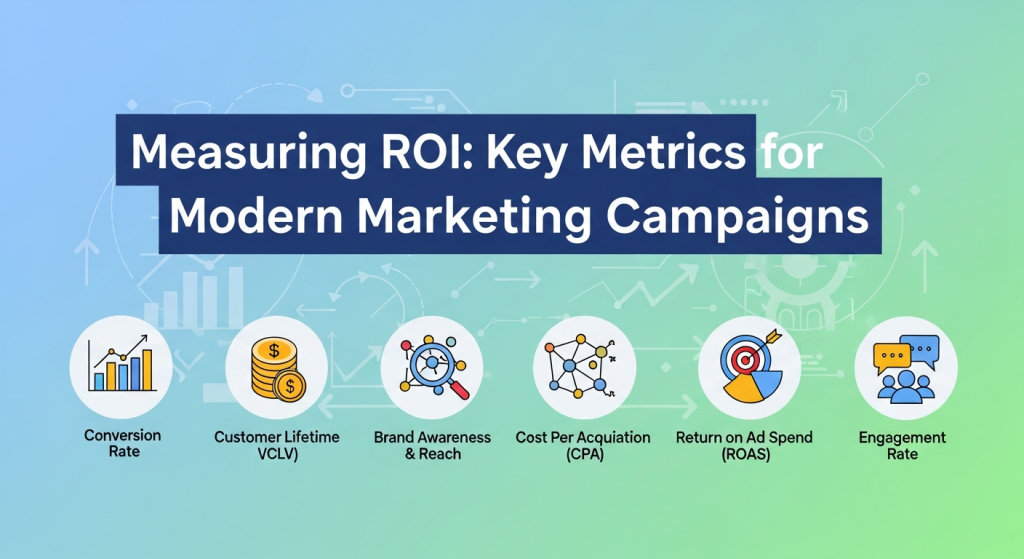
Marketing departments face growing pressure to prove ROI in a complex, multi-channel landscape. Success requires identifying meaningful metrics, understanding their interconnections, and turning data into actionable insights, enabling leaders to demonstrate marketing’s strategic value and justify budgets effectively.
In today’s fast-paced business environment, marketing departments are under unprecedented pressure to prove the tangible impact of every dollar invested. This demand for accountability, while challenging, has elevated marketing from a supportive function to a strategic driver of business growth. However, measuring marketing ROI in a fragmented, multi-channel landscape is far from straightforward. Simple formulas no longer capture the complexity of modern campaigns, where digital touchpoints, content engagement, and customer journeys intertwine. Success hinges on identifying the metrics that truly matter, understanding how they interconnect, and translating data into actionable insights—separating marketing leaders who confidently demonstrate value from those still struggling to justify their budgets.
The Evolved Marketing ROI Landscape
The fundamental concept of marketing ROI—net profit divided by total investment—remains simple in theory. Yet in practice, modern marketing has grown far more complex, requiring sophisticated frameworks to truly capture its impact. Today’s customer journeys span dozens of touchpoints across multiple channels, from social media and email campaigns to in-person events and paid search, making attribution far from straightforward.
The Complexity of Modern Marketing
Modern marketing initiatives are rarely one-dimensional. Each campaign serves unique objectives, which in turn demands tailored measurement approaches:
- Brand-Building Campaigns: These focus on awareness, perception, and long-term loyalty. Their value often emerges over time, measured through brand equity, sentiment analysis, and engagement metrics rather than immediate sales.
- Demand Generation Campaigns: These aim to drive tangible conversions quickly, such as leads, subscriptions, or product purchases. ROI here is often calculated through conversion rates, cost per acquisition (CPA), and revenue generated.
- Integrated Campaigns: Many campaigns combine both objectives, making it essential to track multiple metrics and evaluate their cumulative effect on the business.
Beyond Numbers: Storytelling as ROI
As marketing pioneer Seth Godin famously said, “Marketing is no longer about the stuff you make, but about the stories you tell.” This evolution underscores the need for ROI frameworks that combine quantitative performance metrics with qualitative indicators. Customer sentiment, brand perception, and engagement quality are all essential measures of impact that complement traditional financial calculations.
Connecting Marketing Efforts to Business Impact
A truly modern ROI approach doesn’t just measure individual campaigns—it connects marketing communications to overall business outcomes. Organizations that track how brand narratives and marketing touchpoints influence customer behavior can make more informed decisions and optimize spend strategically. For an in-depth exploration of this connection, see The Role of Marketing Communications in Business.
By embracing both the art and science of marketing measurement, leaders can demonstrate clear value, strengthen their strategic position, and make data-driven decisions that drive long-term growth.
Foundation Metrics: Beyond Basic Conversion Rates

Conversion rates remain a fundamental indicator of marketing performance, but sophisticated marketers recognize that measuring quantity alone is not enough. True insight comes from examining the quality of conversions and their downstream impact on revenue and profitability. Understanding not just how many customers convert, but how valuable those conversions are, is critical for optimizing marketing ROI.
Key Metrics for Advanced ROI Analysis
-
Customer Acquisition Cost (CAC):
-
CAC measures the expense of acquiring a new customer. When analyzed in isolation, it provides a basic efficiency snapshot.
-
Its value multiplies when segmented by channel, campaign, or customer segment, revealing which strategies deliver the highest returns.
-
-
Customer Lifetime Value (CLTV):
-
CLTV evaluates the long-term revenue potential of each customer, offering context for acquisition investments.
-
The CLTV:CAC ratio is a powerful benchmark. Ratios above 3:1 typically indicate profitable, sustainable acquisition economics, while lower ratios highlight areas for improvement.
-
-
Time-to-Payback CAC:
-
This metric adds a temporal lens, showing how long it takes for new customer revenue to recover acquisition costs.
-
Longer payback periods can signal pricing challenges, inefficient onboarding, or misaligned targeting, all of which can suppress marketing ROI even if campaigns appear operationally efficient.
-
Enhancing Conversion Insights
Beyond these core metrics, high-performing marketers continuously optimize the entire conversion funnel. This includes A/B testing landing pages, improving call-to-action strategies, and evaluating post-conversion behaviors. For a practical guide to boosting conversions and understanding which levers matter most, check out Conversion Rate Optimization Marketing Guide.
By combining CAC, CLTV, and time-to-payback insights with continuous funnel optimization, organizations can move beyond surface-level conversion metrics to a holistic view of marketing efficiency and impact.
Channel-Specific Performance Indicators
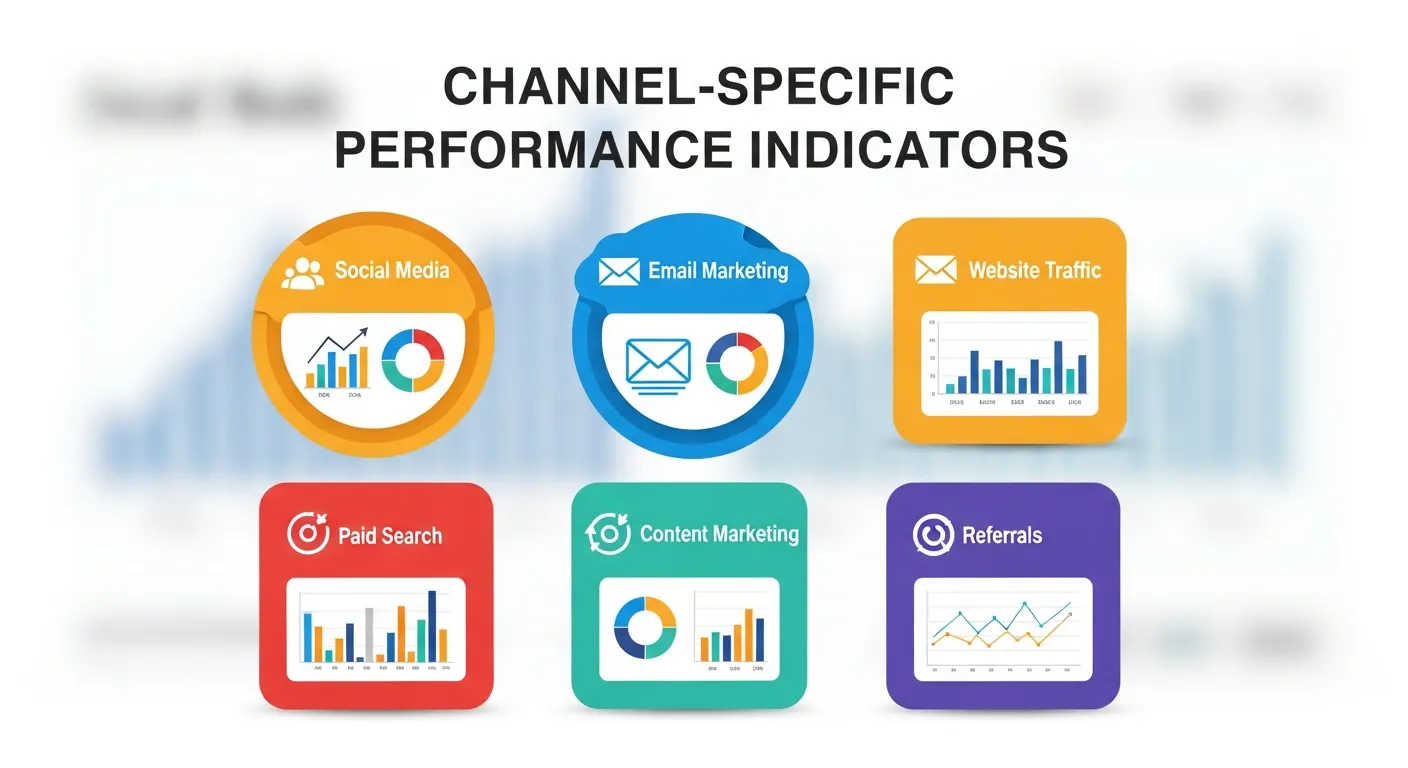
Modern marketing channels each have unique dynamics, requiring tailored measurement approaches that capture their specific contributions while still tying into overall ROI frameworks. A one-size-fits-all metric rarely reflects the true value of any given channel. High-performing organizations evaluate each channel through the lens of both direct results and broader influence on customer behavior.
Key Channel Metrics
-
Digital Advertising:
-
Beyond click-through rates (CTR) and cost-per-click (CPC), advanced marketers track view-through conversions and incremental lift.
-
These metrics capture the influence of ads even when users don’t interact immediately, revealing brand impact and latent purchase behavior.
-
-
Content Marketing:
-
Traditional metrics like page views or downloads only tell part of the story.
-
More meaningful indicators include:
-
Engagement depth (time spent, scroll depth)
-
Content journeys (subsequent content consumed)
-
Attribution influence (content touchpoints before conversion)
-
-
These measures help quantify how content contributes to revenue and supports broader marketing objectives.
-
-
Email Marketing:
-
Performance assessment now incorporates deliverability, inbox placement, and subscriber lifetime value alongside open and click rates.
-
Sophisticated programs differentiate revenue impact by email type—promotional, educational, or transactional—allowing for optimized communication strategies.
-
-
Social Media:
-
Metrics have evolved from vanity numbers like followers or likes to business-relevant indicators:
-
Audience quality and growth
-
Engagement-to-follower ratios
-
Social-attributed revenue
-
-
This ensures social efforts are tied directly to measurable business outcomes rather than superficial popularity.
-
Connecting Channels to Holistic ROI
While each channel has distinct metrics, the ultimate goal is integration into cross-channel frameworks that reflect the interdependent nature of modern marketing. Brands that excel consistently measure performance across multiple dimensions, rather than focusing on isolated metrics. For a deeper dive into building effective, channel-integrated strategies, see Marketing Communication Strategies.
By combining channel-specific performance indicators with cross-channel analysis, organizations gain a comprehensive view of marketing impact, uncover opportunities for optimization, and demonstrate ROI with clarity and confidence.
Attribution Models: From Last Touch to Comprehensive Frameworks
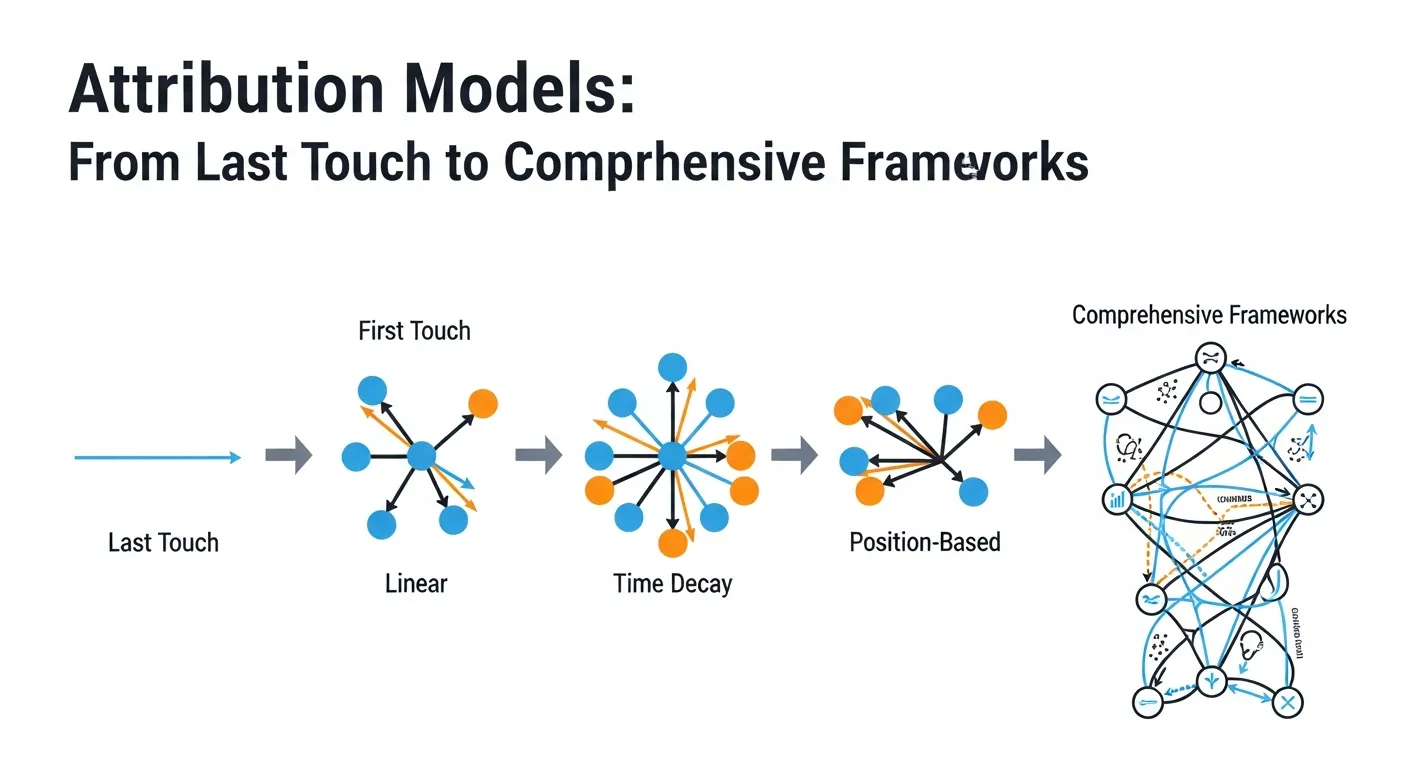
Attribution models are essential for understanding how credit for conversions is distributed across marketing touchpoints. Selecting the right model significantly influences perceived ROI, guiding resource allocation and campaign optimization. While some models offer simplicity, others provide nuanced insights into complex customer journeys.
Single-Touch vs Multi-Touch Attribution
-
Single-Touch Models:
-
First-Touch: Assigns full credit to the first touchpoint. Useful for understanding lead generation but ignores later engagement.
-
Last-Touch: Assigns full credit to the final touchpoint before conversion. Often overemphasizes channels like email that occur near the purchase.
-
-
Multi-Touch Models:
-
Linear: Distributes credit evenly across all touchpoints. Provides a balanced view but may dilute impact of key channels.
-
Position-Based (U-Shaped): Assigns more weight to first and last touchpoints while distributing the remainder across intermediates. Ideal for capturing both awareness and conversion influence.
-
Time-Decay: Gives more credit to touchpoints closer to conversion. Highlights recent interactions while acknowledging prior exposure.
-
-
Data-Driven Attribution:
-
Uses algorithms to analyze historical conversion paths and assign credit based on actual influence. Most sophisticated and accurate but requires robust data infrastructure.
-
| Attribution Model | Pros | Cons | Best Use Case |
|---|---|---|---|
| First-Touch | Simple, highlights lead generation | Ignores later engagement | Awareness campaigns |
| Last-Touch | Simple, highlights final conversion point | Overemphasizes final touch, ignores prior influence | Conversion-focused campaigns |
| Linear | Balanced view across touchpoints | Dilutes high-impact touchpoints | Multi-channel campaigns |
| Position-Based (U-Shaped) | Captures both first and last touch importance | Requires careful weight assignment | Campaigns with both awareness and conversion goals |
| Time-Decay | Highlights recent interactions | May undervalue early engagement | Fast-moving sales cycles |
| Data-Driven | Most accurate, reflects real-world influence | Data-intensive, complex implementation | Organizations with mature analytics capabilities |
Incrementality: The True Test of Marketing Impact
While attribution provides credit allocation, incrementality measures actual causal impact, answering the critical question: What would have happened without this marketing activity?
-
Why Incrementality Matters:
-
Attribution alone can overstate the impact of touchpoints by failing to account for naturally occurring conversions.
-
Incrementality provides a clearer picture of marketing ROI by identifying activities that genuinely move the needle.
-
-
Approaches to Incrementality Testing:
-
Control Groups: Compare results between exposed and unexposed audiences.
-
Geographic Testing: Run campaigns in selected regions while holding others constant.
-
Matched-Market Analysis: Compare similar markets or customer segments to isolate campaign effects.
-
Research from the Harvard Business Review indicates that rigorous incrementality testing often reveals 20–30% of marketing spend generates minimal incremental impact. This insight does not signal waste; rather, it highlights opportunities to reallocate resources toward higher-performing programs.
By combining robust attribution models with incrementality analysis, marketers can move beyond surface-level ROI calculations, optimizing both channel strategy and budget allocation. This approach transforms ROI measurement from a purely accounting exercise into a strategic tool that drives smarter decisions and higher business impact.
Balancing Short-Term and Long-Term Metrics for Marketing ROI
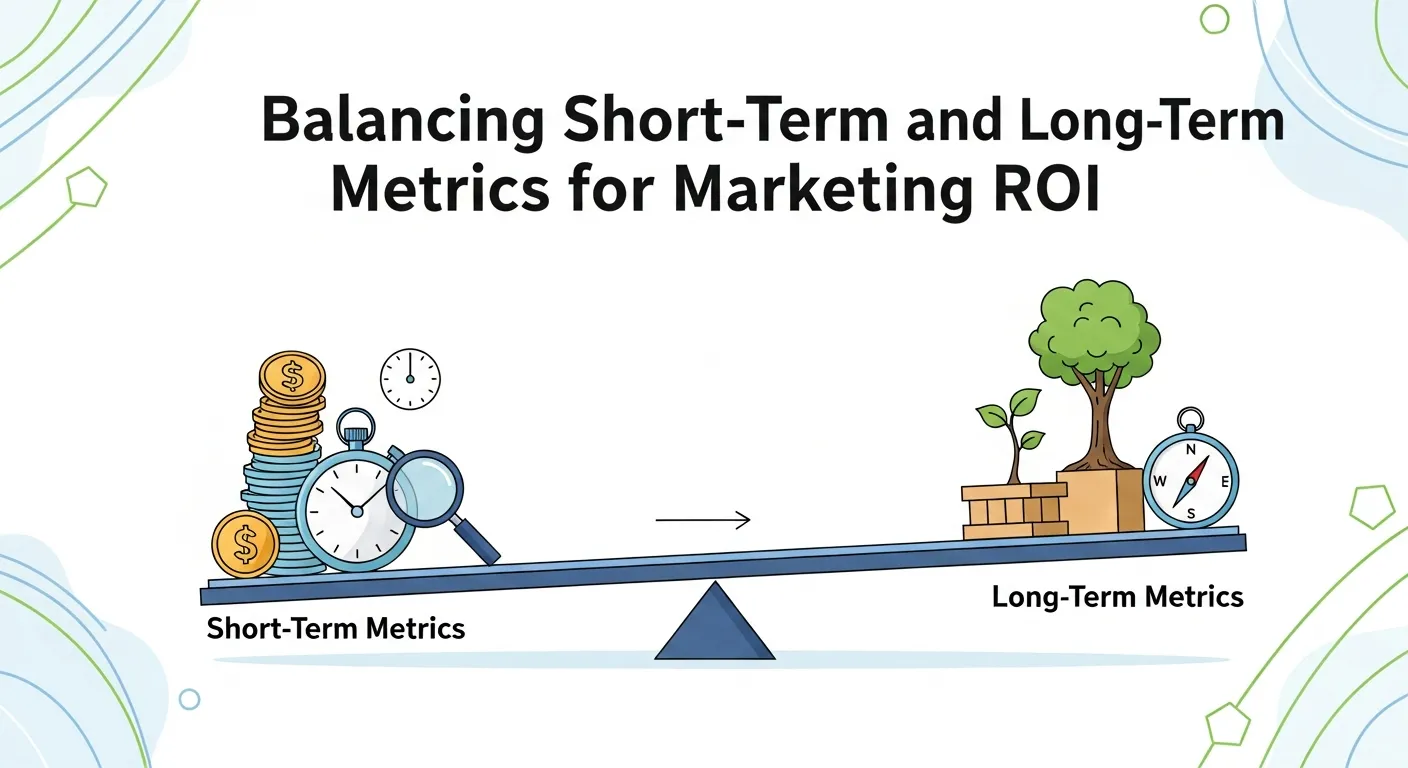
Effective marketing ROI measurement requires understanding that marketing activities deliver both immediate outcomes and long-term strategic impact. A comprehensive ROI framework incorporates metrics across different time horizons, ensuring leaders capture the full value of their efforts.
Short-Term Metrics: Immediate Performance Insights
Short-term indicators provide rapid feedback, enabling tactical adjustments and optimization. Key metrics include:
- Conversion Rates: Track how effectively campaigns turn prospects into customers.
- Cost-per-Acquisition (CPA): Measures the efficiency of acquiring new customers through specific channels.
- Campaign ROI: Evaluates the direct financial return of individual marketing initiatives.
These metrics allow marketers to identify which campaigns are performing well in real time and allocate resources efficiently for immediate gains.
Long-Term Metrics: Strategic Impact
Long-term metrics capture the enduring effects of marketing activities, which are critical for sustainable growth:
- Brand Health Metrics: Track awareness, sentiment, and loyalty over time.
- Market Share Trends: Indicate competitive positioning and growth potential.
- Customer Lifetime Value (CLTV): Measures the total revenue a customer generates over their relationship with the brand, informing long-term acquisition strategies.
The Balance Challenge
Organizations that focus exclusively on short-term metrics risk sacrificing long-term brand equity through excessive promotions or cost-cutting on strategic initiatives. Conversely, ignoring short-term indicators can result in missed optimization opportunities and ineffective campaigns.
Integrated Approach to Marketing ROI
Top-performing marketing leaders use balanced scorecards that combine both short- and long-term metrics. They understand that:
- Today’s brand investments create tomorrow’s conversion opportunities.
- Today’s conversion tactics influence long-term brand perception.
- Measuring marketing ROI across both horizons enables data-driven decisions that optimize immediate results while building sustainable advantage.
By maintaining this dual perspective, organizations can ensure that every marketing activity contributes to both short-term performance and long-term strategic growth, creating a resilient and measurable path to ROI.
Implementation Challenges and Success Factors in Marketing ROI
While the importance of measuring marketing ROI is widely recognized, many organizations struggle to translate theory into practice. Technical limitations, organizational silos, and skill gaps often impede the ability to capture, analyze, and act on marketing performance data effectively.
Common Implementation Challenges
-
Data Integration:
-
Customer interactions now span websites, mobile apps, offline channels, and third-party platforms.
-
Linking these touchpoints requires robust identity resolution and integrated data architectures, which many organizations have yet to fully develop.
-
Without cohesive data, calculating accurate marketing ROI becomes difficult, and decisions may be based on incomplete or fragmented insights.
-
-
Cross-Functional Alignment:
-
Marketing measurement intersects with sales pipelines, customer service interactions, and product usage.
-
Silos between departments often prevent a unified view of the customer journey.
-
Effective marketing ROI frameworks require collaboration across all relevant functions to reflect marketing’s true contribution to revenue and long-term customer value.
-
-
Capability Gaps:
-
Teams may lack analytical expertise or advanced tools necessary to process complex multi-channel data.
-
Over-reliance on basic metrics or intuition can result in misleading ROI conclusions, undermining strategic decision-making.
-
Success Factors for Effective Marketing ROI Measurement
Organizations that succeed in measuring and optimizing marketing ROI share several key characteristics:
- Clear Measurement Governance: Define metrics, data sources, and calculation methodologies to ensure consistency and transparency across campaigns.
- Investment in Technology and Analytics: Implement robust analytics platforms, attribution tools, and data integration systems to transform raw data into actionable insights.
- Cultivation of a Measurement Culture: Encourage evidence-based decision-making, where performance metrics guide strategy rather than tradition or gut feeling.
- Cross-Functional Collaboration: Establish processes that align marketing, sales, product, and customer success teams around shared goals and insights.
- Continuous Learning and Optimization: Regularly assess ROI findings to refine campaigns, reallocate resources, and respond to evolving customer behavior.
By addressing these challenges and embracing these success factors, organizations can build a marketing ROI framework that not only quantifies performance but also drives strategic growth, resource optimization, and competitive advantage.
The Future of Marketing ROI Measurement
Looking ahead, several trends will reshape marketing measurement approaches. Privacy regulations and browser changes are restricting individual-level tracking, driving greater emphasis on aggregate measurement approaches including media mix modeling and incrementality testing.
Artificial intelligence is transforming attribution capabilities, enabling more sophisticated analysis of complex customer journeys while reducing implementation burdens. Machine learning algorithms increasingly identify patterns and relationships that human analysts might miss, creating opportunities for more precise ROI optimization.
Marketing measurement will increasingly incorporate operational metrics alongside financial indicators. Customer effort scores, product adoption rates, and service utilization metrics provide crucial context for understanding marketing’s broader business impact beyond direct revenue generation.
Perhaps most significantly, marketing measurement will become increasingly predictive rather than merely descriptive. Advanced analytics will enable marketers to forecast expected returns before campaign execution, allowing for preemptive optimization rather than retrospective analysis.
These developments will ultimately strengthen marketing’s strategic position by providing clearer evidence of both short-term impact and long-term value creation. Organizations that embrace these evolving approaches will gain competitive advantage through more effective resource allocation and superior customer experiences.
In today’s complex marketing landscape, ROI measurement requires nuanced approaches that balance multiple perspectives while connecting marketing activities to business outcomes. By implementing comprehensive frameworks that incorporate both short-term performance indicators and long-term value metrics, organizations can optimize marketing investments while building stronger cases for continued investment in growth initiatives.
FAQ: Marketing ROI and Product Promotion
1. What is marketing ROI, and why is it important?
Marketing ROI measures the return on marketing investments relative to cost. It helps organizations understand which campaigns deliver the highest financial and strategic impact, guiding resource allocation, campaign optimization, and long-term growth decisions.
2. How do I calculate marketing ROI effectively?
Marketing ROI can be calculated as (Revenue from Marketing – Marketing Costs) ÷ Marketing Costs. Advanced approaches also consider multi-touch attribution, customer lifetime value, and time-to-payback, providing a more nuanced understanding of campaign effectiveness.
3. What are the main challenges in measuring marketing ROI?
Common challenges include data integration across multiple channels, siloed teams, and analytical skill gaps. Without cohesive systems and cross-functional collaboration, organizations often struggle to capture marketing’s full impact.
4. How does short-term ROI differ from long-term ROI?
Short-term ROI focuses on immediate results like conversions, CPA, and campaign revenue. Long-term ROI considers brand equity, CLTV, and market share growth. A balanced approach ensures campaigns deliver both immediate gains and strategic value.
5. What role do attribution models play in marketing ROI?
Attribution models distribute credit for conversions across marketing touchpoints. Single-touch models (first- or last-touch) are simple but limited, while multi-touch and data-driven models provide a more accurate reflection of ROI across channels and campaigns.
6. How can incrementality testing improve marketing ROI?
Incrementality testing evaluates what would have happened without specific marketing activities, helping identify the campaigns that truly drive revenue. Techniques include control groups, geographic testing, and matched-market analysis.
7. How can outbound marketing boost product promotion effectively?
Outbound marketing remains a powerful channel for promoting products. For a complete guide on using outbound strategies to drive product adoption, see Outbound Marketing for Product Promotion.
8. What is a product promotion funnel in outbound marketing?
A product promotion funnel maps the customer journey from awareness to purchase using targeted outbound tactics. It ensures prospects move efficiently through engagement, nurturing, and conversion. Learn more at Product Promotion Funnel & Outbound Marketing.
9. How does inbound marketing differ from outbound in product promotion?
Inbound marketing attracts customers through content, SEO, and organic engagement, while outbound marketing proactively reaches prospects with targeted messaging. A clear understanding of both is key to optimizing campaigns. See Inbound vs Outbound Product Marketing for a detailed comparison.
10. How do I integrate channel-specific metrics into overall marketing ROI?
Channel-specific metrics—like email engagement, social media attribution, or content consumption—must feed into a holistic ROI framework. Integration ensures cross-channel performance is evaluated, uncovering insights that isolated metrics might miss and improving budget allocation.