How Automation Is Changing Outbound Marketing Strategies
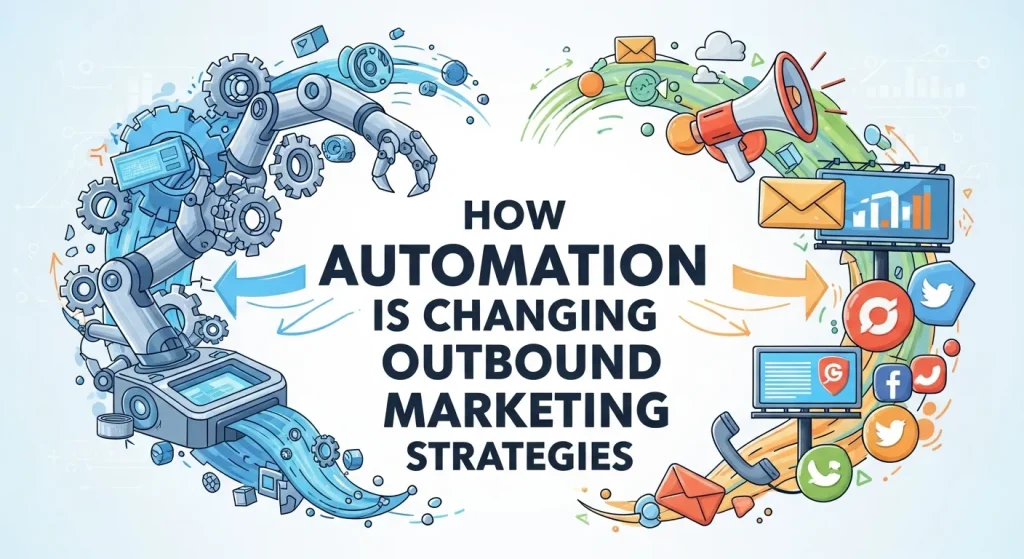
Automation is revolutionizing outbound marketing by streamlining lead generation, personalization, and data management. From referral systems to AI-driven SEM and OCR-powered data automation, it enhances efficiency, scalability, and ROI while preserving the essential human touch in customer engagement.
Marketing has always been about finding and connecting with the right audience. But over the years, the tools and strategies used to accomplish this have evolved drastically. One of the most significant shifts in recent years is the impact of automation on outbound marketing. Auto mation not only streamlines processes but also provides marketers with data-driven insights that refine and enhance their campaigns.
Whether you’re new to outbound or looking to stay ahead of trends, this guide will showcase how automation is reshaping the strategy playbook and helping businesses get better results without burning through resources.
The Growing Role of Automation in Outbound Marketing
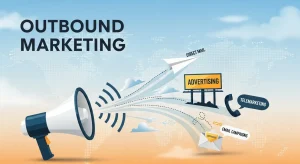
Outbound marketing refers to any method by which you actively reach out to potential customers, rather than waiting for them to come to you. This includes email campaigns, cold calls, direct mail, display ads, and more. Traditionally, outbound could be time-consuming and resource-heavy. Auto mation, however, is revolutionizing this by enabling campaigns to be executed with speed, precision, and scalability.
Here’s an overview of what auto mation brings to the table in outbound :
- Efficiency – Automation takes repetitive tasks off marketers’ plates, ensuring faster execution while saving valuable time and energy.
- Personalization – Advanced tools can analyze behavior and preferences, tailoring communication for higher engagement.
- Consistency – Auto mation ensures that multi-touch campaigns are executed without hiccups, fostering reliable lead nurturing.
- Scalability – Whether reaching ten prospects or ten thousand, auto mation ensures that outbound efforts scale effortlessly.
How Automation Tools Are Transforming Each Stage of Outbound Marketing
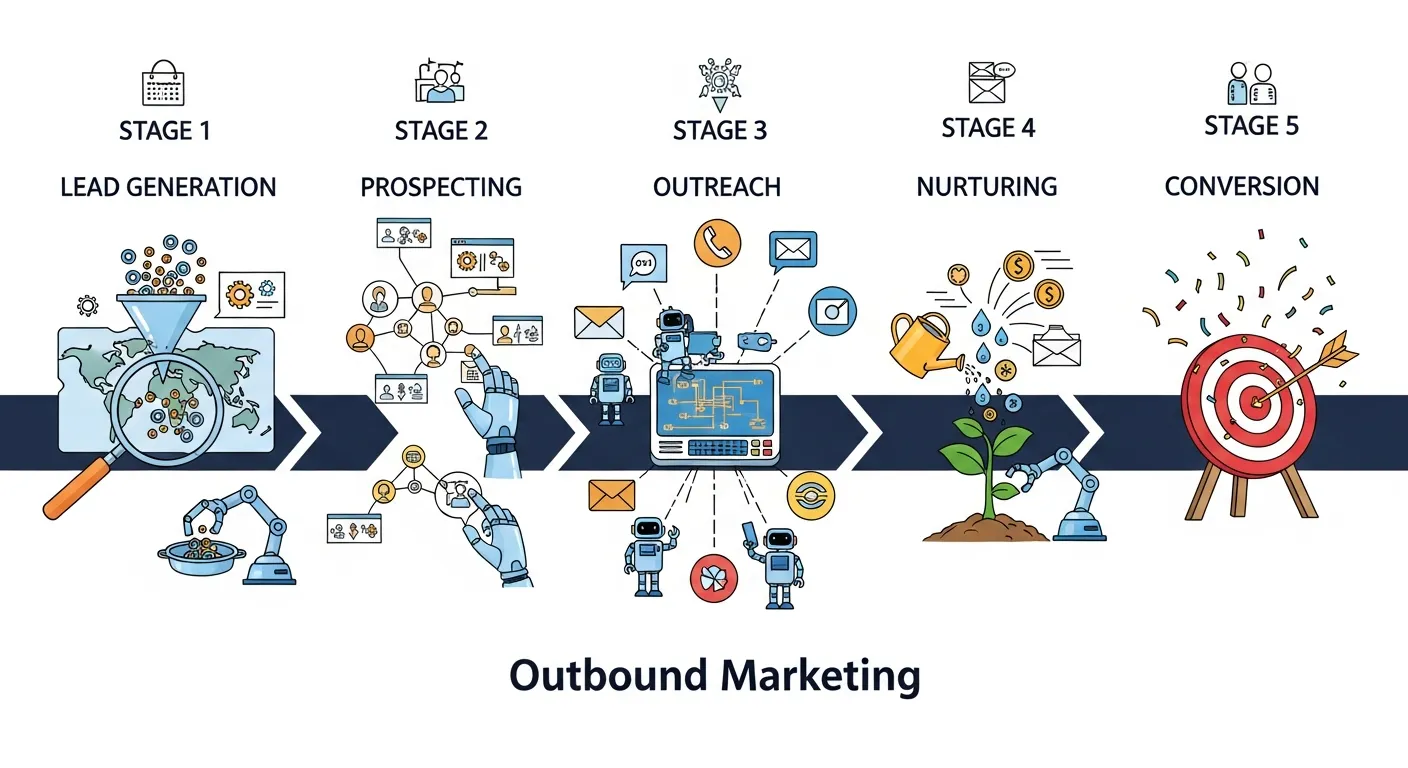
1. Lead Generation
Finding potential customers was historically an arduous task, requiring hours of research, segmentation, and manual outreach. Auto mation tools like LinkedIn Sales Navigator, ZoomInfo, and Leadfeeder now simplify audience discovery.
Key advantages:
- Improved accuracy in targeting the right audiences using filters based on location, profession, or industry.
- Real-time updates so your lead lists remain current and actionable.
- Integration with CRM tools ensures seamless transfer of lead information into the sales pipeline.
Example:
Imagine a SaaS company looking to reach decision-makers in the healthcare space. Auto mation platforms could scan LinkedIn profiles or company directories to build a complete list within minutes while excluding outdated or irrelevant contacts.
2. Personalized Outreach
“Spray and pray” in outbound marketing has been replaced by targeted, personalized messaging. Auto mation platforms like HubSpot, ActiveCampaign, and Mailchimp make it easier to send hyper-relevant emails at scale.
Auto mation in action:
- Add personalization tokens to emails (e.g., recipient’s first name or company name).
- Create behavior-triggered workflows, sending emails or messages based on recipient actions (like downloading a brochure or visiting a pricing page).
- A/B test subject lines, formats, and CTAs for continuous optimization.
Relevant numbers show this approach works. According to a study by Campaign Monitor, personalized emails drive 6x higher transaction rates compared to general emails.
3. Follow-Ups Made Easy
How many sales fall through because follow-ups are forgotten? Enter auto mation. Following up at regular intervals or after certain triggers can now be automated, ensuring that no lead goes cold.
Key benefits of automated follow-ups:
- Send reminders, updates, or check-ins without manual effort.
- Incorporate drip campaigns that nurture leads over time.
- Schedule follow-ups dynamically based on response times or previous interactions.
For example, if a prospect downloads a whitepaper but doesn’t respond to your first email, automation can send a friendly reminder or even an additional resource a week later.
4. Data-Driven Decision Making
Automation tools don’t just execute outbound marketing initiatives; they measure their success as well. Platforms such as Marketo, Pardot, and Salesforce provide dashboards that track every email open, ad click, or website visit.
Metrics you can track include:
- Click-through rates (CTR): Who’s interacting with your messages?
- Conversion rates: Which messages successfully lead to the next stage of the funnel?
- Cost per acquisition (CPA): How much you’re spending to gain a new customer.
Actionable insights, based on these metrics, allow marketers to refine messaging, adjust targeting, and focus on high-performing strategies, further increasing ROI.
5. Scalable Multichannel Campaigns
Modern outbound marketing is no longer restricted to a single channel. Automation empowers marketers to engage audiences seamlessly across emails, social media, SMS, and paid ads with consistent messaging.
Example:
- A lead engages with a Facebook ad → Automation adds them to your email workflow → A triggered email offers an exclusive webinar invite.
- After attending the webinar, they are offered a personalized discount or demo via SMS.
By combining channels strategically, you can significantly boost touchpoints without overburdening your marketing team.
Integrating Referral Marketing with Automation
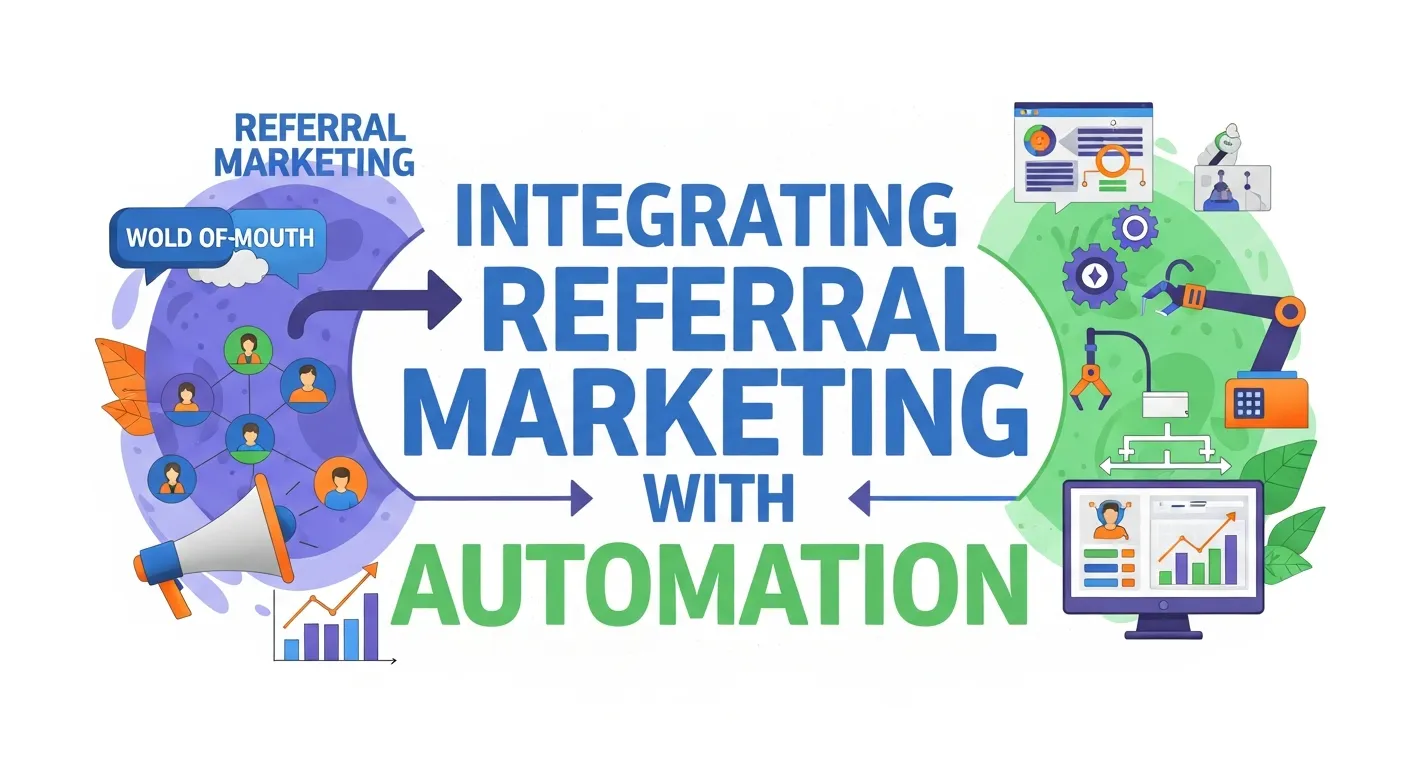
Referral marketing has always been one of the most trusted growth strategies — because at its core, people believe people. A recommendation from a satisfied customer carries far more weight than even the most polished ad campaign. However, while traditional referral programs rely heavily on manual tracking and outreach, modern businesses are now supercharging this strategy through auto mation.
With the rise of , companies can create referral programs that run smoothly in the background — tracking performance, rewarding advocates, and personalizing communication — all while maintaining that genuine, human touch that makes referrals so powerful.
How Referral Marketing Automation Enhances Outbound Strategy
Automation doesn’t replace the trust behind referrals — it amplifies it. Here’s how integrating automation into your outbound marketing strategy can take customer advocacy to the next level:
-
Automatically Track Referrals and Rewards:
No more manual spreadsheets or delayed updates. Auto mation platforms track every referral, conversion, and incentive in real time, ensuring full visibility and accountability. -
Send Personalized “Thank You” Messages Instantly:
Automated workflows trigger customized thank-you emails or SMS messages immediately after a successful referral, reinforcing goodwill and brand connection. -
Segment and Reward Top Brand Advocates Efficiently:
With advanced analytics, businesses can identify their most active referrers and offer them exclusive perks, loyalty points, or higher-tier rewards to encourage continued engagement.
The Real Impact of Referral Auto mation
| Automation Benefit | Description |
|---|---|
| Real-Time Tracking | Instantly monitor referrals, track conversion rates, and identify which advocates drive the most leads. |
| Custom Rewards | Tailor incentives based on the value or volume of referrals — from gift cards to VIP access. |
| Workflow Integration | Seamlessly sync with CRM, email platforms, and analytics tools to keep data consistent across marketing and sales systems. |
| Performance Insights | Generate automated reports to measure ROI, campaign reach, and referral efficiency. |
| Scalable Communication | Manage thousands of advocates without losing personalization or quality of interaction. |
Example in Action
Imagine an e-commerce brand that launches a referral program encouraging existing customers to invite friends via email or social media.
With referral-marketing-automation, every step — from invitation tracking to discount delivery — happens automatically. When a new customer makes a purchase, the system instantly notifies the referrer, delivers a personalized thank-you message, and updates the CRM with real-time performance data.
This creates a continuous cycle of engagement:
- A customer refers →
- The referral converts →
- Both receive automated rewards →
- The customer is motivated to refer again.
The result? A self-sustaining growth loop powered by automation and fueled by trust.
Why It Matters for Modern Outbound Marketing
Outbound thrives on reach and repetition — but trust is what drives conversion. By embedding referral automation into your outbound ecosystem, you achieve both. It ensures that your brand message doesn’t just come from ads or sales teams but from real customers who genuinely believe in your product.
In essence:
Referral marketing automation bridges the gap between authentic human advocacy and data-driven scalability, giving outbound campaigns the credibility and efficiency they’ve always needed.
The Future of SEM, AI, and Human Collaboration
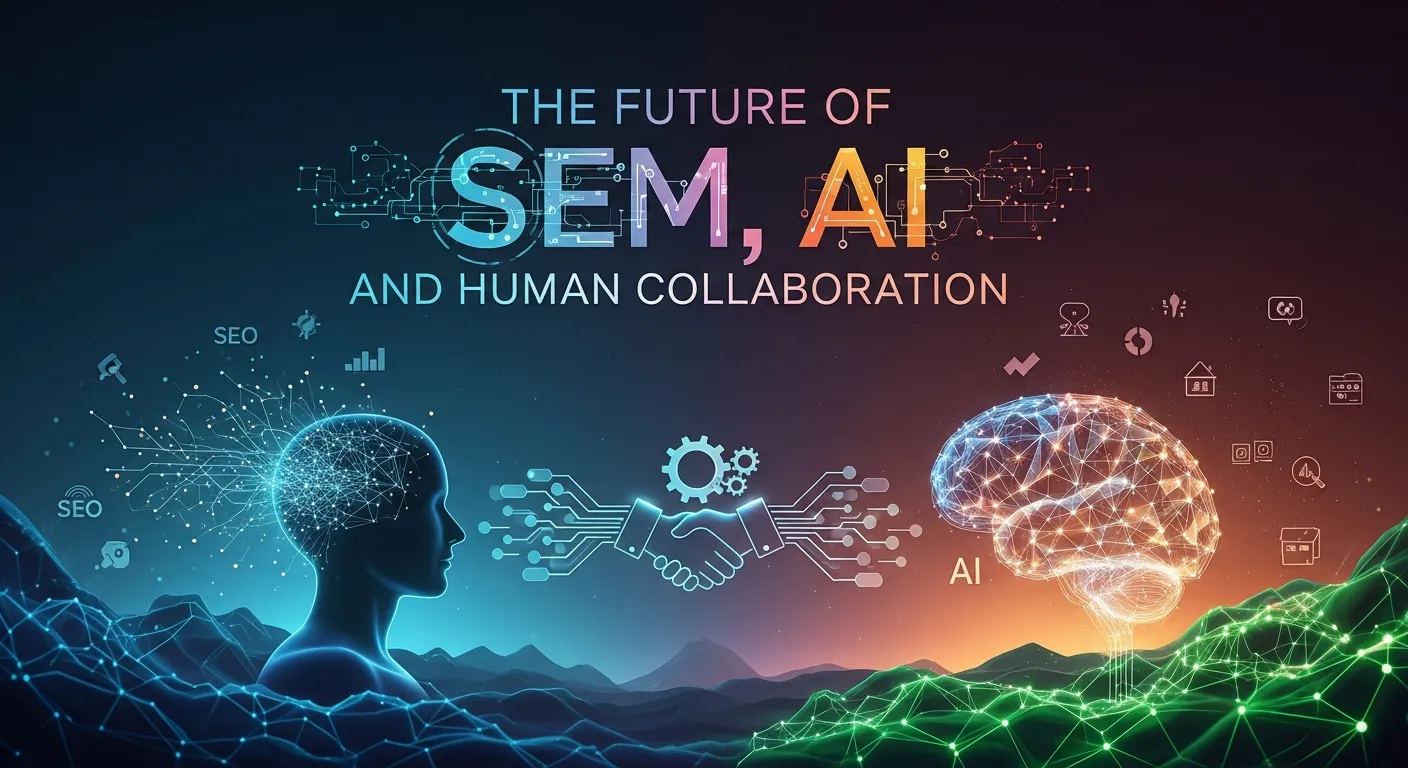
As search and digital advertising evolve, the synergy between auto mation and human creativity has become more vital than ever. Modern outbound campaigns now intersect with Search Engine Marketing (SEM), AI-driven personalization, and predictive analytics to reach audiences more intelligently and efficiently. Yet, amid this auto mation revolution, one truth remains — the human touch still matters.
While AI can process billions of data points in seconds, it’s the marketer’s intuition, emotion, and storytelling that transform clicks into genuine connections. The future belongs to brands that can combine algorithmic precision with authentic human empathy — the true essence of the future of sem ai automation and why human touch still matters.
Key Trends Shaping the Future of SEM and Automation
Auto mation and AI have already reshaped how outbound marketing integrates with search and paid advertising. Here are the most impactful trends defining this transformation:
-
Predictive Algorithms for Smart Targeting:
AI now analyzes behavioral signals, browsing history, and intent data to identify the right prospects at exactly the right moment. Instead of relying on broad demographics, predictive analytics ensures every ad impression counts. -
Dynamic Ad Optimization and Bidding:
Auto mation tools like Google Ads’ Smart Bidding and Meta Advantage+ automatically adjust bids and placements based on real-time performance, ensuring maximum ROI without manual intervention. -
Hyper-Personalized Messaging:
With AI, marketers can craft ad variations tailored to micro-segments — aligning creative content with search intent, user history, and even time of day. -
AI-Powered Creative Testing:
Automation platforms can now A/B test thousands of ad combinations at once, identifying the best-performing visuals, CTAs, and copy lines faster than ever before. -
Human Oversight for Brand Authenticity:
Even the smartest algorithms can’t replicate empathy or context. Human marketers ensure that every message reflects the brand’s voice, ethics, and emotional resonance.
Automation and Human Roles: A Powerful Partnership
| Area | Automation Strength | Human Value |
|---|---|---|
| Ad Optimization | AI refines targeting automatically based on performance data. | Humans shape the brand voice, emotional tone, and narrative consistency. |
| Campaign Scaling | Auto mation ensures rapid execution across multiple platforms. | Humans contribute creativity, strategic storytelling, and cultural relevance. |
| Customer Engagement | Bots handle quick responses and nurture leads efficiently. | Humans build trust, resolve nuanced queries, and deepen relationships. |
| Performance Reporting | AI visualizes campaign data instantly. | Humans interpret results and make strategic adjustments aligned with goals. |
| Creative Development | Automation suggests variations. | Humans craft the big ideas that inspire and connect. |
This collaboration between machine efficiency and human ingenuity ensures that outbound marketing campaigns are not just optimized — they’re alive with relevance, authenticity, and purpose.
Example in Action: A Smarter SEM Campaign
Imagine a B2B software company running an outbound SEM campaign to promote a new product demo. AI-powered automation manages bidding, optimizes ad placement, and segments audiences by industry and decision-maker role. Meanwhile, the marketing team creates emotionally engaging ad copy emphasizing trust, innovation, and customer success stories.
The result?
- CTR increases by 35% due to predictive targeting.
- Conversion rates rise as content resonates emotionally.
- Time spent on manual management drops by 60%, freeing teams to focus on strategic storytelling.
Together, auto mation and human creativity turn a standard SEM campaign into a dynamic, data-driven success story.
Why Balance Is the Future
As automation grows more sophisticated, the marketer’s role evolves — not to compete with machines, but to collaborate with them intelligently. The future of outbound marketing isn’t purely AI-led or human-led; it’s AI-assisted and human-guided.
Automation ensures precision and performance. Humans ensure empathy and meaning. When both work together, brands not only reach their audience — they truly connect with them.
Streamlining Data Management with AI and OCR
Every outbound marketing strategy depends on accurate data. Manual entry, however, can slow operations and cause costly errors. This is where data entry auto mation with ocr and ai comes into play, ensuring accuracy and speed.
Benefits of Automated Data Handling:
- Instantly convert scanned or handwritten data into digital format.
- Reduce errors from manual input.
- Free up marketing teams for strategy and creativity.
| Task | Manual Effort | Automated with OCR + AI |
|---|---|---|
| Lead Information Entry | Hours of manual typing | Instant data extraction |
| Data Validation | Prone to human error | Automated verification |
| CRM Sync | Requires manual uploads | Seamless integration |
Automation in data entry ensures that your outbound systems — CRM, email, analytics — stay aligned, accurate, and responsive.
Streamlining Data Management with AI and OCR
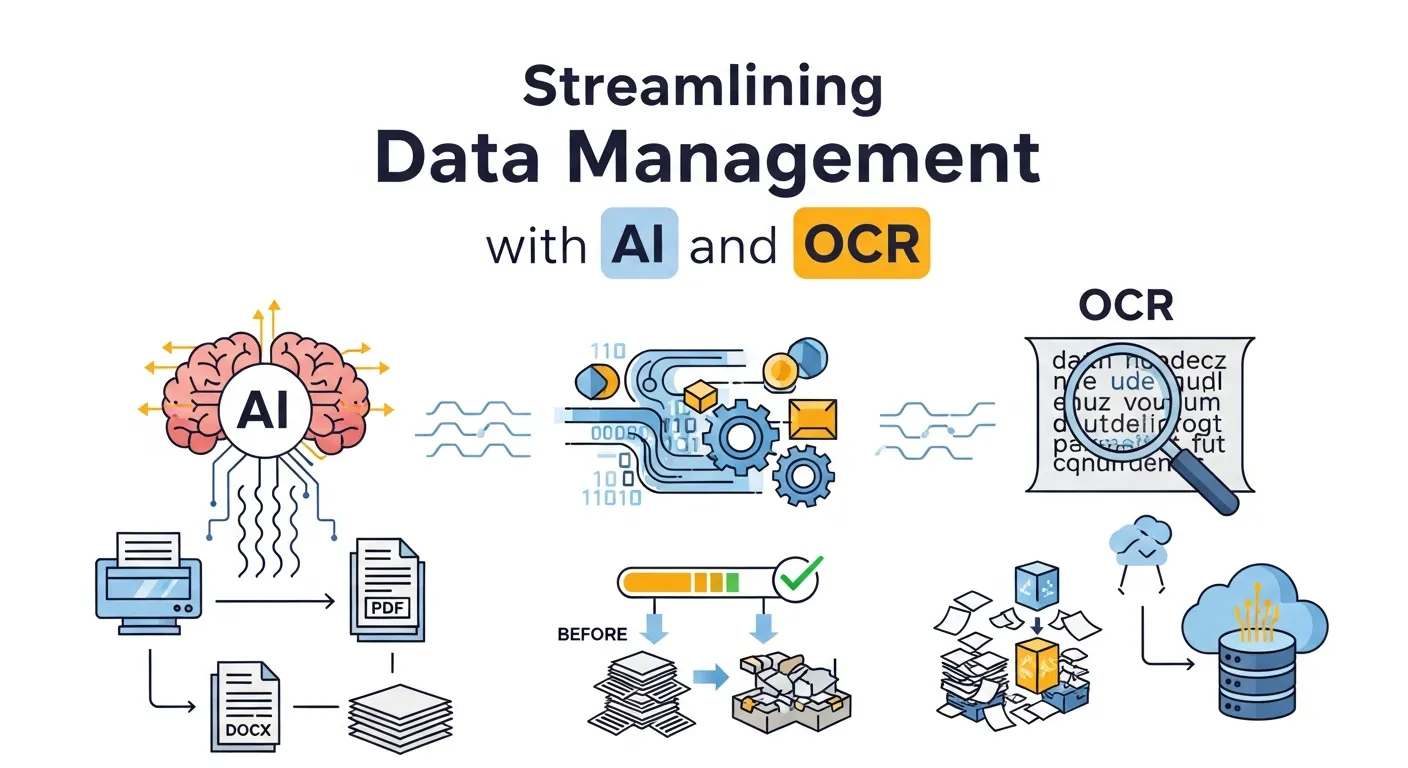
In the fast-paced world of outbound marketing, data is everything. From identifying leads to tracking engagement and measuring campaign performance, every decision depends on the accuracy and timeliness of your data. Yet, many organizations still rely on manual data entry — a process that’s slow, error-prone, and resource-draining.
This is where data-entry-automation-with-ocr-and-ai (Optical Character Recognition and Artificial Intelligence) transforms the game. By automating data capture, validation, and synchronization, businesses can finally eliminate bottlenecks and empower marketing teams to focus on what truly drives results — strategy, creativity, and customer relationships.
Why Manual Data Entry Is Holding Businesses Back
Before auto mation, marketing and sales teams often spent countless hours entering contact details, updating CRM records, or cleaning spreadsheets. While essential, these repetitive tasks introduce delays and human error that can derail campaign efficiency.
Common challenges of manual data management include:
- Duplicate or incomplete lead records.
- Delayed campaign launches due to manual uploads.
- Inaccurate analytics caused by outdated or inconsistent data.
- Reduced productivity as marketers spend time on admin work instead of growth strategy.
For outbound marketers aiming to move fast and scale, these inefficiencies create a serious drag on performance.
How AI and OCR Are Revolutionizing Data Entry
By integrating AI-powered Optical Character Recognition into your marketing workflow, even complex, unstructured, or handwritten data can be instantly digitized and organized.
Here’s how it works:
- Data Capture: OCR technology scans documents, images, forms, or business cards and converts text into editable, searchable data.
- Data Understanding: AI interprets and categorizes the extracted information — such as names, company details, contact info, or purchase history.
- Automation & Syncing: The system automatically validates and syncs this information with CRMs, email platforms, and analytics tools in real time.
Key Benefits of Automated Data Handling
Automation ensures that every data point — from a webinar registration to a lead form submission — flows seamlessly across your outbound systems.
Top Advantages:
- Instant Conversion: Scanned or handwritten data becomes usable digital information within seconds.
- Error Reduction: AI validation prevents duplication and ensures consistency across platforms.
- System Alignment: All tools — CRM, email automation, analytics — remain synchronized and reliable.
- Resource Efficiency: Frees up marketing teams from repetitive input tasks to focus on campaign strategy and creative execution.
- Data Compliance: Many AI-powered tools now include GDPR and data governance features, keeping information secure and compliant.
Manual vs. Automated Data Entry
| Task | Manual Effort | Automated with OCR + AI |
|---|---|---|
| Lead Information Entry | Hours of manual typing and spreadsheet maintenance. | Instant extraction and entry across connected systems. |
| Data Validation | Prone to human errors, typos, and inconsistencies. | Automated verification, deduplication, and error correction. |
| CRM Sync | Requires repetitive manual uploads and updates. | Seamless, real-time integration with CRMs and marketing tools. |
| Data Reporting | Delayed insights due to slow data compilation. | Instant access to clean, reliable analytics dashboards. |
Example: How Automation Simplifies Outbound Operations
Consider a B2B event marketing team that collects hundreds of attendee forms from trade shows. In a manual system, staff would spend days typing this data into spreadsheets before uploading it into the CRM — a process that risks missing leads or duplicating records.
With AI and OCR automation, every handwritten form is scanned and processed in minutes. The system extracts attendee names, email addresses, and company details, verifies accuracy, and pushes everything directly into the CRM. By the time the event ends, the outbound email sequences are already scheduled — no lag, no errors, no missed opportunities.
The result:
- Data processing time reduced by 90%.
- Lead accuracy improved by 40%.
- Outbound campaign speed increased dramatically.
Why It Matters for the Future of Outbound Marketing
Automation isn’t just about efficiency — it’s about strategic empowerment. When marketers can rely on real-time, accurate data, they can make faster decisions, craft more personalized campaigns, and measure ROI with confidence.
In an era where personalization, timing, and agility define success, data-entry-auto mation-with-ocr-and-ai provides the foundation for everything else — from automated outreach and CRM integration to predictive analytics and performance optimization.
In short: Data auto mation doesn’t just tidy your spreadsheets — it fuels your entire outbound engine.
Overcoming the Challenges of Automation in Outbound Marketing
While automation is powerful, it’s not without its challenges. Here’s how to tackle common pitfalls:
- Lack of human touch: Maintain balance by integrating conversational elements into automated emails or messages to feel authentic.
- Over-reliance on templates: Regularly refresh templates to ensure content doesn’t feel generic or repetitive.
- Data security concerns: Only use GDPR-compliant tools and regularly audit your systems to protect customer data.
Why Automation Is Essential for Your Marketing Future
Outbound will always have a place in your growth strategy, but auto mation is turning it into a far more efficient and powerful process. By adopting auto mation, businesses are not only saving time and resources but also driving better customer interactions, personalization, and ROI.
At its core, auto mation allows marketers to focus on what truly matters—fostering genuine connections and delivering value to customers.
If you’re looking to transform how your business approaches outbound , now is the time to explore automation. Start small by optimizing one process, then scale as needed.
Frequently Asked Questions (FAQ)
1. What is outbound marketing and how does it differ from inbound marketing?
Outbound marketing refers to proactive outreach — reaching out to potential customers through emails, calls, ads, and messages — rather than waiting for them to come to you. Unlike inbound marketing, which attracts leads through content and SEO, outbound focuses on direct engagement, speed, and conversion. Many successful brands combine both inbound and outbound marketing for a balanced, full-funnel approach that maximizes visibility and results.
2. How is automation changing outbound marketing strategies?
Auto mation streamlines repetitive outbound tasks like lead generation, email outreach, and follow-ups. It helps marketers segment audiences, personalize communication, and monitor performance with minimal manual work. As a result, businesses can scale faster, reduce errors, and deliver consistent messaging across channels — all while focusing on strategy and creativity instead of data entry.
3. What are the main tools used for automating outbound ?
Popular auto mation tools include HubSpot, ActiveCampaign, Salesforce Pardot, and LinkedIn Sales Navigator. These platforms handle everything from lead tracking to automated email workflows and CRM integration. The right combination of tools depends on your campaign size, budget, and marketing goals.
4. Can automation make outbound marketing more personalized?
Absolutely. Automation doesn’t mean robotic communication — in fact, it enhances personalization. Using behavioral data and AI, auto mation platforms can tailor messages based on user activity, preferences, and engagement history, making outreach feel human and timely rather than generic or intrusive.
5. How can businesses build trust through outbound marketing in e-commerce?
Trust is vital in e-commerce, especially in outbound campaigns where customers may not know your brand yet. The key is authenticity — using data to personalize offers, being transparent about pricing, and following up respectfully. Learn more about how to build trust through outbound marketing in e-commerce by focusing on honest messaging, customer testimonials, and value-driven interactions that humanize your automated campaigns.
6. What role does SMS marketing play in outbound strategies?
SMS remains one of the most direct and engaging outbound channels. With automation, businesses can schedule personalized texts for promotions, reminders, or follow-ups without manual effort. This approach, often referred to as sms marketing leveraging-direct mobile communication for business growth, ensures messages reach customers instantly — driving immediate responses and higher engagement rates.
7. How can automation improve lead nurturing in outbound marketing?
Auto mation allows marketers to create drip campaigns that guide leads through every stage of the buyer journey. By sending relevant content, reminders, and offers at optimal times, auto mation keeps prospects engaged without overwhelming them. The result is a smoother, more personalized nurturing process that improves conversion rates.
8. What are the biggest challenges of automating outbound marketing?
Some challenges include over-reliance on templates, lack of human touch, and data privacy concerns. To overcome these, marketers must balance automation with personalization, regularly refresh campaign content, and use GDPR-compliant tools. Auto mation should assist human creativity — not replace it.
9. How can data automation improve outbound performance?
Tools using AI and OCR streamline data entry, validation, and synchronization, ensuring every campaign runs on accurate, up-to-date information. This auto mation eliminates manual errors, aligns CRM systems, and provides real-time insights for optimization — making outbound marketing smarter and faster.
10. What’s the future of outbound marketing with automation?
The future lies in combining AI-driven precision with emotional intelligence. Predictive algorithms will target ideal prospects, while marketers focus on crafting authentic, empathetic messaging. As auto mation evolves, outbound marketing will become more efficient — but the human touch will always remain the most powerful differentiator.