Is Cold Calling Dead? The Modern Take on Outbound Sales

Cold calling has long been an iconic part of outbound sales strategies. However, in recent years, the question persists among sales professionals and business leaders alike: Is cold calling dead?
With the rise of digital marketing tools, changing consumer behaviors, and new sales technology, outbound sales strategies have dramatically evolved. Many companies are rethinking their approach to cold calling and integrating modern tools to make their outreach more effective.
This blog explores the status of cold calling in the modern sales landscape, highlights its challenges, and provides actionable tips for updating your outbound strategy for better results.
What is Cold Calling?
Cold calling is the process of contacting potential customers who have no prior interaction with your company or product. It often involves reaching out via phone in an attempt to initiate a sales conversation or qualify leads.
While cold calling was once the backbone of many sales teams, it now faces a more challenging environment. Audiences have become increasingly resistant to unsolicited calls in favor of more personalized and convenient sales approaches.
Is Cold Calling Dead?
Contrary to popular belief, cold calling isn’t totally “dead.” Like any sales tactic, its effectiveness depends on how it’s executed and the context in which it’s used.
Here’s the reality:
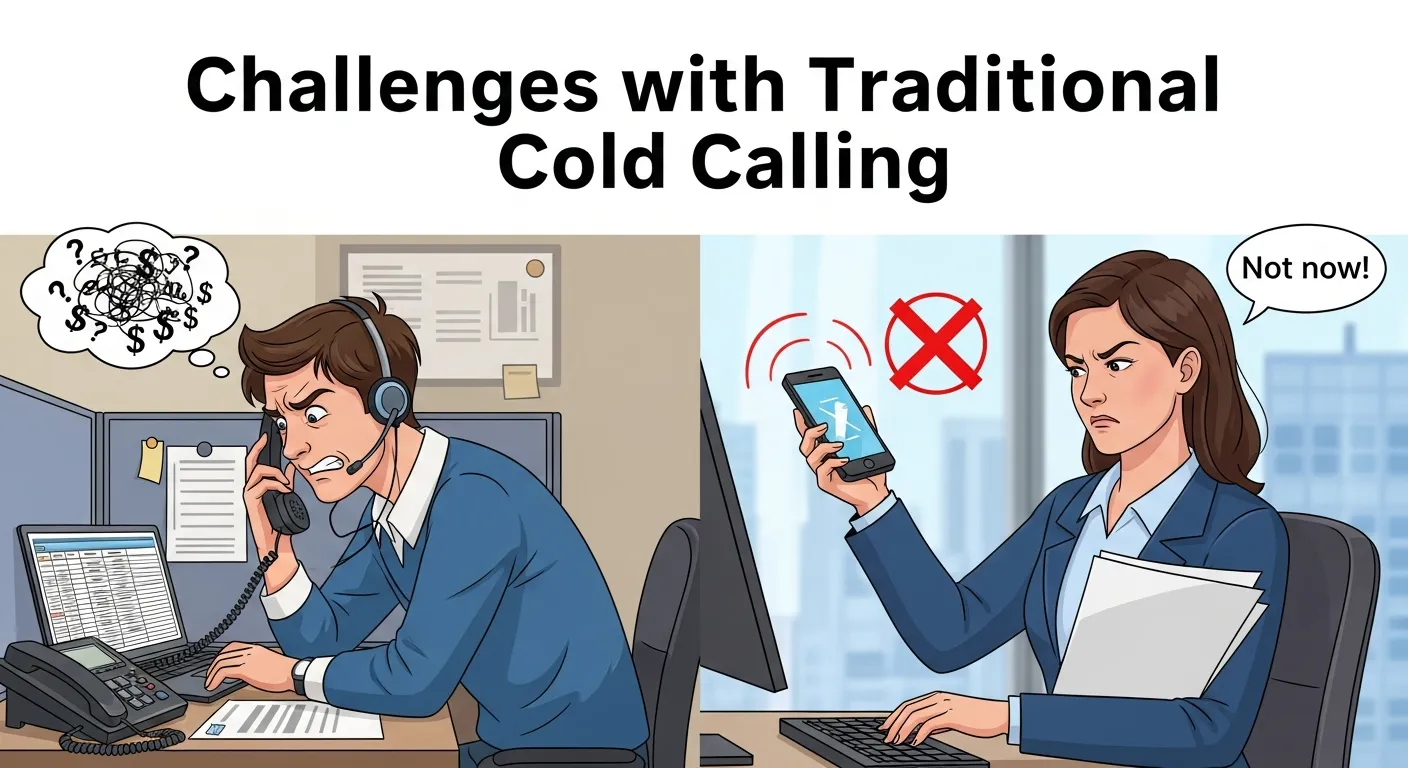
- Challenges with Traditional Cold Calling
Traditional cold calling can feel intrusive, especially in a world where buyers value convenience and personalization. Many decision-makers screen calls or ignore unknown numbers, making it difficult to connect.
Additionally, cold calls often rely on scripts that don’t align with the prospect’s unique needs, further reducing their effectiveness.
- Why Cold Calling is Still Relevant in Some Scenarios
For B2B sales, demographics like small businesses or blue-collar industries might still prefer a human touch over an email. Cold calling also works well when properly researched and targeted, turning “cold” calls into “warm” ones by addressing the receiver’s pain points.
The Modern Challenges of Cold Calling
While not dead, cold calling has lost its dominance due to several challenges:
1. Higher Resistance from Prospects
Consumers and businesses alike have developed a resistance to unsolicited calls. Almost 90% of consumers say they won’t answer phone calls from unknown numbers.
2. Privacy and Regulatory Restrictions
Data privacy laws, such as GDPR (General Data Protection Regulation) and Do Not Call (DNC) lists, have imposed strict limitations on outbound calling practices. Businesses must balance compliance with maintaining meaningful outreach.
3. Rise of Digital Communication
LinkedIn messages, personalized emails, and social media ads have become the preferred communication methods of today’s decision-makers. Digital channels often allow for more targeted and less intrusive interactions compared to random cold calls.
4. Increasing Focus on Customer-Centric Selling
Modern buyers expect personalized solutions tailored to their business needs. A one-size-fits-all cold calling pitch often falls flat, as it fails to deliver tailored solutions.
The Key to Evolving Your Outbound Strategy

If you want to modernize your sales approach, here’s how to blend elements of cold calling with newer methods:
1. Make Warm Calls Instead of Cold Calls
Rather than reaching out blindly, warm calls involve pre-qualifying leads through research or digital engagement. For example, review a prospect’s LinkedIn profile or company website to personalize your message. Tools like LinkedIn’s Sales Navigator can help identify prospects and provide insights into their roles and pain points.
2. Leverage Multichannel Outreach
Integrating cold calling with other outreach channels such as email, social media, or video messages can increase your chances of connecting meaningfully. Create a sequence where each touchpoint complements the last. For instance:
- Send a personalized email first.
- Follow up with a phone call referencing the email.
- Engage with their LinkedIn content, such as liking or commenting on posts.
3. Personalize Your Approach
Prospects are more likely to respond if the conversation feels relevant. Tailor your message based on real data, such as their job role, recent company news, or challenges common to their industry. Outbound sales platforms like Outreach.io and Apollo integrate data insights to help personalize the conversation.
4. Use Data to Inform Timing
Timing matters in sales. Use tools to identify the best times for outreach. For instance, Mondays tend to be less effective for cold calls, while midweek mornings offer higher chances of getting through. AI-based sales tools can help predict peak outreach times based on engagement analytics.
5. Utilize CRM and Automation
Pairing cold calls with technology maximizes efficiency. Use a CRM (Customer Relationship Management) tool to track conversations and automate follow-ups. CRM platforms like HubSpot or Salesforce can integrate with calling systems to streamline workflows.
Real-World Alternatives and Enhancements to Cold Calling
While cold calling has evolved, several other outbound tactics are proving to be valuable replacements or enhancements:
Account-Based Marketing (ABM)
ABM relies on focusing all your sales and marketing efforts on highly targeted accounts. It involves a lot of upfront research, ensuring calls or emails arrive as part of a larger, customized campaign.
To make the most of ABM, start by selecting high-value accounts that closely match your ideal customer profile. Align your sales and marketing teams to develop personalized messaging and outreach strategies for each account. Use insights from your research to craft content that speaks directly to the specific challenges and goals of those businesses. Leverage tools like CRM and ABM platforms to track engagement and optimize your approach over time. Consistent follow-up, thoughtful personalization, and data-driven adjustments are key ABM marketing tips that can significantly boost your success.
Social Selling
Both LinkedIn and Twitter are excellent platforms for building rapport with prospects. By engaging in online conversations weeks before making contact, you can warm up leads naturally.
Webinars and Lead Magnets
Create value upfront by hosting a webinar or providing downloadable resources in exchange for contact information. This turns cold leads into warm ones before the first call is even dialed.
AI-Powered Insights
Leverage AI to analyze your prospect’s pain points, sentiment, and recent business needs. Tools like Gong or Chorus.ai can provide insights into which outbound strategies perform best.
Combining Cold Calling with Product Marketing Strategy
Modern sales success lies in aligning cold calling with broader product marketing initiatives. In essence, cold calling becomes more powerful when treated as a common product marketing technique—a bridge that connects real customer insights with brand messaging, awareness, and market validation.
For years, cold calling was viewed purely as a sales-driven tactic. But in the modern business landscape, it’s evolving into a feedback-rich marketing tool that helps shape how products are positioned, communicated, and improved. When integrated properly, cold calling doesn’t just drive conversions—it informs the entire go-to-market strategy.
Why Cold Calling Belongs in Product Marketing
Unlike surveys, forms, or digital feedback tools, cold calls offer human interaction—the ability to hear emotion, hesitation, and enthusiasm firsthand. Every conversation provides insights that help product marketers understand what truly matters to customers.
By turning outbound calls into opportunities for data gathering and brand storytelling, companies can:
- Test market messaging in real time before major campaigns.
- Gather authentic feedback on features, pricing, and positioning.
- Identify emerging trends or pain points faster than competitors.
- Strengthen brand perception through human-to-human communication.
This approach transforms cold calling from a transactional tool into a strategic feedback loop that continuously refines product marketing efforts.
How to Integrate Cold Calling into Product Marketing
1. Gather Feedback for Product Teams
Each call is a discovery session. Encourage your sales reps to document customer frustrations, unmet needs, and recurring objections. These conversations often uncover micro-insights that surveys miss—such as usability issues, pricing confusion, or feature requests.
Example:
A tech company’s cold calls revealed that most prospects misunderstood the product’s “AI-powered automation” feature. Product marketers used this insight to simplify messaging and create a visual explainer campaign that boosted understanding and conversions.
2. Validate Positioning and Messaging in Real Time
Before launching major campaigns, use cold calling to test how prospects react to different pitches, taglines, or value propositions. This real-time validation helps marketing teams identify which messages resonate and which fall flat.
Pro Tip:
Run short-term outbound calling experiments around specific messages. Track which scripts generate the most positive responses or callbacks, then apply those learnings across your broader campaigns.
3. Refine Target Personas
Cold calls reveal who your real buyers are—not just who you think they are. Pay attention to which job titles, company sizes, or industries respond best to certain value propositions. Over time, these insights help refine your ideal customer profile (ICP) and guide your ad targeting, content strategy, and outbound efforts.
Example:
A SaaS brand discovered through cold outreach that mid-level IT managers—not executives—were the real decision influencers. This shifted their marketing content toward more technical messaging, improving engagement rates by 35%.
Turning Conversations into Marketing Intelligence
| Product Marketing Aspect | Role of Cold Calling | Measurable Outcome |
|---|---|---|
| Messaging Validation | Test how prospects respond to new features or offers | Refined communication strategy and stronger brand resonance |
| Customer Feedback | Capture direct objections, needs, and expectations | Improved product-market alignment and faster iteration |
| Persona Development | Discover unexpected audience segments or buyer influencers | More accurate targeting and segmentation |
| Competitive Positioning | Identify which competitors are being mentioned most | Stronger differentiation and updated value propositions |
| Feature Prioritization | Record feature requests or “wish list” mentions | Smarter product roadmap and prioritization |
By treating cold calls as live market research, sales teams become an extension of the product marketing department—helping to gather data that informs positioning, messaging, and product evolution.
Creating a Unified Sales–Marketing Feedback Loop
To make this integration sustainable, establish a structured collaboration process between marketing and sales:
-
Create Shared Dashboards:
Use CRM integrations (like HubSpot or Salesforce) to track feedback trends and objection patterns. -
Hold Monthly Insight Reviews:
Let product marketers join sales debriefs to interpret call data and align upcoming campaigns with customer sentiment. -
Develop Adaptive Scripts:
Adjust cold calling scripts regularly based on what resonates most with prospects, ensuring your outreach evolves with the market. -
Turn Insights into Content:
Use recurring questions or objections as inspiration for blog posts, webinars, or FAQs—creating content that answers real buyer concerns.
Why This Alignment Works
When sales outreach and product marketing operate in sync, your brand messaging becomes sharper, more authentic, and customer-driven. Cold calling no longer feels like a hard sell—it becomes a value-driven conversation that reflects genuine understanding of the customer’s world.
Key Benefits:
- Faster go-to-market adjustments
- Higher message resonance and trust
- Stronger alignment between customer perception and brand promise
- Continuous product refinement based on real-world dialogue
Ultimately, integrating cold calling into product marketing is about closing the loop between communication and innovation. Every call becomes not just an opportunity to sell—but an opportunity to learn, adapt, and grow.
Tracking Product-Market Fit the Right Way Through Cold Calls

Every sales call is a data point — a window into your customer’s needs, perceptions, and buying motivations. When analyzed effectively, these conversations help in tracking product market fit the right way, offering real-time evidence of how well your product aligns with market expectations.
Unlike online surveys or passive data collection methods, cold calling provides unfiltered, direct feedback from prospects. The immediacy of conversation allows teams to uncover objections, identify unmet needs, and validate whether the product truly resonates with the target market. In essence, cold calls bridge the gap between product assumptions and real-world demand.
Why Cold Calling Helps Track Market Fit
1. Real-Time Customer Objections and Adoption Barriers
Cold calling offers a direct line to the prospect’s thoughts. Every hesitation, objection, or question during the call provides clues about potential roadblocks in your product’s adoption.
For instance, if multiple prospects express confusion about your pricing model or hesitate due to a missing feature, those patterns reveal critical gaps that product teams can address early.
Example:
A SaaS startup discovered through cold calls that many potential users misunderstood their pricing tiers. By simplifying plan names and descriptions, they increased trial conversions by 28% — a clear indicator of improved product-market alignment.
2. Uncovering Pain Points Beyond Analytics
While web analytics and CRM data show what users do, cold calls reveal why they behave that way. Talking directly with prospects allows sales reps to dig deeper into motivations, frustrations, and priorities that might never appear in quantitative data.
This qualitative insight helps marketers craft messages and campaigns that resonate emotionally, not just logically.
Tip:
Encourage sales reps to categorize and tag recurring pain points in your CRM — this transforms anecdotal feedback into measurable insight streams.
3. Validating Pricing, Features, and Market Readiness
Cold calling is one of the fastest ways to test product hypotheses. Whether it’s a new feature, an updated pricing structure, or a repositioned offer, sales teams can gauge reactions immediately.
If a feature sparks curiosity or confusion, that feedback can guide product refinement before a full-scale rollout. Likewise, strong interest signals that your product is market-ready.
Pro Insight:
Top-performing teams record and transcribe sales calls, then use AI-powered tools (like Gong or Chorus.ai) to detect sentiment, emotional triggers, and keyword trends. These insights fuel product decisions and improve go-to-market strategies.
Translating Cold Call Data into Actionable Insights
| Insight Type | Source from Cold Calls | Application |
|---|---|---|
| Objection Patterns | Recorded or noted customer responses | Improve product features and messaging |
| Market Readiness | Engagement levels, response rates, and conversation tone | Guide launch timing and go-to-market planning |
| Buyer Sentiment | Emotional reactions and enthusiasm indicators | Refine sales scripts and brand positioning |
| Competitive Awareness | Mentions of rival products or alternatives | Adjust value proposition and differentiation |
| Feature Requests | Repeated user suggestions during calls | Prioritize development roadmap |
By documenting these insights systematically, companies turn subjective call notes into quantifiable intelligence that sharpens both sales and product strategies.
From Calls to Continuous Improvement
To make the most of cold calling as a data collection tool, organizations should establish structured feedback loops between sales, marketing, and product teams.
Here’s how:
- Standardize Call Reporting: Create a template for reps to record common themes, objections, and feature mentions.
- Run Monthly Insight Reviews: Analyze call trends to detect shifts in customer needs or sentiment.
- Integrate Feedback into Roadmaps: Feed findings directly into your product development and marketing planning cycles.
- Leverage AI for Trend Detection: Use conversation intelligence tools to track which objections decline after new updates—an early sign of improved product-market fit.
Why This Matters
When sales conversations guide decision-making, your business moves beyond assumptions. Cold calls become a listening channel, not just a sales tactic. They allow you to spot friction points early, iterate intelligently, and scale with confidence.
Teams that master tracking product-market-fit-the-right-way through cold calls gain a powerful edge:
- Faster adaptation to market feedback
- More accurate messaging and positioning
- Stronger alignment between customer needs and product development
In today’s competitive environment, the companies that listen hardest — and act fastest — win. And that listening often starts with something as simple, yet powerful, as a well-executed cold call.
Outbound Product Marketing and the Evolution of Cold Calling

To fully understand the future of cold calling, it’s worth exploring what is outbound product marketing and how it complements today’s dynamic sales environment.
Outbound product marketing is all about proactively engaging your audience through strategic communication, personalized outreach, and campaign-driven visibility. Unlike inbound marketing, which attracts leads organically, outbound product marketing takes initiative — reaching prospects first with carefully crafted messaging that addresses their pain points and aligns with their business goals.
This proactive approach perfectly complements modern cold calling, transforming it from a one-dimensional sales activity into a data-driven, customer-centric engagement strategy. When sales and marketing teams align through outbound product marketing principles, cold calls no longer feel random or intrusive—they become extensions of meaningful conversations already started through other channels.
How Outbound Product Marketing Enhances Cold Calling
1. Personalization at Scale
Modern buyers expect relevance. Outbound product marketing provides the data foundation to deliver it.
By leveraging CRM data, customer personas, and behavioral analytics, sales teams can craft personalized cold calling scripts that speak directly to the customer’s context—whether it’s referencing their recent product usage, company announcement, or industry challenge.
Example:
Instead of starting with a generic pitch, a rep might open with,
“I saw your company recently expanded into the European market. Many of our clients in that space faced similar challenges with cross-border logistics—how are you currently managing that?”
2. Campaign Synchronization
A key advantage of integrating outbound product marketing with cold calling is message consistency across all touchpoints.
When your marketing campaigns and sales calls share the same messaging pillars—value propositions, offers, and customer stories—your brand builds stronger recall and credibility.
- Before the Call: The prospect sees your brand through ads, emails, or webinars.
- During the Call: The salesperson references the same message or campaign theme.
- After the Call: Follow-up emails and social engagement reinforce the same promise.
This synchronized sequence ensures every prospect interaction feels cohesive, professional, and purpose-driven.
3. Follow-up Synergy
Cold calls are just the start of a conversation. What happens next defines success.
Outbound product marketing enables structured, automated follow-ups that nurture interest and keep your brand top-of-mind.
For example:
- After a cold call, marketing automation tools can trigger personalized email sequences based on the conversation outcome.
- Prospects who requested more information might receive a whitepaper or case study relevant to their industry.
- Those not ready to buy can be added to a long-term nurture campaign, ensuring consistent engagement over time.
This creates a seamless sales-to-marketing handoff, where every call feeds into a broader engagement ecosystem.
Integration in Action
| Outbound Strategy | Cold Calling Integration | Benefit |
|---|---|---|
| Targeted Campaigns | Call prospects reached via ads or webinars | Higher conversion rates through pre-engaged audiences |
| Event Follow-Ups | Call attendees post-event to discuss takeaways or offers | Reinforced interest and deeper connection |
| Account Outreach | Combine calls with ABM efforts for top-tier accounts | Enhanced personalization and relationship depth |
| Content Reinforcement | Reference recent blog posts or product updates during calls | Builds authority and trust |
| Post-Demo Calls | Follow up after product demos to gather feedback or clarify concerns | Accelerates decision-making |
Why This Integration Works
Combining outbound product marketing with cold calling creates a balanced approach that unites brand storytelling with human interaction. It bridges the gap between awareness and conversion by ensuring every cold call feels like a natural continuation of the customer journey.
This synergy delivers three key outcomes:
- Higher Engagement: Prospects recognize your brand from other touchpoints, reducing call resistance.
- Improved Conversion Rates: Personalized, context-rich conversations resonate more deeply.
- Stronger Brand Trust: Consistent, value-driven communication builds long-term credibility.
The Future of Cold Calling in a Product-Driven World
As buyer expectations continue to evolve, cold calling will rely increasingly on data, automation, and integrated marketing insights. Outbound product marketing provides the structure and intelligence needed to keep calls strategic rather than spontaneous.
In the near future:
- AI tools will recommend the best call timing based on customer behavior data.
- CRM integrations will auto-suggest talking points pulled from the prospect’s engagement history.
- Marketing analytics will inform which messages convert best, allowing sales teams to adjust in real time.
Ultimately, the evolution of cold calling isn’t about abandoning the phone—it’s about enhancing it with context, coordination, and creativity. When outbound product marketing and sales efforts move in sync, your outreach becomes not just effective—but irresistible.
Building Long-Term Customer Relationships
The ultimate goal of outbound sales is to build meaningful, lasting relationships with customers. This is why your approach should go beyond just securing the first conversation.
After connecting with a prospect:
- Schedule personalized demos or consultations.
- Deliver valuable follow-up content, such as whitepapers tailored to their pain points.
- Maintain consistent communication through helpful, non-intrusive updates or newsletters.
Final Thoughts: Cold Calling Isn’t Dead, It’s Evolving
Cold calling in its traditional sense might feel outdated, but it’s far from irrelevant. When combined with modern tactics like personalization, multichannel outreach, and AI tools, cold calling can still deliver strong results. The key is adapting your strategy to align with the expectations of today’s savvy buyers.
For businesses looking to stay ahead in outbound sales, integrating new methods while refining old ones is essential.
Looking for sales tools to help you combine cold calling with data-driven insights? Discover what’s possible when you upgrade your outbound strategy today.
Frequently Asked Questions (FAQ) on Cold Calling and Outbound Marketing
1. Is Cold Calling Still Effective in 2026?
Yes — but only when it evolves. Cold calling today isn’t about random dialing; it’s about personalized, data-driven outreach. With tools like LinkedIn Sales Navigator, CRM integrations, and AI-based prospecting, sales reps can target specific personas with precision. Modern cold calling focuses on solving problems, not selling products. When combined with tailored messaging and timing analytics, it remains one of the most human and impactful ways to build relationships in outbound marketing.
2. How Does Cold Calling Fit into a Modern Outbound Strategy?
Cold calling is a cornerstone of outbound strategy because it creates direct human connection. It’s often used alongside email marketing, social outreach, and account-based marketing (ABM). In modern workflows, reps first engage prospects digitally (for example, via LinkedIn), then follow up with a warm call referencing that engagement. This multichannel approach builds familiarity and trust, ensuring the call feels relevant and valuable.
3. How Does Cold Calling Help Product Marketing Teams?
Cold calling gives product marketing teams real-time customer insights that surveys or analytics can’t provide. It reveals:
- What messaging resonates
- Which features are most desired
- How prospects perceive pricing or competition
These insights allow marketing teams to refine positioning, improve product-market fit, and guide content strategy. Essentially, every call becomes a live feedback loop that informs smarter campaigns and product decisions.
4. What’s the Difference Between Inbound and Outbound Product Marketing?
The main difference lies in approach and timing.
- Inbound product marketing attracts leads through content, SEO, and organic engagement.
- Outbound product marketing proactively reaches out to prospects through direct communication like emails, ads, or cold calls.
When comparing outbound vs inbound product marketing which works best at each stage, outbound tends to dominate in awareness and early engagement, while inbound shines during nurturing and conversion. The best strategy often depends on where your target audience is in their buyer journey and how quickly you need to generate results.
5. Can You Use Both Inbound and Outbound Marketing Together?
Absolutely — in fact, the most successful companies do. Inbound and outbound efforts complement each other when properly synchronized.
For instance, inbound builds brand credibility and long-term trust, while outbound accelerates lead generation by initiating direct contact. This hybrid approach allows teams to reach more qualified leads faster while maintaining authenticity and consistency.
So, if you’ve ever wondered can you use both inbound and outbound marketing, the answer is yes — and you should, to maximize your overall marketing ROI.
6. How Do You Personalize Cold Calls for Better Results?
Personalization begins long before you pick up the phone. Research the prospect’s business, challenges, and recent activities using tools like LinkedIn, Crunchbase, or industry news. Reference these findings during the call to show genuine understanding.
Example:
“I noticed your team recently expanded operations in Asia — many of our clients faced supply chain issues during that phase. Has your team encountered similar challenges?”
This approach positions you as a problem solver, not a salesperson.
7. How Does AI Improve Cold Calling and Outbound Campaigns?
AI is transforming how sales teams plan, execute, and optimize cold calls. Conversation intelligence tools like Gong and Chorus.ai analyze tone, sentiment, and keyword frequency to highlight what works best. Predictive analytics can even recommend the right time and day to call, based on engagement patterns. By combining AI insights with human empathy, businesses can achieve the perfect balance of scale and personalization in their outbound sales.
8. What Are Common Mistakes to Avoid in Cold Calling?
Some of the biggest mistakes include:
- Using generic, scripted pitches that lack personalization
- Calling without researching the prospect’s background
- Focusing on the product instead of the problem
- Ignoring follow-up sequences
- Failing to record or analyze call outcomes
Avoiding these pitfalls ensures your outreach remains strategic and customer-centric.
9. How Can Cold Calling and Product Marketing Work Hand in Hand?
Cold calling supports product marketing initiatives by validating real-world messaging, uncovering objections, and identifying feature gaps. When sales and marketing collaborate:
- Marketing supplies insights and talking points to sales.
- Sales returns qualitative feedback from conversations.
This creates a continuous improvement loop that sharpens both outreach and positioning. The collaboration ensures that what’s being promoted aligns perfectly with what customers actually need.
10. Inbound vs Outbound Marketing — Which Strategy Is Right for Your Business?
The ideal approach depends on your business goals, sales cycle, and target audience.
If you aim for quick visibility and immediate lead generation, outbound marketing (like cold calling, direct emails, or paid ads) delivers faster results. On the other hand, inbound marketing (like content marketing, SEO, and social engagement) builds credibility and trust over time.
Ultimately, the question of inbound vs outbound marketing which strategy is right for your business isn’t about choosing one—it’s about knowing when and how to use each. Many successful brands use inbound to attract leads and outbound to convert them.
11. What Metrics Should You Track to Measure Cold Calling Success?
Key performance indicators (KPIs) include:
- Connection Rate: Percentage of calls that reach a live prospect.
- Response Rate: How many prospects show interest or agree to follow-ups.
- Conversion Rate: How many calls turn into qualified opportunities or demos.
- Call Duration and Sentiment: Quality indicators that reflect engagement level.
- Follow-Up Success: Conversion from subsequent calls or emails.
Analyzing these metrics over time reveals what’s working — and helps refine scripts, timing, and targeting for better ROI.
12. How Does Cold Calling Enhance Customer Retention?
Cold calling isn’t just for new leads—it’s also powerful for customer success. Reaching out post-sale to check satisfaction, share updates, or offer support strengthens relationships and builds loyalty. These proactive interactions help prevent churn and uncover opportunities for upselling or referrals.
When sales teams treat existing customers with the same attention as prospects, they transform cold calls into relationship calls that drive long-term value.