Account-Based Marketing: The Evolution of Targeted Outbound Strategies

The business landscape continues to shift dramatically, particularly in how organizations approach their marketing efforts. Among these evolutions, account-based marketing (ABM) stands out as perhaps the most significant transformation in outbound strategy development of the past decade.
Gone are the days when casting wide nets through generic campaigns represented the pinnacle of marketing strategy. Today’s most successful B2B companies recognize that precision matters more than volume, and personalization delivers greater returns than generalization.
The Fundamental Shift
Account-based marketing essentially inverts the traditional marketing funnel. Rather than generating numerous leads and gradually narrowing them down, ABM begins with identifying specific high-value accounts and crafting customized approaches for each. This targeted strategy represents a return to relationship-focused business principles, albeit powered by modern technology and data analysis.
The approach makes intuitive sense. When resources are directed toward prospects with the highest potential value, organizations naturally see improved conversion rates and stronger ROI. What’s changed is our capacity to identify these prospects with unprecedented accuracy and engage them through highly personalized messaging across multiple channels.
Technology as the Enabler

The rise of ABM correlates directly with technological advancement. Early practitioners of account-targeting strategies faced significant limitations in identifying ideal prospects, understanding their needs, and delivering consistent messaging across touchpoints.
Today’s marketing technology results offer sophisticated tools that transform how teams execute ABM. Data aggregation platforms, intent signal monitoring, and AI-driven insights now allow marketers to identify accounts showing genuine buying signals before competitors even recognize the opportunity.
CRM integration with marketing automation platforms enables smooth coordination between marketing and sales teams—essential for ABM success. When both departments work from the same dataset and toward the same objectives, the customer experience becomes seamless and more effective.
Personalization at Scale
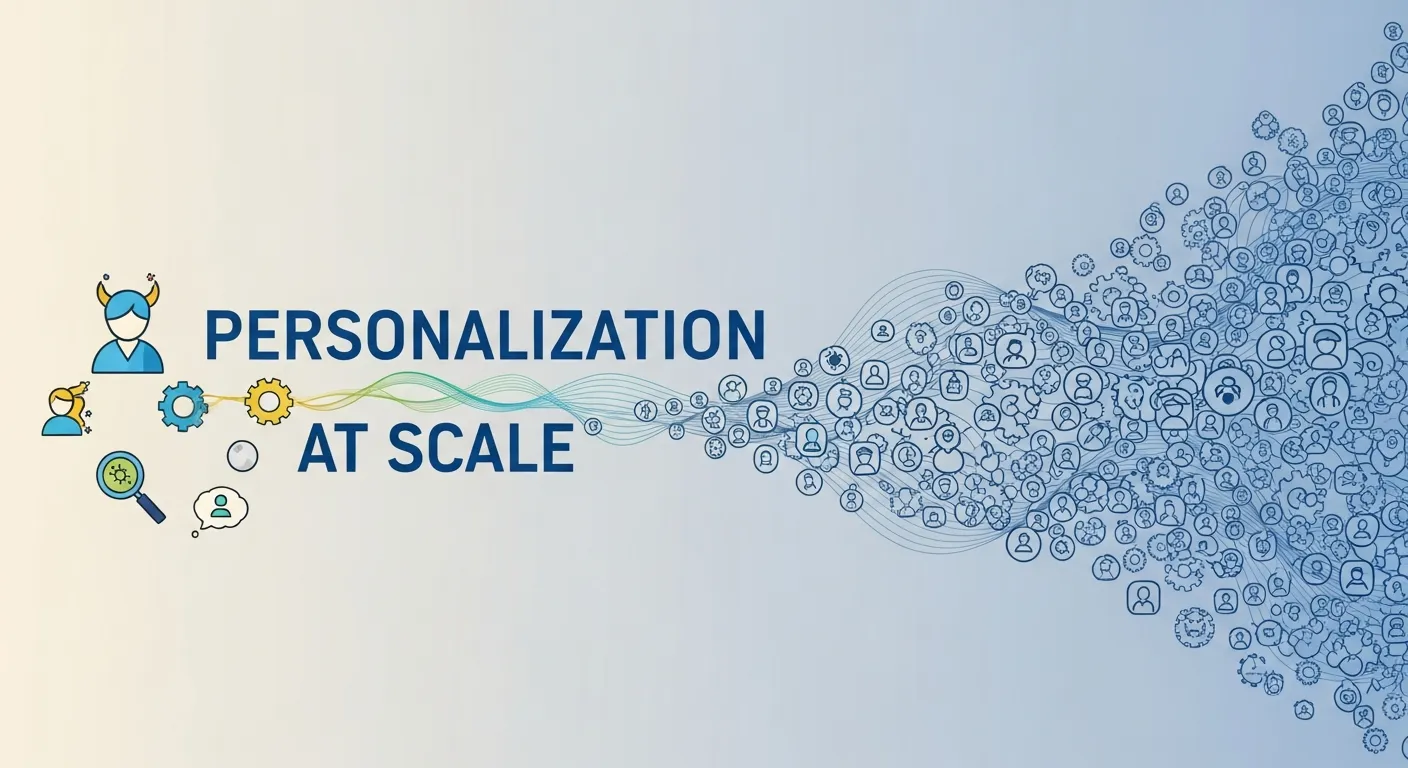
One of the most transformative shifts in Account-Based Marketing (ABM) is the newfound ability to deliver personalization at scale—combining individual relevance with operational efficiency. In traditional marketing, personalization often came at a steep cost: it required significant time, manual effort, and design resources to tailor content for each prospect. Today, ABM technology redefines this balance, allowing marketers to scale personalized experiences without compromising quality or authenticity.
The Power of Scalable Personalization
Modern Account-Based Marketing platforms use automation, AI, and real-time data to dynamically shape content for each account. These tools analyze firmographic data, intent signals, and behavioral patterns to deliver messaging that aligns precisely with an organization’s challenges, goals, and industry nuances. The result? Every interaction feels one-to-one—even when you’re engaging hundreds of accounts simultaneously.
How ABM Delivers Personalization at Scale
- Dynamic Content Platforms: ABM tools automatically tailor landing pages, ads, and email sequences to reflect a company’s industry, size, and current initiatives.
- AI-Driven Insights: Predictive analytics interpret buying intent, enabling marketing teams to send the right message at the right time.
- Automated Personalization: Intelligent workflows ensure that each decision-maker within an account receives content matching their specific role and stage in the buying process.
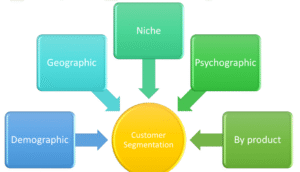
- Data-Driven Segmentation: Advanced segmentation allows marketers to cluster similar accounts for semi-customized campaigns that retain a sense of individual relevance.
Example of Scalable ABM Personalization
Imagine a campaign targeting enterprise tech firms. Instead of manually building individual materials, your Account-Based Marketing system could automatically:
- Display customized landing pages showing case studies relevant to that company’s technology stack.
- Send automated yet personalized emails addressing key industry pain points.
- Serve targeted ads featuring testimonials from similar high-value clients.
The prospect perceives each message as uniquely tailored—while your team operates with streamlined efficiency and data-backed precision.
Benefits of Personalization in ABM
| Benefit | Impact on Performance |
|---|---|
| Higher Engagement Rates | Personalized outreach earns more clicks, responses, and meeting requests. |
| Stronger Buyer Relationships | Customized experiences demonstrate understanding and empathy. |
| Improved Conversion Efficiency | Precise targeting reduces wasted effort on low-fit accounts. |
| Scalable Operations | Automation allows consistent personalization across hundreds of accounts. |
Ultimately, Account-Based Marketing enables brands to achieve the long-sought marketing equilibrium: massive reach with meaningful relevance. By merging data, creativity, and technology, businesses can now speak directly to the needs of each account—fueling stronger engagement and measurable growth without expanding operational strain.
Sales and Marketing Alignment
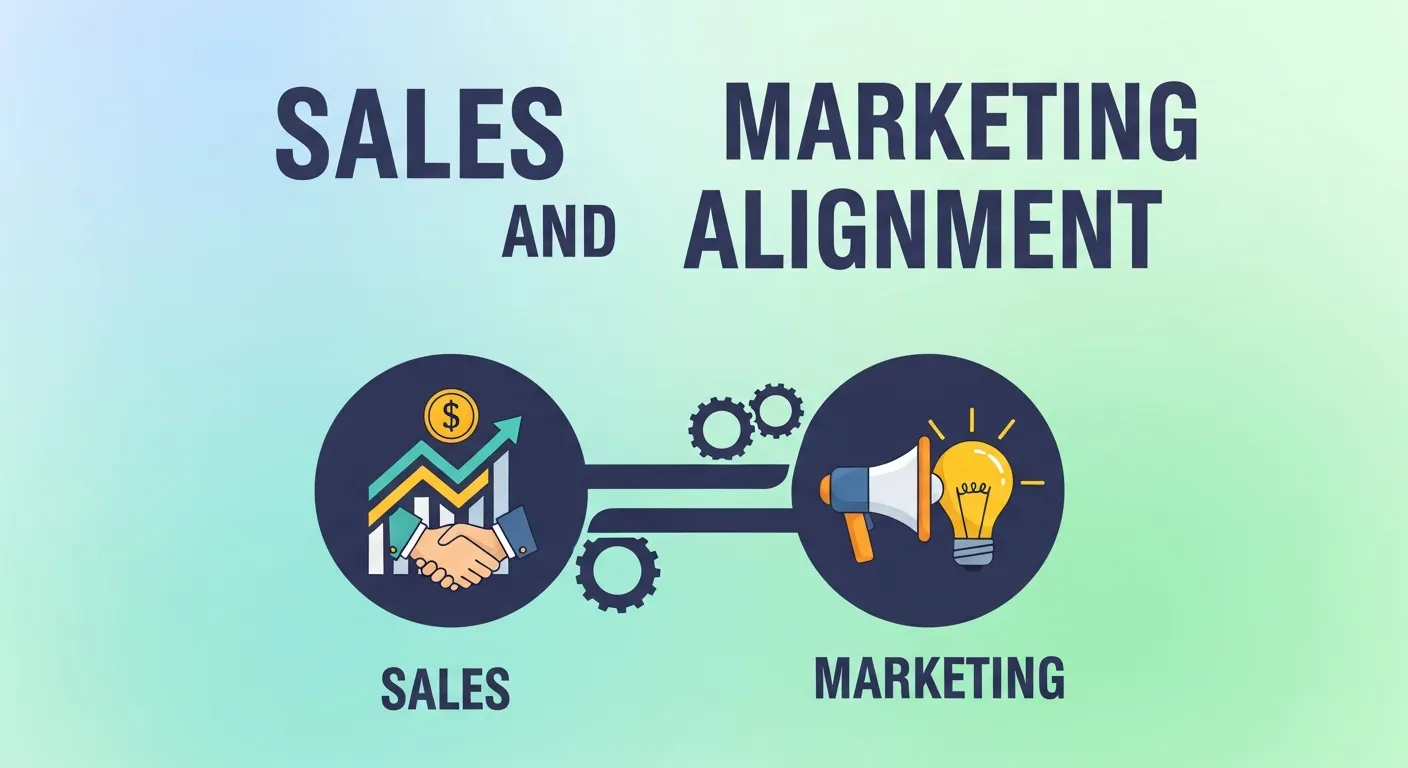
One of the most profound impacts of Account-Based Marketing (ABM) lies in how it reshapes the relationship between sales and marketing teams. Traditionally, these departments have operated as separate entities—marketing generates leads, and sales closes them. However, in the ABM framework, this division no longer works. Success depends on a unified, collaborative approach focused on engaging and converting high-value accounts together.
The New Collaborative Model
In an effective Account-Based Marketing program, both teams share ownership of the same objectives, data, and outcomes. Instead of passing leads down a linear funnel, they work hand-in-hand throughout the entire buying journey—co-developing strategies, aligning messaging, and tracking account engagement in real time.
Core Principles of Sales-Marketing Alignment in ABM:
- Shared Goals and KPIs: Both teams focus on account-specific success metrics such as engagement rate, pipeline velocity, and deal expansion.
- Unified Messaging: Consistency in tone, timing, and content ensures prospects receive a cohesive experience from first touch to conversion.
- Collaborative Planning: Sales provides insight into account needs and decision-maker dynamics, while marketing tailors campaigns to support those insights.
- Real-Time Feedback Loops: Continuous communication allows teams to refine outreach strategies based on live account behavior.
Benefits of Alignment in Account-Based Marketing
| Alignment Area | Key Benefit |
|---|---|
| Shared Accountability | Encourages collaboration and transparency between departments |
| Data Consistency | Eliminates duplicated efforts and creates a unified customer view |
| Improved Conversion Rates | Joint planning leads to more relevant and timely engagement |
| Revenue Efficiency | Shared data and insights shorten the sales cycle |
This deeper partnership transforms how organizations operate. Marketing becomes more strategic and revenue-oriented, while sales gains richer insights to close deals faster. The result is a seamlessly integrated system that drives long-term growth and stronger customer relationships—hallmarks of mature Account-Based Marketing execution.
Measuring What Matters

In the data-driven era of Account-Based Marketing (ABM), measurement is not about counting leads—it’s about understanding engagement, influence, and impact at the account level. Traditional metrics like website traffic or open rates tell only part of the story. ABM redefines success by focusing on how effectively marketing activities contribute to relationship building and revenue outcomes within specific target accounts.
The Shift to Account-Centric Measurement
Modern Account-Based Marketing programs employ a metrics framework built on quality over quantity. The goal is to measure how deeply and effectively your campaigns engage key accounts, how aligned they are with the buying committee, and how those interactions influence revenue.
Key ABM Measurement Dimensions:
- Account Engagement: Tracks interactions across email, content, webinars, and events to determine which accounts are most active.
- Pipeline Influence: Measures the direct and indirect role of marketing efforts in generating or accelerating opportunities.
- Revenue Contribution: Links ABM campaigns to closed deals and overall ROI.
- Buying Committee Coverage: Evaluates engagement across multiple stakeholders within the same target account.
- Account Progression: Assesses how accounts move through the buying journey over time.
Metrics for Account-Based Marketing Success
| Metric | Description | Why It Matters |
|---|---|---|
| Engagement Score | Weighted score of all interactions across channels | Reflects depth of relationship building |
| Pipeline Velocity | Speed at which targeted accounts progress through sales stages | Indicates efficiency and alignment |
| Influenced Revenue | Portion of revenue tied to ABM efforts | Demonstrates true ROI |
| Decision-Maker Reach | % of stakeholders engaged within an account | Shows campaign penetration |
| Customer Expansion | Growth in contract value or upsells from ABM accounts | Reveals long-term impact |
By focusing on these account-level indicators, organizations gain a clearer view of marketing’s strategic contribution to revenue. This allows leadership teams to make more informed investment decisions and continuously refine targeting precision.
Ultimately, measurement in Account-Based Marketing is not just about proving value—it’s about enhancing it. When teams analyze engagement holistically, they uncover which efforts build the strongest relationships and which need improvement, fueling a cycle of smarter, more effective outreach. Explore detailed frameworks for implementing data-driven measurement strategies in your Account-Based Marketing initiatives.
Leveraging ABM for Brand Promotion
Account-based marketing (ABM) goes far beyond simple lead generation—it’s an essential strategy for enhancing brand visibility and reputation within high-value markets. By focusing on the right accounts rather than broad audiences, companies can cultivate brand perception as strategic, insightful, and customer-centric.
ABM’s power lies in precision storytelling—aligning your brand narrative to each account’s specific pain points, industry challenges, and business aspirations. This personalized attention not only boosts brand recognition but also helps position your company as a trusted advisor rather than just another vendor.
Key Approaches for ABM Brand Promotion
- Tailored content campaigns: Create whitepapers, case studies, or video stories that highlight success within a prospect’s vertical.
- Customized events: Host executive dinners, webinars, or workshops that speak directly to account priorities.
- Social engagement: Share targeted success stories on LinkedIn or X, tagging accounts to drive personalized visibility.
- Collaborative initiatives: Partner with top accounts on joint reports, co-branded content, or thought leadership features.
Benefits of ABM in Brand Promotion
| Benefit | Description |
|---|---|
| Enhanced awareness | High-value accounts view your brand as a reliable, strategic partner |
| Increased credibility | Personalized campaigns demonstrate expertise and authenticity |
| Stronger engagement | Deep, focused outreach fosters stronger, long-term relationships |
| Better retention | Sustained trust encourages customer loyalty and advocacy |
When executed properly, ABM transforms branding from a passive exercise into a precision-driven engagement strategy. It ensures every message, event, or piece of content reinforces brand authority with those who matter most.
Learn more about building your ABM-driven brand promotion strategy here: account-based marketing your brand promotion strategy
Measuring ABM Success Effectively
To achieve sustained ABM success, measurement and optimization must be at the program’s core. Traditional metrics like clicks and impressions are no longer enough—modern ABM requires account-level visibility into engagement, influence, and revenue outcomes.
By focusing on metrics that truly reflect depth and quality of interaction, marketers can connect their initiatives directly to business growth. The goal is not to generate thousands of leads but to influence and convert the right accounts efficiently.
Key Metrics to Track
- Account engagement scores: Measure multi-channel activity—email opens, ad interactions, webinar participation, and content downloads—to gauge interest.
- Pipeline progression: Track how target accounts move through the funnel, identifying which tactics drive conversions.
- Revenue impact: Quantify the contribution of ABM accounts to closed deals and long-term revenue.
- Cross-team alignment: Evaluate the frequency and quality of communication between marketing and sales teams.
- Program efficiency: Analyze cost-per-engaged-account to understand ROI and resource optimization.
Example Table: ABM Success Metrics
| Metric | Measurement Approach | Why It Matters |
|---|---|---|
| Engagement | Track interactions across channels and touchpoints | Reveals which accounts are most active and interested |
| Pipeline Growth | Monitor deals sourced and influenced by ABM campaigns | Demonstrates real business impact |
| Sales Alignment | Review joint planning sessions and shared dashboards | Ensures both teams pursue the same targets |
| Content Effectiveness | Assess which materials generate engagement | Guides the refinement of future assets |
| ROI per Account | Compare revenue to marketing investment | Validates ABM’s financial contribution |
Beyond tracking performance, organizations should use this data to refine personalization, reallocate budget to the most responsive accounts, and continuously enhance campaign precision.
Discover advanced techniques for measuring ABM effectiveness here: how to measure account-based marketing success.
Integrating ABM into Overall Marketing Strategy
For account-based marketing (ABM) to reach its full potential, it must operate as a core component of your overall marketing ecosystem, not a separate initiative. Integrating ABM across sales, content, and data operations ensures every touchpoint—from the first ad impression to post-sale engagement—contributes to a unified customer experience.
This alignment helps businesses move from isolated campaigns to holistic growth strategies, where every department understands and supports account-specific goals. When ABM is properly woven into broader marketing efforts, organizations achieve stronger consistency, deeper personalization, and measurable business impact.
Steps to Effective ABM Integration
- Align Goals and KPIs: Create shared objectives between marketing and sales to ensure collaboration around the same high-value accounts. Unified performance metrics—such as account engagement, opportunity velocity, and deal value—keep both teams focused.
- Map the Customer Journey: Identify all touchpoints from awareness to decision-making. This helps align inbound content, outbound messaging, and sales outreach for a smoother buyer experience.
- Leverage Technology and Data: Use CRM, marketing automation platforms, and predictive analytics to streamline workflows. Integrated tools provide real-time insights into buyer intent, behavior, and engagement patterns.
- Iterate and Optimize: Continuously review campaign performance and adjust based on insights. A feedback loop between teams ensures ongoing refinement and improvement.
- Encourage Cross-Functional Collaboration: Involve product, customer success, and operations teams to enrich ABM efforts and ensure messaging consistency across all channels.
Integration Benefits
| Integration Area | Outcome |
|---|---|
| Marketing & Sales | Strengthened collaboration, shared data, and aligned objectives |
| Inbound & Outbound | Balanced engagement strategies that nurture and convert high-value accounts |
| Content & Messaging | Consistent narratives tailored for each account segment |
| Data & Analytics | Better targeting, accurate forecasting, and deeper customer insights |
| Technology Stack | Seamless coordination between CRM, automation, and analytics platforms |
By merging ABM with inbound marketing and other strategic functions, businesses create a closed-loop system where insights from one area enhance performance across the board. This approach transforms ABM from a niche strategy into a sustainable growth engine that drives measurable ROI and stronger customer relationships.
Explore practical strategies for integrating ABM into your full marketing framework here: account-based marketing strategy
Looking Forward
As account-based marketing continues to evolve, several trends appear poised to shape its next iteration. AI and machine learning will further enhance our ability to identify ideal target accounts and predict their needs. Intent data will become increasingly granular, allowing for intervention at precisely the right moment in the buying journey.
Perhaps most significantly, the lines between inbound and outbound strategies will continue to blur. Sophisticated organizations already recognize that these approaches complement rather than compete with each other. The most effective programs leverage the strengths of both—using inbound methods to build awareness and credibility while applying outbound approaches to accelerate engagement with high-value targets.
Account-based marketing represents not just an evolution in outbound strategy but a fundamental rethinking of how businesses identify, engage, and convert their most valuable potential customers. Those who master this approach position themselves to build deeper relationships with better-fit clients—ultimately driving sustainable growth in increasingly competitive markets.
Organizations that continue relying solely on traditional volume-based approaches may find themselves at a significant disadvantage as more competitors adopt these targeted strategies. The evolution continues, but one thing remains clear: the future belongs to those who recognize the value of precision over volume.
Frequently Asked Questions (FAQ)
1. What is Account-Based Marketing (ABM) and why is it important?
Account-Based Marketing (ABM) is a strategic approach that focuses marketing and sales efforts on high-value target accounts instead of broad audiences. It’s important because it aligns teams, improves ROI, and builds deeper, more personalized relationships with key customers. ABM prioritizes quality engagement over volume, ensuring every interaction drives measurable business growth.
2. How does ABM differ from traditional outbound marketing?
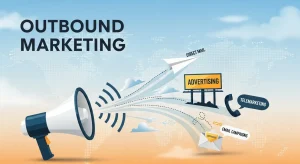
Traditional outbound marketing relies on broad campaigns—like cold emailing or ads—to reach large audiences. In contrast, Account-Based Marketing zeroes in on specific accounts that offer the highest potential value. Every campaign, message, and piece of content is personalized to that account’s needs, creating stronger relevance and better conversion rates. For insight into outbound methods that complement ABM, see outbound marketing methods.
3. What types of companies benefit most from Account-Based Marketing?
ABM is particularly effective for B2B organizations with complex sales cycles, high-value deals, or limited target markets—such as SaaS providers, technology firms, financial institutions, and enterprise service companies. It helps these businesses focus on the accounts most likely to drive long-term revenue and strategic growth.
4. How do personalization and technology work together in ABM?
Personalization in Account-Based Marketing is powered by technology. Platforms that combine CRM, automation, and AI-driven insights enable marketers to tailor messaging at scale. Dynamic content tools deliver customized experiences—like landing pages, emails, or ads—based on real-time data from each account’s behavior and industry trends.
5. What are the main components of a successful ABM strategy?
A successful ABM strategy typically includes:
- Target account selection: Identifying high-value companies using data and intent signals.
- Personalized content: Crafting tailored assets for each account or buying group.
- Sales-marketing alignment: Ensuring collaboration and unified messaging.
- Multi-channel execution: Reaching accounts through email, LinkedIn, ads, and events.
- Measurement and optimization: Tracking engagement and ROI at the account level.
6. How can ABM be integrated with content marketing?
ABM and content marketing work best together when content is designed specifically for target accounts. Personalized thought leadership articles, case studies, or interactive experiences enhance engagement.
For example, interactive and visual storytelling formats—like quizzes, calculators, or infographics—make outbound content more engaging and memorable. Learn more about this approach here: interactive content, outbound marketing.
7. What role does video play in Account-Based Marketing campaigns?
Video is an increasingly powerful medium in Account-Based Marketing, helping brands communicate value quickly and authentically. Personalized video messages, account-specific explainers, and targeted video ads can capture decision-makers’ attention and humanize outreach. See how video enhances outbound engagement here, video advertising.
8. How should businesses measure the success of their ABM programs?
Measuring ABM success goes beyond clicks and impressions. Businesses should track:
- Account engagement scores (how often target accounts interact with your content)
- Pipeline progression and deal velocity
- Revenue influenced or generated by ABM campaigns
- Cross-department alignment metrics
These insights reveal which strategies build meaningful relationships and drive ROI.
9. How can small or mid-sized businesses implement ABM effectively?
Small and mid-sized businesses can implement Account-Based Marketing by starting small—selecting a handful of key accounts and building personalized campaigns for them. Affordable ABM tools and CRM integrations make it possible to automate personalization, manage outreach, and track performance without large enterprise budgets.
10. What are the future trends shaping Account-Based Marketing?
The future of Account-Based Marketing is driven by innovation in AI, intent data, and automation. Predictive analytics will make it easier to identify ideal accounts early, while machine learning will refine messaging based on behavioral insights. Additionally, the boundaries between inbound and outbound marketing will continue to blur, creating a more holistic, data-driven engagement model.