What Is Outbound Marketing? A Comprehensive Guide for Beginners

Every business requires customers, and locating those customers generally means that you need to actively seek them out. This is where outbound marketing performs a function. However, what is outbound marketing, and how does it work? If you’ve heard the phrase thrown around but aren’t quite sure what it really means or how to make it work for you, this guide is for you.
We’ll define the principles of outbound marketing, go over some typical techniques, and describe the differences between outbound and inbound marketing. Before you’re done reading, you’ll have a clear idea of how outbound marketing can grow your business and bridge the gap between you and potential customers out there in the wild.
What Exactly Is Outbound Marketing?
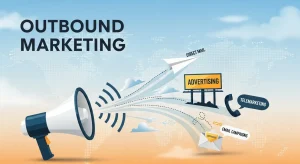
Outbound marketing is a proactive strategy where businesses reach out to potential customers to promote their products or services. Often referred to as “push marketing,” outbound marketing differs from inbound marketing, which attracts customers through content and organic engagement. Traditional outbound marketing techniques include television and radio ads, cold calling, direct mail, and outdoor advertising. By actively pushing your message to your audience, you can increase brand awareness, drive sales, and reach customers who may not discover your business on their own.
Understanding what outbound marketing is and how it works is essential for any business aiming to expand its reach and generate immediate results.
Why Does Outbound Marketing Matter?
Outbound marketing remains an essential tool for businesses looking to generate immediate results. While inbound marketing’s long-term strategies build trust and relationships, outbound marketing allows companies to quickly put their brand and products directly in front of a target audience. This is especially useful for businesses seeking to:
- Generate brand awareness in competitive markets
- Boost sales with direct, high-visibility campaigns
- Introduce new products or services to consumers
- Target specific demographics for tailored marketing efforts
Key Benefits of Outbound Marketing:
- Direct Audience Engagement: You connect with people who may not have discovered your brand organically.
- Speed: Outbound efforts, like paid ads or cold calling, often yield results quickly.
- Measurable Outcomes: Campaigns such as paid ads or email marketing allow you to track performance metrics like impressions, clicks, and conversions.
- Scalability: Outbound marketing methods like online ads can be scaled up or down based on campaign effectiveness.
Outbound Marketing Techniques and How They Work
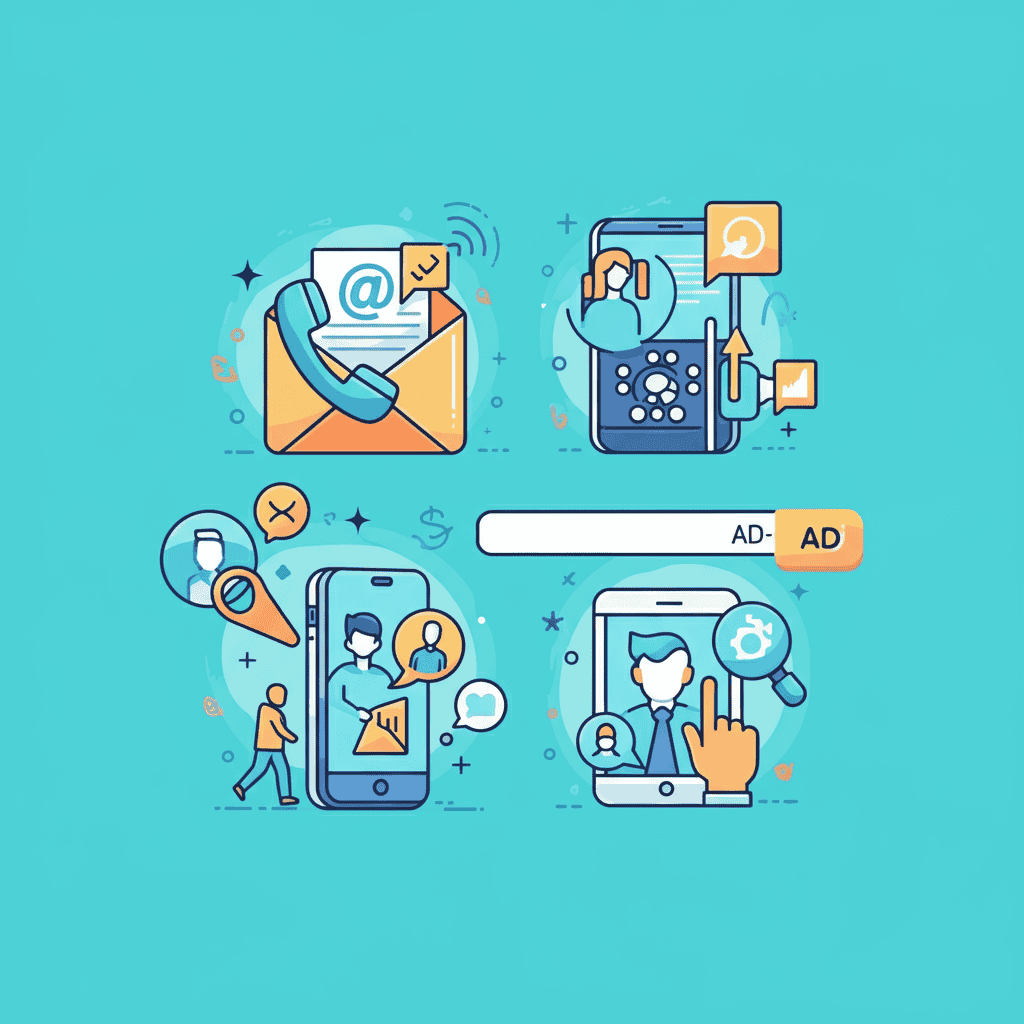
Not all outbound marketing tools are created equal, but here are some of the most popular and effective methods used today.
1. Cold Calling
Cold calling has been a hallmark of outbound marketing for decades. It involves directly contacting potential customers by phone to pitch a product or service.
- How it works: Sales representatives compile a list of prospects and call them to introduce the product or service. Success often depends on the quality of the script and the ability to address objections.
- When to use it: When selling high-touch services or products that require explanation or consultation.
2. Email Marketing
Email marketing is a major outbound strategy for reaching business prospects or customers directly in their inbox.
- How it works: Companies send out promotional emails to a list of potential customers with the aim of driving conversions or awareness.
- Pro tip: Personalize your emails! Emails with personalized subject lines are 26% more likely to be opened.
3. Search Engine Ads (Paid Search)
Paid search advertising, also known as Pay-Per-Click (PPC), is a digital outbound strategy that places your ads at the top of search engine result pages (SERPs).
- How it works: You bid on keywords related to your offerings, and your ad appears when users search for those terms.
- When to use it: To quickly drive traffic to your website, often for special offers or time-sensitive promotions.
4. Social Media Ads
Platforms like Facebook, Instagram, and LinkedIn allow businesses to run highly targeted ad campaigns.
- How it works: Businesses create sponsored content or ad campaigns targeted based on location, age, or specific interests.
- Why it’s effective: Social media ads are great at reaching niche audiences with a high level of precision.
5. Direct Mail
Good old-fashioned mail is also a popular method for outbound marketing.
- How it works: Brochures, postcards, or catalogs are sent directly to the recipient’s mailbox, often with a special offer or call to action.
- Best for: Local campaigns and niche markets, where a tangible item can leave a lasting impression.
6. Broadcast Advertising
TV commercials and radio ads are traditional forms of outbound marketing that are still widely used today.
- How it works: Businesses pay for placement during commercial breaks or prime time slots to maximize exposure.
- When to use it: For large-scale campaigns and brand awareness.
Measuring the Effectiveness of Outbound Marketing
Outbound marketing only works if you can track its success. Unlike inbound strategies, which often rely on long-term engagement, outbound marketing gives immediate data—but only if you know what to measure.
Key Metrics to Track
- Conversion Rate – Measures how many prospects take the desired action, such as filling out a form, making a purchase, or booking a consultation.
- Click-Through Rate (CTR) – Especially important for emails, paid search, and social media ads. A higher CTR indicates your messaging resonates with your audience.
- Cost Per Acquisition (CPA) – Shows how much each customer costs you. This helps identify whether a campaign is profitable.
- Return on Investment (ROI) – Compares revenue generated to marketing spend. Essential for determining overall campaign value.
- Lead Quality – Not all leads are equal. Tracking whether your outbound efforts generate leads likely to convert is critical, especially for B2B campaigns.
Tools and Techniques
- CRM Systems (Salesforce, HubSpot): Track leads and sales conversions.
- Google Analytics: Monitor traffic generated from ads and email campaigns.
- Email Marketing Platforms (Mailchimp, ActiveCampaign): Analyze open rates, clicks, and engagement.
- A/B Testing: Experiment with different ad copy, email subject lines, and messaging to see what performs best.
Actionable Tips
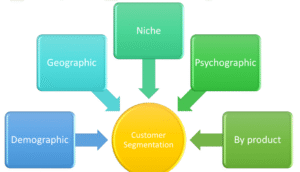
- Segment your audience before launching campaigns to reduce wasted spend.
- Track metrics in real time to pivot strategies quickly.
- Combine data sources: Match ad performance with actual sales to avoid misleading conclusions.
Measuring performance is more than numbers—it’s about understanding which strategies produce real results, helping you allocate resources effectively and maximize ROI.
Outbound Marketing for B2B vs. B2C
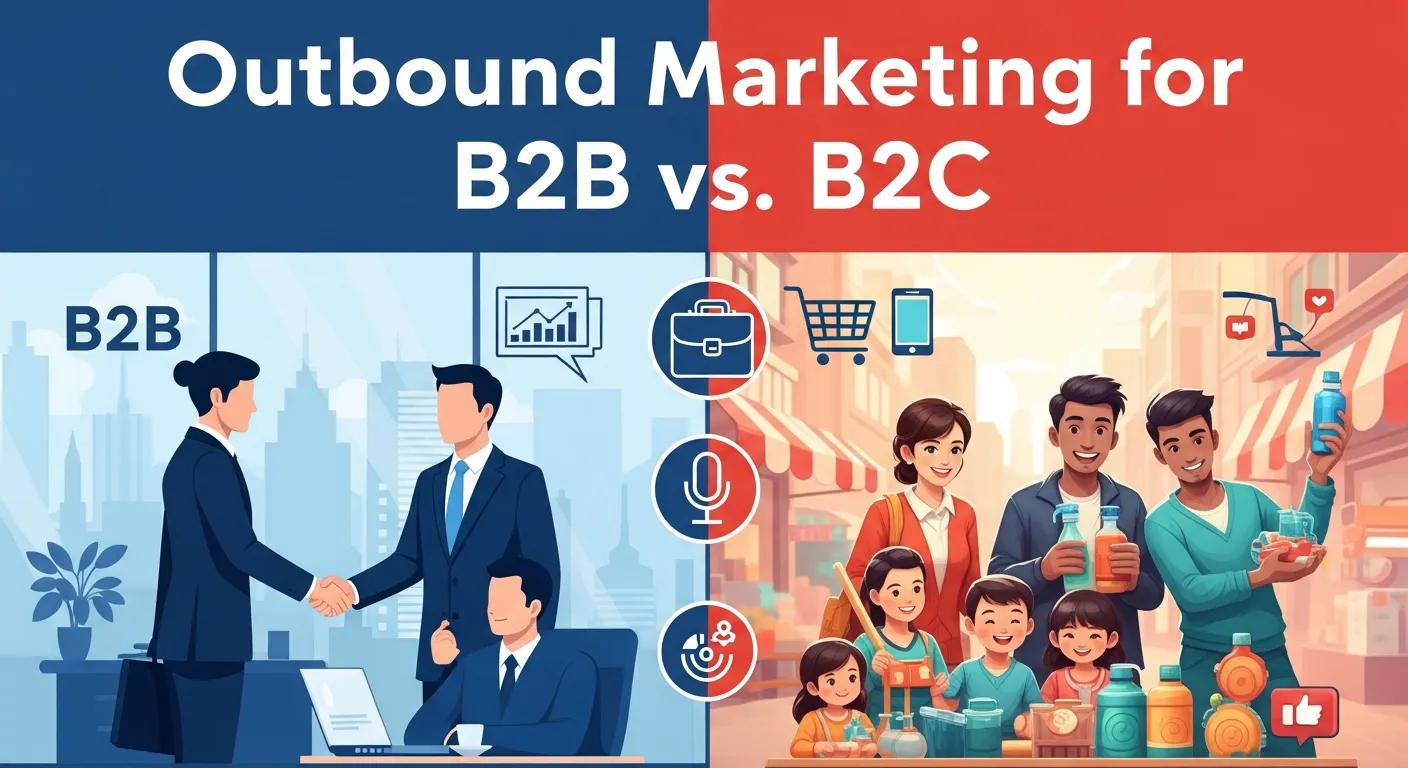
Outbound marketing is not one-size-fits-all. The strategies, messaging, and channels you use will vary depending on whether your audience is businesses (B2B) or individual consumers (B2C).
B2B Outbound Marketing
- Focus: Relationship-building, credibility, and demonstrating ROI.
- Common Methods: Cold calling, LinkedIn campaigns, personalized emails, webinars, and trade shows.
- Example: A software company targeting HR managers may send a personalized email offering a free demo of a new tool. The follow-up could include a LinkedIn message to reinforce credibility.
Tip: Use account-based marketing (ABM) to target high-value clients individually rather than mass audiences.
B2C Outbound Marketing
- Focus: High-volume engagement and immediate action.
- Common Methods: Television and radio ads, social media campaigns, direct mail, SMS promotions.
- Example: A retail brand launching a holiday sale may send postcards, run Facebook ads, and use Google Ads simultaneously to drive foot traffic.
Tip: Emotional appeal, urgency, and clear calls-to-action work best for B2C audiences.
Key Differences at a Glance
| Feature | B2B | B2C |
|---|---|---|
| Audience size | Smaller, targeted | Larger, broader |
| Messaging style | Informative, consultative | Persuasive, emotional |
| Sales cycle | Longer, multiple stakeholders | Shorter, impulse-driven |
| Best channels | Email, LinkedIn, cold calls | Social media, TV, direct mail |
Outbound marketing is most effective when your approach matches the buying behavior and needs of your target audience. Misalignment can waste both time and budget.
Outbound vs. Inbound Marketing
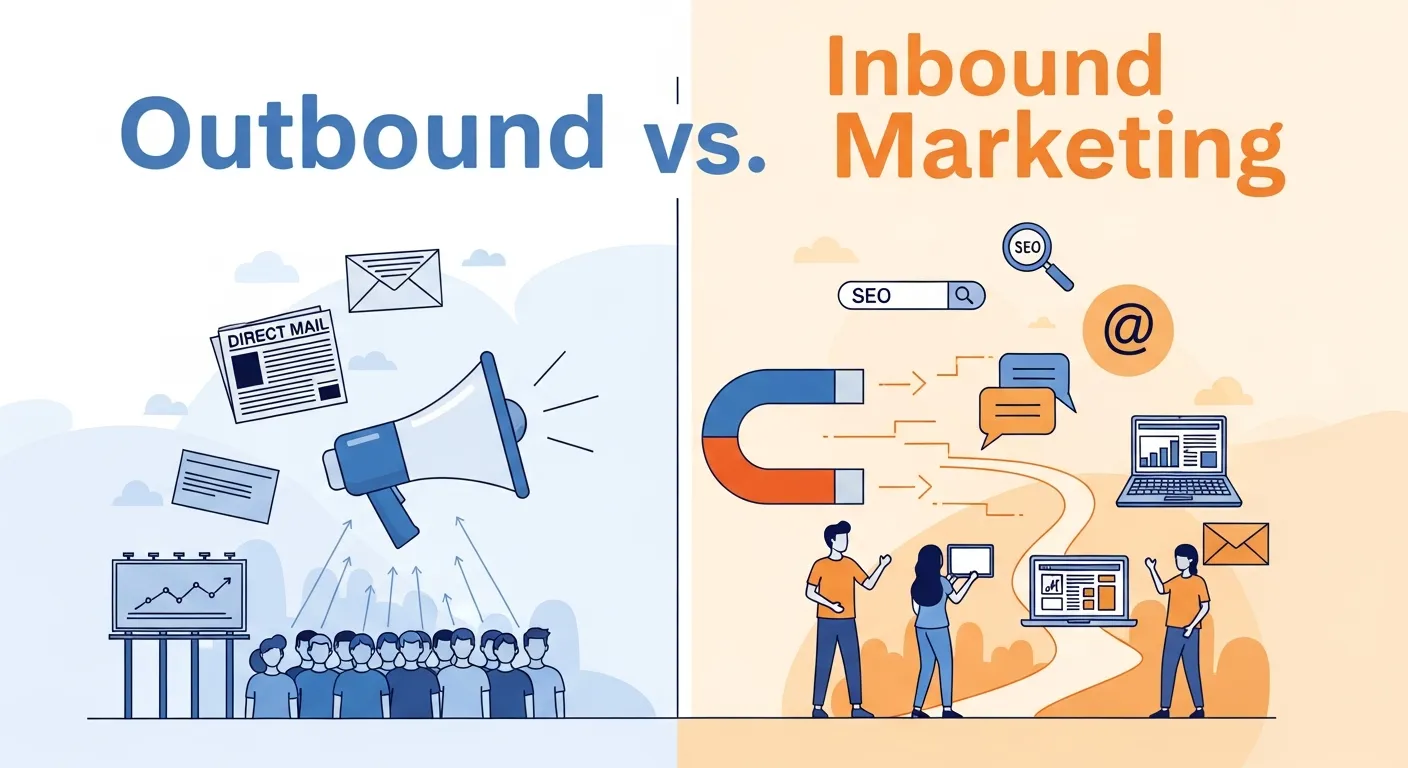
Outbound and inbound marketing differ primarily in how businesses communicate with potential customers and initiate engagement.
Outbound Marketing
Outbound marketing is a proactive approach where businesses deliver their message directly to an audience. This method does not rely on prior interest from the consumer. Instead, it focuses on reaching people through traditional outbound marketing and digital channels such as cold calling, email campaigns, paid search ads, outdoor advertising, TV commercials, and social media promotions. Outbound marketing is particularly effective for generating immediate brand awareness, promoting products, and targeting specific demographics quickly.
Inbound Marketing
Inbound marketing takes a reactive approach, attracting customers rather than actively reaching out to them. It relies on valuable content, SEO, blogs, social media posts, and educational resources to draw audiences organically. Potential customers discover the brand while searching for information or solutions, which helps build trust and credibility over time. Inbound strategies are ideal for nurturing long-term relationships and establishing thought leadership.
Which Strategy Works Best?
Neither strategy is better on its own. Outbound marketing delivers fast results and visibility, while inbound marketing supports sustained growth and customer loyalty. When combined, businesses can maximize reach, accelerate conversions, and maintain long-term engagement—creating a balanced and effective marketing strategy.
Emerging Trends in Outbound Marketing
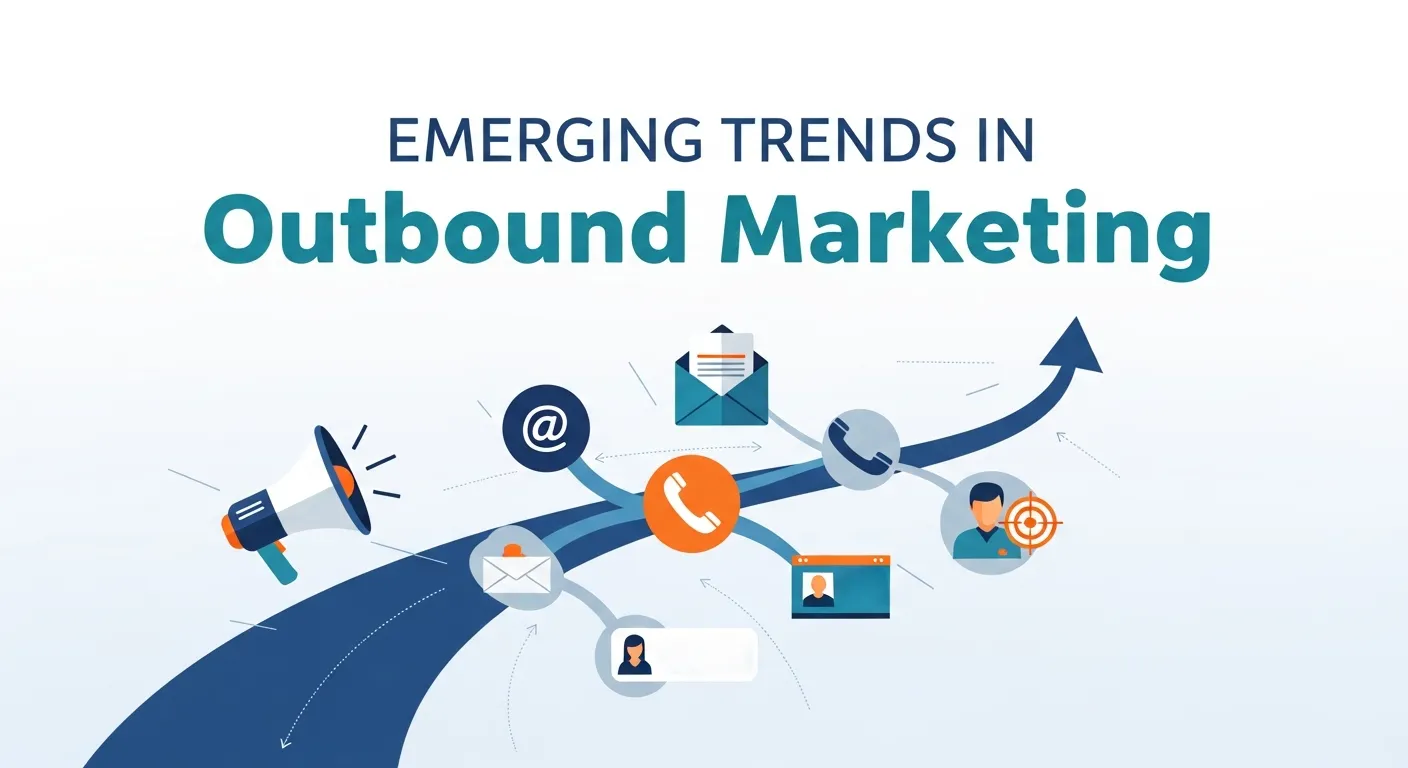
Outbound marketing is evolving rapidly. Businesses that combine traditional techniques with new digital strategies are seeing better results than those relying on a single approach.
1. Programmatic Advertising
- Uses AI and automation to serve ads to precise audiences in real time.
- Reduces wasted ad spend and improves relevance.
Example: An e-commerce company can target users who browsed shoes but didn’t purchase, showing a tailored ad for those exact products.
2. Retargeting Campaigns
- Focuses on users who have engaged with your website, emails, or ads but haven’t converted.
- Increases the chance of turning interest into action.
Example: A SaaS company might retarget website visitors with ads offering a 14-day free trial.
3. Omnichannel Outreach
- Integrates multiple channels—email, social media, cold calling, direct mail—for consistent messaging.
- Reinforces brand awareness and keeps your business top-of-mind.
Example: A car dealership may combine SMS reminders, Facebook ads, and personalized emails to promote a new model.
4. Interactive and Personalized Ads
- Includes quizzes, polls, gamified ads, and video ads that invite engagement.
- Personalized content increases CTR and conversion rates.
Example: A cosmetics brand can use Instagram polls to guide users to products that suit their preferences.
5. AI and Automation in Outbound Marketing
- AI tools can personalize email campaigns, optimize ad targeting, and even predict customer behavior.
- Automation allows you to scale outbound campaigns efficiently without sacrificing personalization.
Outbound marketing is no longer just about “pushing messages.” Today, it’s about reaching the right people, at the right time, with the right message—across multiple channels. Businesses that adapt to these trends gain a competitive edge in visibility and conversions.
Challenges of Outbound Marketing (and How to Overcome Them)
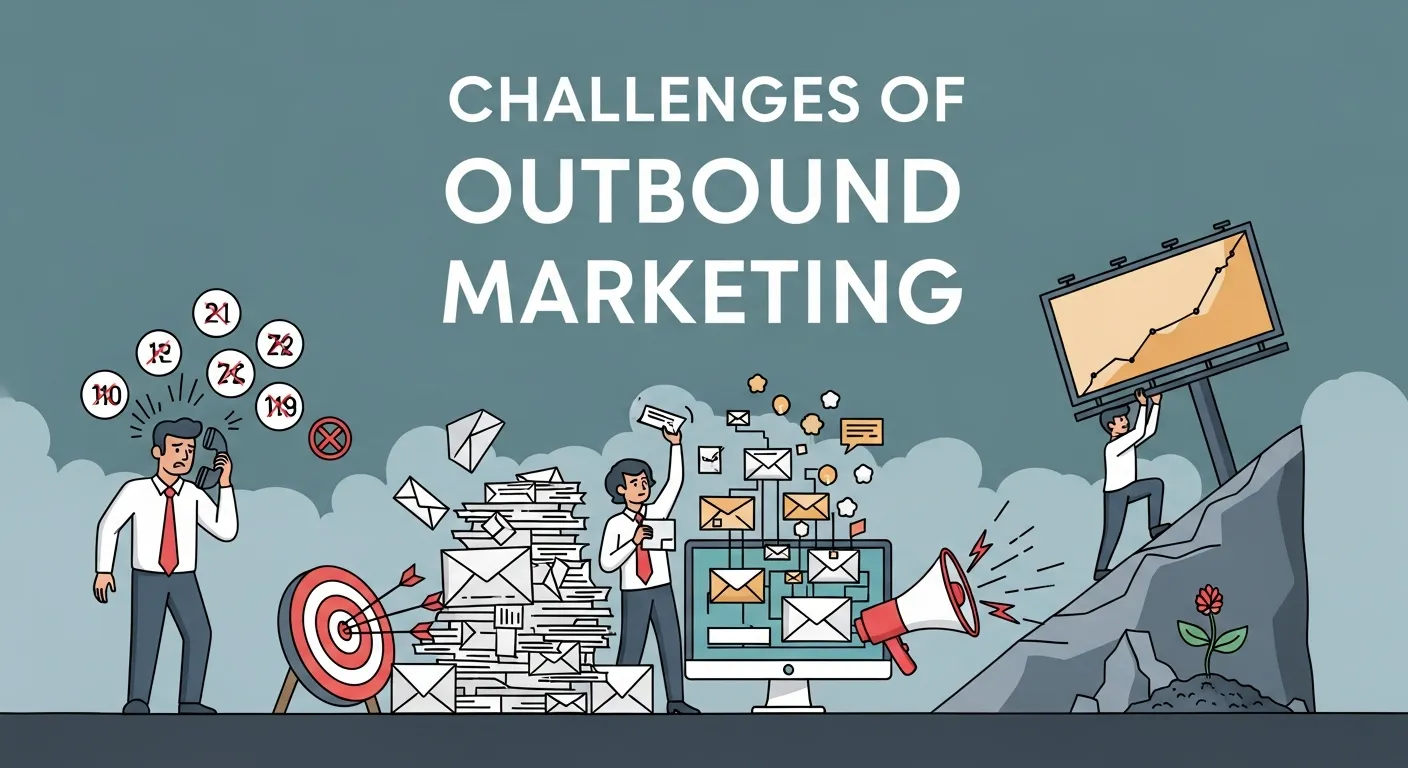
Outbound marketing can be highly effective, but it’s not without its challenges:
- High Cost: Broadcast ads and PPC campaigns can eat up a significant portion of your budget.
- Solution: Use data-driven tools to carefully target your audience, reducing wasted spend.
- Rejection: Cold calls or emails can face resistance from prospects.
- Solution: Invest in quality scripts and training for your team, and use segmentation to ensure relevance.
- Ad Fatigue: Overexposure to ads might cause consumers to ignore them.
- Solution: Use varied messaging and tie your campaigns to promotions or new launches to keep things fresh.
Is Outbound Marketing Right for Your Business?
If you’re trying to build brand awareness fast, promote specific offers, or launch a new product or service, outbound marketing might be the perfect strategy for you. However, it’s most effective when paired with a strong inbound strategy that attracts, nurtures, and retains customers over the long term.
Grow Your Reach with Outbound Marketing
As data continues to be crunched up to October 2023, outbound marketing has proven itself over time, making it necessary for businesses that want to reach the right audience. From snazzy TV commercials to laser-focused social media efforts, it’s a world full of opportunities to move more product and build your brand.
If you are ready to take your marketing to the next level, learn how incorporating outbound strategies into your business plan can expand your reach. Want to write the best outbound campaign? For more information about our services or to speak to a member of our team, contact us today and begin forging meaningful connections.
Frequently Asked Questions (FAQs) About Outbound Marketing
1. What is outbound marketing?
Outbound marketing is a marketing strategy where businesses actively reach out to potential customers to promote their products or services. Instead of waiting for customers to find the brand, outbound marketing pushes messages through channels such as cold calling, email campaigns, paid search ads, outdoor advertising, and broadcast media.
2. Is outbound marketing still effective today?
Yes, outbound marketing remains highly effective, especially for businesses seeking immediate visibility and fast results. When combined with data-driven targeting and personalization, modern outbound marketing methods can generate strong leads and measurable ROI.
3. What are traditional outbound marketing methods?
Traditional outbound marketing includes television and radio commercials, direct mail, print ads, cold calling, billboards, and other forms of outdoor advertising. These methods are still widely used for brand awareness and large-scale campaigns.
4. How does outbound marketing differ from inbound marketing?
Outbound marketing proactively delivers messages to an audience, while inbound marketing attracts customers through valuable content, SEO, and social media. Outbound focuses on speed and reach, while inbound emphasizes long-term relationship building.
5. Is outbound marketing suitable for B2B businesses?
Absolutely. B2B outbound marketing is highly effective for targeting decision-makers through personalized emails, LinkedIn outreach, cold calling, and account-based marketing strategies.
6. What are the best outbound marketing methods for product promotion?
Effective outbound marketing for product promotion includes paid search ads, social media advertising, email campaigns, outdoor advertising, and direct mail, especially when combined with clear calls-to-action.
7. How can businesses reduce the cost of outbound marketing?
Businesses can reduce costs by refining audience targeting, using data analytics, testing campaigns regularly, and combining outbound efforts with inbound strategies for better efficiency.
Learn more about: Harnessing Conversational AI for Outbound Marketing Success