Using Retargeting as an Outbound Strategy: Smart Ad Tactics
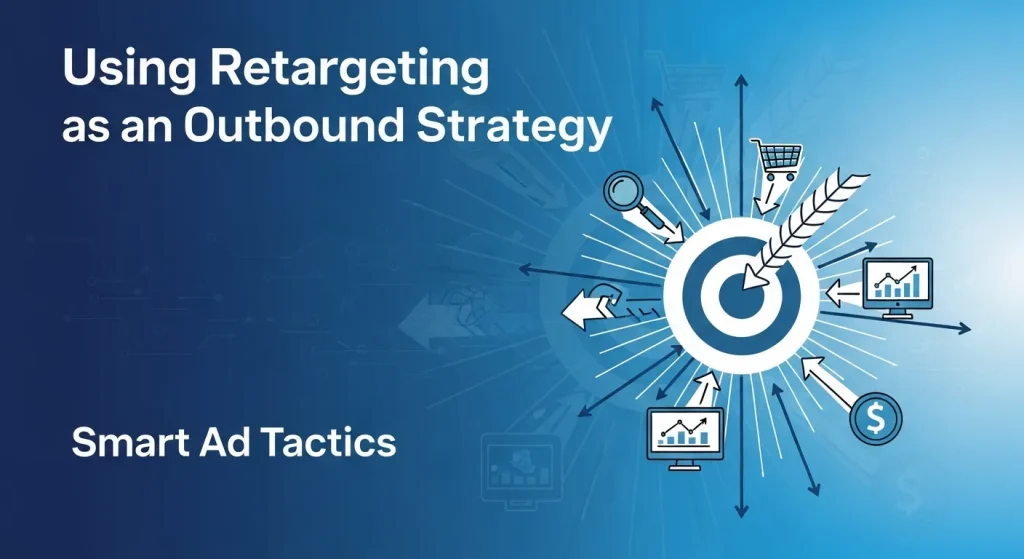
Learn how outbound retargeting helps businesses reconnect with prospects who showed interest but didn’t convert. This blog explores smart ad tactics, audience segmentation, and data-driven strategies to win back leads and maximize your marketing ROI
Most businesses still treat retargeting as a recovery tactic — a way to re-engage website visitors who didn’t convert. But that limited view misses huge growth potential. Forward-thinking marketers now use outbound retargeting strategies to proactively reach new audiences, target competitors’ prospects, and accelerate lead generation.
Retargeting has evolved beyond simple display ads. Today, brands can expand their reach through lookalike audiences, personalized ad sequencing, and cross-channel targeting to turn missed opportunities into measurable growth.
This guide will show you how to transform retargeting from a passive recovery tool into a powerful outbound growth engine. You’ll learn advanced tactics for audience expansion, competitor targeting, and strategic campaign optimization that can dramatically boost conversions and maximize your marketing ROI.
Understanding Modern Retargeting Beyond Recovery
The Evolution of Retargeting Technology
Retargeting has advanced far beyond the early days of simple banner ads chasing users across the web. Today’s outbound retargeting strategy relies on intelligent ad platforms powered by AI-driven audience modeling, cross-device tracking, and multi-touch attribution to drive both lead recovery and new customer acquisition.
Modern retargeting technology enables brands to identify and reach users across multiple channels — websites, social media, email, and mobile — creating a unified customer view. This evolution allows marketers to connect with audiences who interact with your brand at any touchpoint, not just your website visitors.
Redefining Retargeting Goals
Traditional retargeting focused mainly on recovering lost website visitors. However, strategic outbound retargeting now serves as a growth engine with three powerful objectives:
- Audience Intelligence:
Analyze retargeting data to uncover customer behavior trends, intent signals, and preferences. Use these insights to enhance segmentation and inform wider marketing automation strategies. - Market Expansion:
Use your existing audience data to create lookalike segments and reach new high-intent prospects who have not yet engaged with your brand — turning retargeting into an acquisition channel. - Competitive Advantage:
Deploy competitor retargeting campaigns that engage audiences researching similar products or solutions. Capture attention at the decision stage and position your brand as the smarter choice.
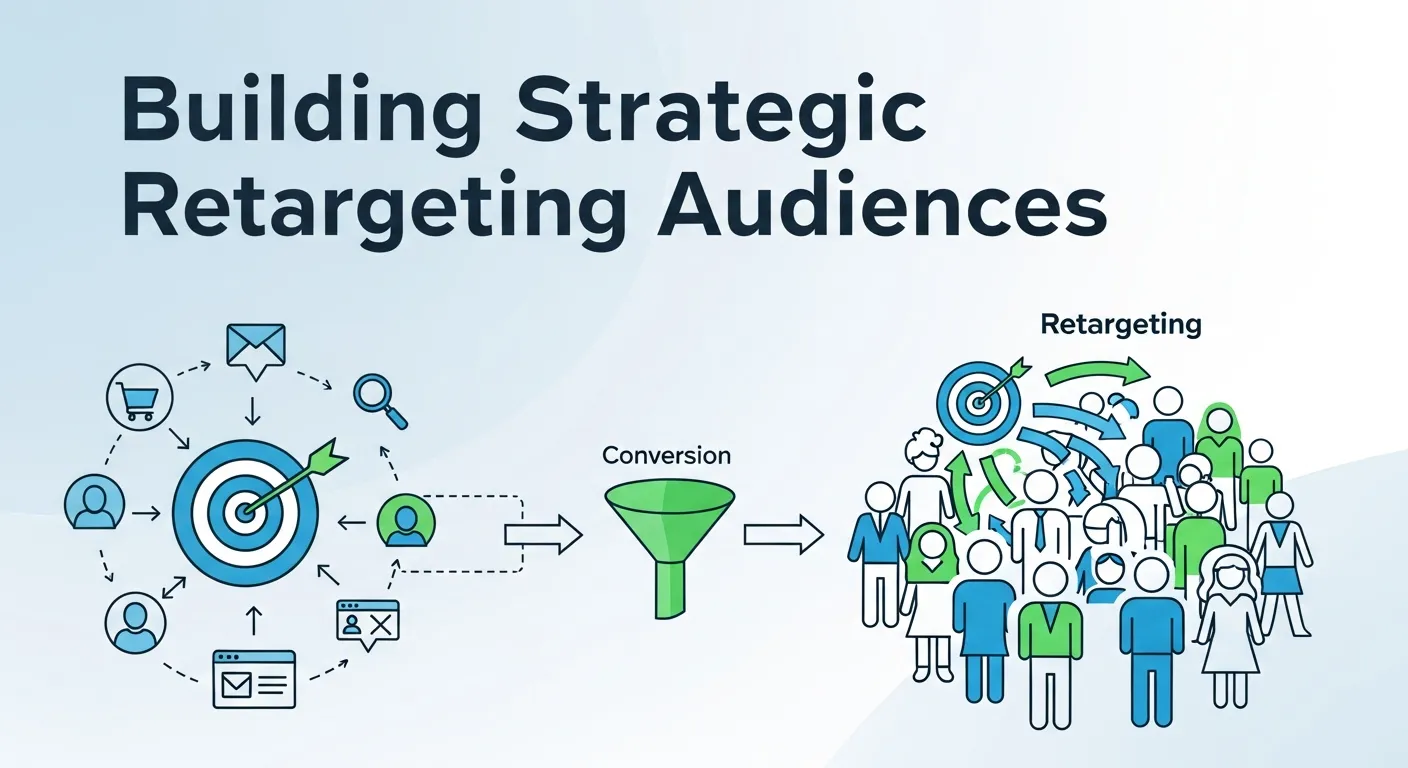
Building Strategic Retargeting Audiences
Creating Lookalike Audiences from High-Value Segments
Lookalike audiences represent one of the most powerful applications of retargeting data. Instead of just targeting people who visited your pricing page, create lookalike audiences based on those visitors to reach thousands of similar prospects.
Start by identifying your highest-value audience segments. These might include customers who made large purchases, users who engaged with specific product pages, or visitors who spent significant time on your site. Use these segments as source audiences for lookalike creation.
The key to effective lookalike targeting lies in audience quality over quantity. A smaller, highly engaged source audience typically produces better lookalike results than a large, generic visitor pool.
Competitor Audience Targeting
Competitor retargeting allows you to reach people actively researching solutions in your category. This strategy works by targeting users who have visited competitor websites or engaged with competitor content.
To implement competitor targeting effectively, research your competitors’ digital footprint. Identify their key landing pages, popular content, and conversion paths. Then create audiences based on engagement with these competitor touchpoints.
Remember that competitor targeting requires careful messaging. These prospects are already familiar with your category, so focus on differentiation rather than education. Highlight your unique value proposition and what sets you apart from the competition.
Interest-Based Audience Expansion
Beyond website visitors and competitor audiences, you can create retargeting campaigns based on interest and behavior signals. This approach targets users who have demonstrated interest in topics related to your product or service, even if they haven’t directly engaged with your brand.
Interest-based retargeting works particularly well for businesses with longer sales cycles or complex products. By targeting users who consume content about industry trends, attend relevant webinars, or follow industry influencers, you can build awareness before prospects even realize they need your solution.
Advanced Retargeting Campaign Strategies
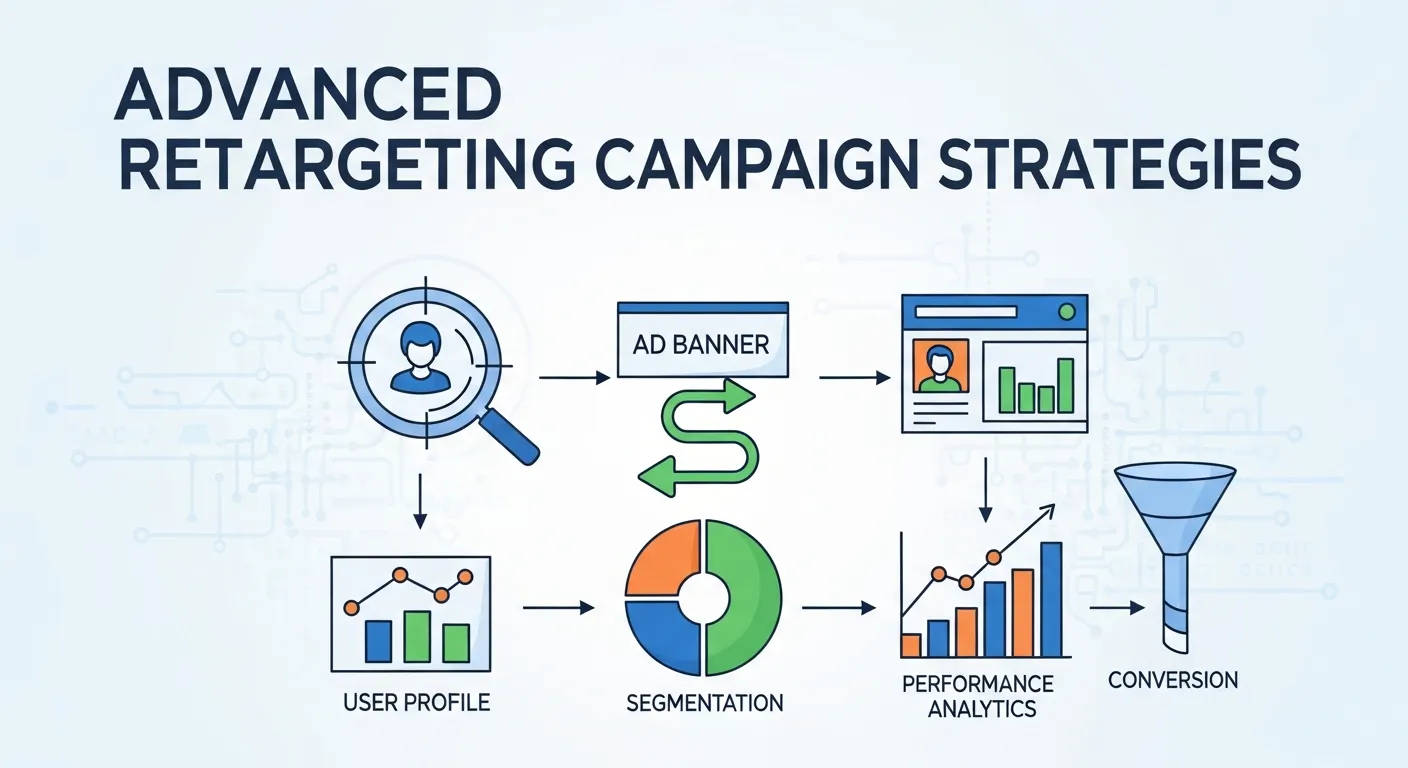
Sequential Messaging Campaigns
Sequential messaging moves beyond single-ad retargeting to create multi-touch campaigns that guide prospects through your sales funnel. This approach recognizes that most purchases require multiple touchpoints and designs campaigns accordingly.
Design your sequential campaigns with clear progression logic. Start with awareness-focused messages for new prospects, move to consideration-focused content for engaged users, and finish with conversion-focused calls to action for high-intent prospects.
Timing intervals between sequential messages matter significantly. Too frequent, and you risk ad fatigue. Too infrequent, and you lose momentum. Test different intervals to find the optimal balance for your audience and product category.
Cross-Channel Retargeting Integration
Effective retargeting extends beyond display ads to include social media, email, and even direct mail. Cross-channel integration ensures consistent messaging while maximizing touchpoints with your target audience.
Coordinate your retargeting efforts across platforms to avoid message conflicts and optimize frequency. If someone clicks on your Facebook retargeting ad, adjust your Google display campaign accordingly to prevent oversaturation.
Email retargeting deserves special attention. Users who abandon their email signup process or download attempts represent high-intent prospects. Create email sequences specifically designed to re-engage these users and complete their intended actions.
Dynamic Creative Optimization
Dynamic creative optimization (DCO) automatically adjusts ad creatives based on user behavior, preferences, and context. This technology makes retargeting campaigns more relevant and effective by personalizing the experience for each prospect.
DCO works by testing different combinations of headlines, images, calls to action, and offers to identify the most effective combinations for different audience segments. Over time, the system learns which creative elements perform best for specific user types and contexts.
Implement DCO gradually, starting with simple variations in headlines and calls to action before moving to more complex creative differences. This approach allows you to understand what drives performance improvements without overwhelming your testing capabilities.
Measuring and Optimizing Retargeting Performance
Key Performance Indicators Beyond Click-Through Rates
While click-through rates provide useful information, they don’t tell the complete story of retargeting success. Focus on metrics that align with your business objectives and provide actionable insights.
View-through conversions measure users who saw your retargeting ads but converted through other channels. This metric helps you understand the full impact of your retargeting efforts on customer acquisition.
Audience expansion rate tracks how effectively your retargeting campaigns grow your addressable market. This metric becomes particularly important when using lookalike audiences and competitor targeting strategies.
Customer lifetime value by acquisition source helps you understand which retargeting strategies produce the most valuable customers over time. This insight guides budget allocation and campaign prioritization decisions.
Attribution Modeling for Retargeting
Attribution modeling becomes critical when retargeting serves as part of a broader outbound strategy. Different attribution models will show varying levels of retargeting contribution to your overall marketing success.
First-touch attribution often undervalues retargeting since these campaigns typically engage prospects who have already shown some interest. Last-touch attribution may overvalue retargeting by giving it full credit for conversions that involved multiple touchpoints.
Consider implementing time-decay or position-based attribution models that recognize retargeting’s role in the customer journey while accounting for other marketing touchpoints. These models provide more accurate insights into retargeting’s true contribution to your business growth.
A/B Testing Retargeting Strategies
Systematic testing drives continuous improvement in retargeting performance. Test different audience definitions, creative approaches, and campaign structures to identify what works best for your specific business.
Test audience size and composition by comparing broad lookalike audiences with narrow, highly defined segments. Test frequency caps to find the optimal balance between reach and engagement. Test different creative formats to understand what resonates most with your retargeting audiences.
Document your testing results to build institutional knowledge about what works for your business. This documentation becomes particularly valuable as you scale retargeting efforts or onboard new team members.
Maximizing Your Retargeting Investment
Retargeting represents one of the most cost-effective ways to drive business growth when implemented strategically. By expanding beyond traditional recovery campaigns to embrace audience expansion, competitor targeting, and sophisticated sequencing, you can transform retargeting into a powerful outbound marketing engine.
Success requires commitment to testing, measurement, and optimization. Start with one or two advanced strategies, measure their impact carefully, and expand your efforts based on proven results. Remember that retargeting works best as part of an integrated marketing approach rather than a standalone tactic.
The businesses that master strategic retargeting gain sustainable competitive advantages through better customer acquisition costs, improved conversion rates, and deeper customer insights. Begin implementing these tactics today to unlock retargeting’s full potential for your business growth.
Integrating Outbound Retargeting with Broader Marketing Strategy
To unlock its full potential, outbound retargeting must work as part of a larger outbound strategy rather than operating in isolation. When retargeting aligns with your brand’s broader marketing ecosystem — including content, email, and paid media — it creates a seamless buyer journey that moves prospects from awareness to conversion efficiently.
How to Align Retargeting with Outbound Campaigns
- Unify Messaging Across Channels
Ensure your outbound email campaigns, social media ads, and retargeting creatives carry consistent tone, visuals, and calls to action. Consistency reinforces recognition and strengthens brand recall. - Integrate with Outbound Digital Marketing
Combine outbound retargeting with outbound digital marketing tactics like personalized email follow-ups, video ads, and direct LinkedIn outreach. This holistic approach nurtures leads through multiple digital touchpoints simultaneously. - Leverage Programmatic Advertising of Audience Targeting
Modern programmatic advertising of audience targeting allows automated ad delivery to specific high-intent segments, maximizing ad efficiency. Integrating this technology with retargeting ensures real-time adjustments based on behavior, engagement, and conversion data.
Comparison: Traditional vs. Integrated Outbound Retargeting
| Aspect | Traditional Retargeting | Integrated Outbound Retargeting |
|---|---|---|
| Objective | Recover lost visitors | Drive growth and acquisition |
| Approach | Isolated display campaigns | Unified with outbound channels |
| Targeting | Website-based audiences | Multi-channel, intent-driven segments |
| Technology | Manual audience setup | AI-driven, programmatic automation |
| Outcome | Incremental conversions | Scalable lead generation and ROI growth |
By merging retargeting with broader outbound strategy, marketers create smarter, data-driven campaigns that not only recover lost leads but also accelerate audience expansion and customer acquisition.
From Retargeting to Revenue: Turning Engagement into Lead Generation
While outbound retargeting helps re-engage potential buyers, its real power lies in converting that engagement into measurable business growth through outbound lead generation.
Steps to Transform Retargeting into Lead Generation
- Optimize Landing Pages for Conversion
Every retargeting ad should lead to a landing page that offers real value — such as a free demo, whitepaper, or exclusive offer — to capture contact information effectively. - Use Dynamic Segmentation
Segment audiences based on behavior, engagement level, or funnel stage to deliver the right message at the right time. This improves click-through and conversion rates. - Incorporate CRM and Automation Tools
Sync retargeting data with your CRM to identify warm leads and trigger personalized follow-ups automatically. This synergy enhances lead nurturing and retention. - Measure and Refine
Track cost per lead, engagement depth, and downstream conversions to identify high-performing audience segments.
Sample Retargeting Funnel Breakdown
| Funnel Stage | Audience Type | Ad Objective | Example Tactic |
|---|---|---|---|
| Awareness | Lookalike audiences | Brand visibility | Educational video ads |
| Consideration | Competitor audiences | Engagement | Comparative landing pages |
| Decision | High-intent visitors | Conversion | Limited-time offer ads |
By evolving retargeting from a passive reminder to an active outbound lead generation driver, businesses can bridge the gap between engagement and revenue — transforming ad spend into sustainable growth.
The Future of Outbound Retargeting: Trends Shaping Smarter Engagement
As marketing technology evolves, outbound retargeting continues to grow smarter, more predictive, and deeply integrated into broader outbound strategy. Businesses that adapt early to these innovations will gain a clear competitive edge in audience targeting and campaign efficiency.
Emerging Trends to Watch
- AI-Driven Predictive Retargeting
Artificial intelligence is reshaping how marketers identify and engage audiences. Predictive algorithms can now anticipate buyer intent and automatically adjust ad delivery, improving conversion rates while reducing ad spend waste. - Privacy-First Targeting Models
With third-party cookies disappearing, privacy-focused data strategies are becoming essential. Outbound marketers will increasingly rely on first-party data and consent-based engagement to maintain personalization without compromising trust. - Cross-Channel Intelligence
The next phase of outbound retargeting will connect data across search, social, email, and CTV (Connected TV), creating unified campaigns that follow prospects seamlessly across platforms. - Automation and Integration
Advanced automation tools now synchronize retargeting with CRM systems, marketing automation platforms, and outbound strategy campaign data — allowing real-time optimization and better customer lifecycle visibility.
Why These Trends Matter
| Trend | Impact on Outbound Retargeting | Business Benefit |
|---|---|---|
| AI & Predictive Modeling | Smarter audience segmentation | Higher ROI and efficiency |
| Privacy-Focused Data | Ethical personalization | Stronger customer trust |
| Cross-Channel Integration | Unified customer experience | Improved engagement rates |
| Automation & CRM Sync | Streamlined campaign control | Scalable outbound strategy growth |
In the coming years, outbound retargeting will no longer be just a recovery tool — it will serve as a central driver of scalable growth, powered by automation, intelligence, and seamless integration with the entire outbound marketing on outbound strategy.
By staying ahead of these trends, marketers can transform every ad impression into a learning opportunity — and every engagement into a step toward stronger brand relationships and higher marketing ROI.
Frequently Asked Questions (FAQ) About Outbound Retargeting Strategy
1. What is outbound retargeting, and how does it differ from traditional retargeting?
Outbound retargeting expands the concept of traditional retargeting by going beyond re-engaging past website visitors. It proactively targets new, high-intent audiences — including competitor traffic and lookalike segments — to drive both lead recovery and new customer acquisition. Traditional retargeting focuses mainly on recovering lost visitors, while outbound retargeting supports broader business growth through advanced audience expansion and campaign sequencing.
2. Why is outbound retargeting an essential part of modern marketing outbound strategy?
Outbound retargeting is crucial because it transforms passive engagement into proactive lead generation. It helps marketers reach potential buyers who are in the research or comparison stage, ensuring your brand stays visible across multiple touchpoints. When combined with automation and data analytics, it becomes one of the most effective tools for accelerating conversions and improving ROI.
3. How can businesses use outbound retargeting alongside social media marketing?
Integrating social media marketing with outbound retargeting amplifies brand visibility and engagement. Platforms like Facebook, Instagram, and LinkedIn offer precise audience segmentation, allowing brands to retarget users based on behaviors, interests, or interactions. By combining social and retargeting data, businesses create consistent, cross-platform messaging that strengthens customer trust and boosts conversion rates.
4. What role does AI play in enhancing outbound retargeting performance?
Artificial intelligence (AI) enables smarter targeting and personalization in outbound retargeting campaigns. AI algorithms analyze user behavior, intent signals, and engagement data to deliver the right message at the right time. This helps reduce ad spend waste, improve campaign timing, and predict which prospects are most likely to convert — all of which make outbound retargeting more efficient and scalable.
5. How do Google’s marketing strategies influence outbound retargeting success?
Google’s marketing strategies heavily shape how outbound retargeting operates. Google Ads uses machine learning to identify high-converting audiences, optimize bidding, and personalize ad delivery across the Display Network and YouTube. Leveraging these tools helps brands reach potential customers beyond their website, while automated rules and attribution insights ensure budget efficiency and consistent ROI growth.
6. How can outbound retargeting support B2B lead generation?
For B2B brands, outbound retargeting is a powerful method to stay top of mind with decision-makers. It helps re-engage prospects who visited key pages like pricing, demo requests, or case studies. By using personalized ads and sequential campaigns, companies can nurture these leads through multiple stages of the buyer’s journey, improving conversion rates and deal velocity.
7. How to align marketing and outbound retargeting efforts effectively?
Knowing how to align marketing and outbound retargeting efforts is key to maximizing campaign impact. Begin by syncing your CRM, email, and ad platforms to ensure unified audience data. Then, establish shared KPIs across teams — such as conversion rate, lead quality, and engagement depth — so that retargeting supports broader marketing goals like brand awareness and revenue growth.
8. What metrics should I track to measure outbound retargeting performance?
Beyond click-through rates, focus on metrics that show real business impact:
- View-through conversions – to measure indirect influence.
- Audience expansion rate – to evaluate reach.
- Customer lifetime value (CLV) – to assess long-term ROI.
Combining these insights gives a full picture of how effectively your outbound retargeting contributes to marketing success.
9. How does outbound retargeting work with programmatic advertising?
Outbound retargeting integrates seamlessly with programmatic advertising platforms that automate audience targeting and ad delivery. These systems use AI and real-time bidding to deliver personalized ads to high-intent users at the right moment. By leveraging programmatic tools, marketers can scale outbound strategy campaigns efficiently while maintaining precision in message delivery.
10. What future trends will shape outbound retargeting?
The future of outbound retargeting is being shaped by automation, AI-driven optimization, and privacy-first targeting. Expect deeper integration with omnichannel platforms, allowing campaigns to deliver cohesive experiences across display, video, search, and social. As cookie-based tracking declines, first-party data strategies and ethical personalization will become key drivers of retargeting success.
Learn more about: How Outbound Marketing Shapes Your Business Reputation