Does Salesforce Marketing Cloud Work on Inbound Emails?
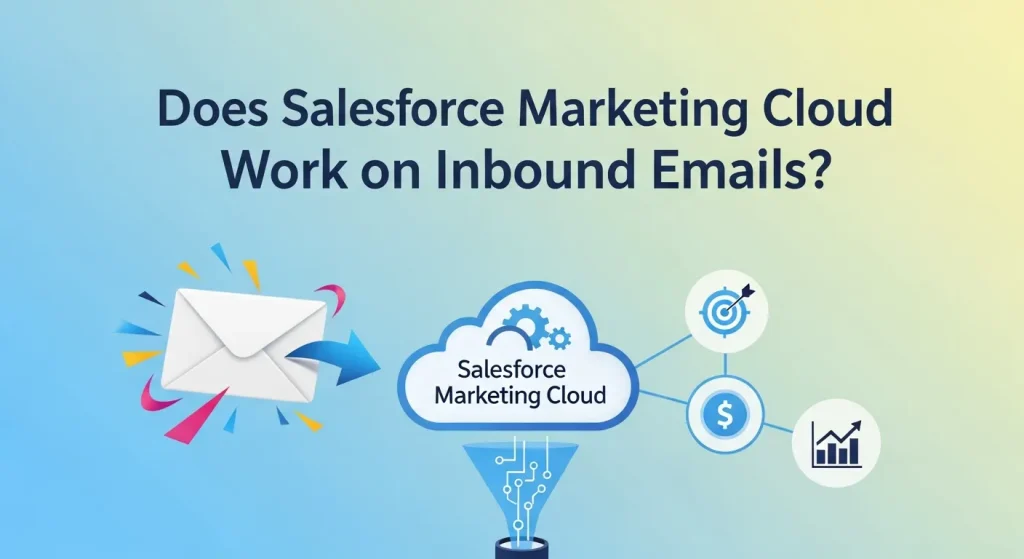
Email remains the backbone of digital marketing despite the proliferation of newer communication channels. For many businesses using Salesforce Marketing Cloud (SFMC), understanding its capabilities for handling inbound emails becomes crucial for developing comprehensive communication strategies. While SFMC excels at outbound email campaigns, its approach to inbound email management presents a more nuanced picture that marketers should thoroughly understand.
Understanding Salesforce Marketing Cloud’s Email Functionality
Salesforce Marketing Cloud originated primarily as an outbound marketing automation platform. Its core strength lies in creating, segmenting, personalizing, and delivering email campaigns to targeted audiences. The platform’s Journey Builder, Content Builder, and Automation Studio components work together seamlessly to orchestrate sophisticated outbound email sequences based on customer behavior, preferences, and demographics.
However, when it comes to inbound email processing—handling replies and messages initiated by recipients—SFMC’s native capabilities follow a different philosophy than some might expect. This distinction matters significantly for businesses developing comprehensive email communication strategies that must address both outbound messaging and inbound responses.
Native Inbound Email Handling in SFMC
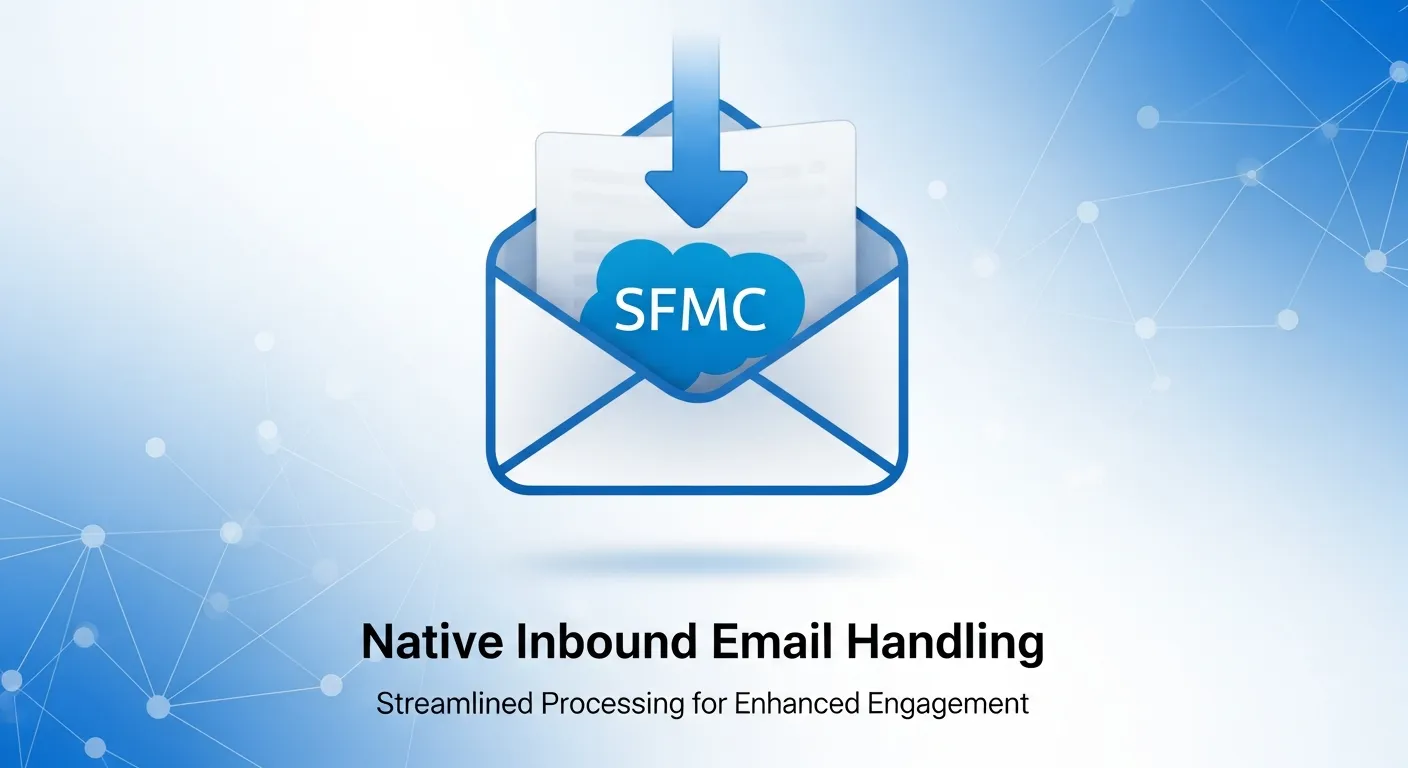
Salesforce Marketing Cloud does provide certain functionalities for managing inbound emails, though these capabilities differ from full-fledged inbound email processing systems. The Reply Mail Management (RMM) feature represents SFMC’s primary tool for handling responses to outbound campaigns. This system allows basic processing of replies through several mechanisms:
RMM can automatically process unsubscribe requests, forwarding relevant information to subscriber management systems to update preference records. This automation helps maintain compliance with email regulations while reducing manual processing requirements.
The system can also identify and categorize certain types of responses, such as out-of-office replies, allowing these messages to be filtered appropriately rather than cluttering marketing or service queues. This categorization proves particularly valuable for distinguishing between automated responses and genuine customer communications requiring attention.
For more complex scenarios, RMM can forward selected inbound messages to designated email addresses or support queues where human representatives can address specific inquiries or requests. This routing capability helps ensure relevant messages reach appropriate handlers rather than disappearing into unmonitored mailboxes.
According to Email Vendor Selection, proper reply management represents an often-overlooked aspect of email marketing that significantly impacts customer experience. Their research indicates that up to 12% of marketing email recipients attempt to directly reply to campaigns, making proper handling of these responses crucial for maintaining positive brand relationships.
Limitations of SFMC for Comprehensive Inbound Email Processing
Despite these capabilities, SFMC’s native inbound email processing falls short of what many organizations might consider comprehensive inbound email management. Several limitations deserve consideration when developing email communication strategies:
The platform lacks sophisticated natural language processing for automatically interpreting the content and intent of inbound messages. While basic categorization occurs, nuanced understanding of customer inquiries requires either integration with additional systems or human intervention.
SFMC also provides limited native capabilities for automatically generating personalized responses to common inquiries received through inbound channels. Organizations seeking this functionality typically need to implement additional solutions or develop custom applications leveraging the Salesforce platform’s broader capabilities.
Furthermore, tracking conversations across multiple reply cycles presents challenges within the standard SFMC environment. The system excels at managing outbound campaign metrics but offers less robust tools for monitoring ongoing email discussions initiated through replies.
Integration Options for Enhanced Inbound Email Management
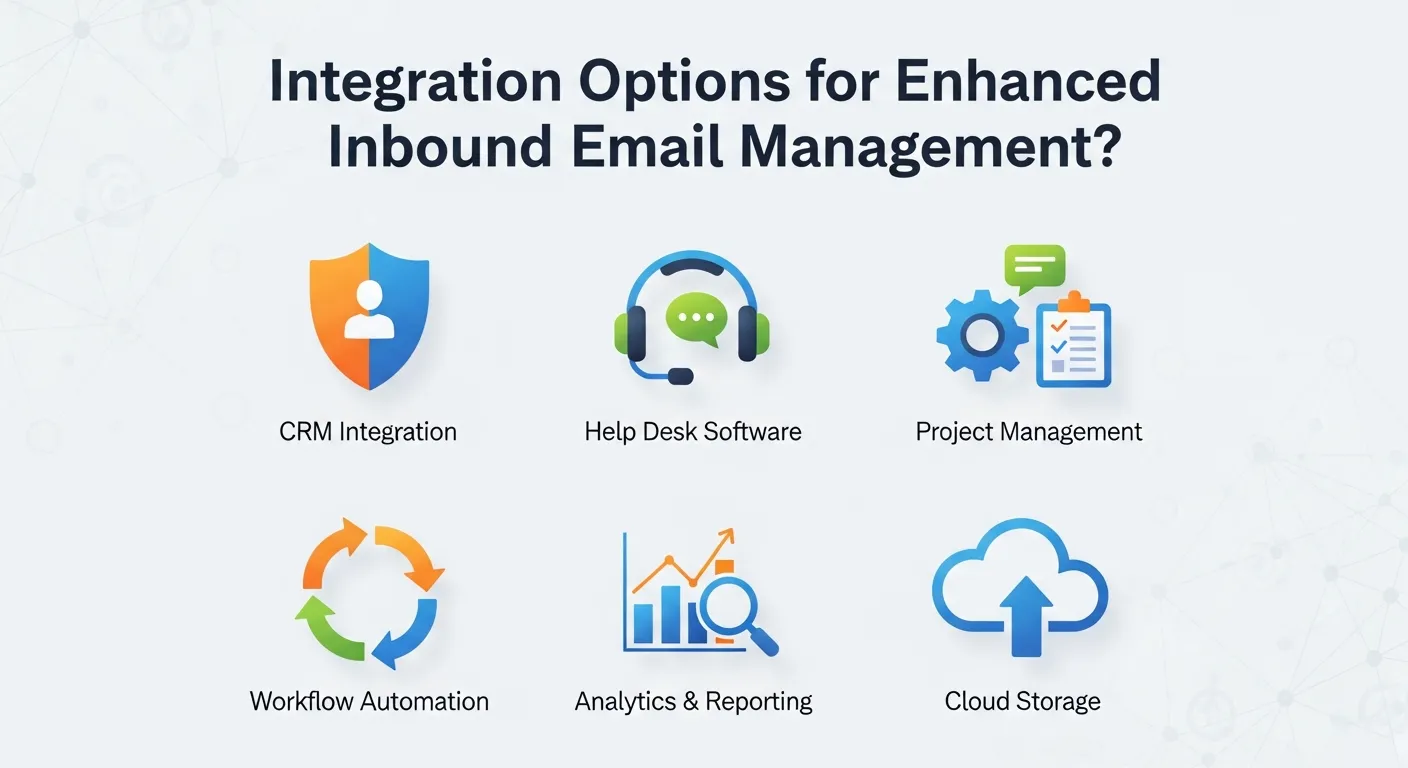
Recognizing these limitations, many organizations implement integrated approaches that combine SFMC’s strengths with complementary systems designed specifically for inbound communication management. Several integration patterns have emerged as common practice:
Connecting SFMC with Salesforce Service Cloud creates a powerful combination that leverages each platform’s strengths. Marketing Cloud manages outbound campaigns while Service Cloud handles inbound responses through case management workflows. This integration allows marketing teams to focus on campaign optimization while ensuring customer inquiries receive appropriate attention from service representatives.
For organizations already using Salesforce Sales Cloud, configuring email-to-case or email-to-lead functionality provides mechanisms for routing inbound emails to appropriate sales processes. This approach helps ensure inquiries generating sales opportunities receive prompt follow-up rather than languishing in marketing response queues.
Some enterprises implement dedicated email management solutions like Front that specialize in collaborative inbox management and integrate these with SFMC through API connections or middleware platforms. This approach provides purpose-built tools for handling inbound communications while maintaining synchronization with marketing automation processes.
Building a Comprehensive Email Communication Strategy
Given SFMC’s orientation toward outbound marketing, organizations should develop thoughtful strategies for handling the full communication lifecycle including both outbound campaigns and inbound responses. Several considerations warrant attention when designing these approaches:
Clearly defining which communications channels serve which purposes helps set appropriate expectations and allocate resources effectively. Many successful organizations explicitly inform customers about preferred channels for different types of inquiries rather than assuming all email addresses serve identical purposes.
Implementing consistent governance processes across both marketing and service communications ensures brand voice remains coherent regardless of which team handles specific interactions. This consistency proves particularly important when customers may interact with both marketing emails and service responses during the same customer journey.
Developing appropriate metrics that span both outbound and inbound communications provides more comprehensive insights than evaluating each channel independently. For instance, examining how inbound response rates correlate with specific outbound campaign characteristics may reveal opportunities for improving both components simultaneously.
For organizations seeking to enhance their integrated email communication strategy, our team at outboundmarketo.com offers specialized consulting services focused on optimizing the connection between outbound campaigns and inbound response handling.
Alternative Approaches for Managing Marketing-Related Inbound Emails
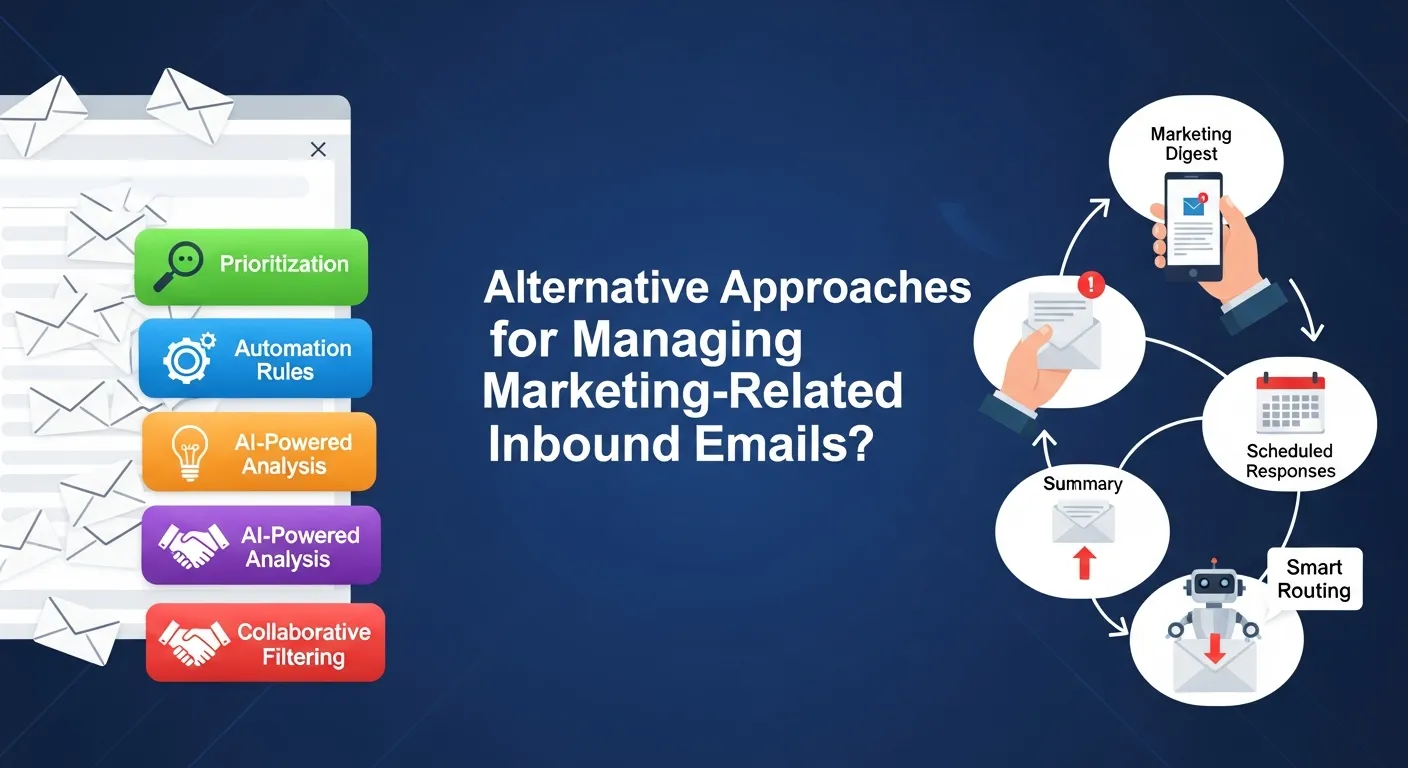
While Salesforce Marketing Cloud (SFMC) offers useful features for outbound communication, some organizations find that alternative architectures better meet their specific needs for managing inbound messages. The following approaches demonstrate how businesses can extend SFMC’s functionality and create a more balanced inbound-outbound communication strategy.
1. Implement Dedicated “Response Handling” Journeys
Within Salesforce Marketing Cloud’s Journey Builder, you can design custom “response handling” journeys that automatically react to certain types of inbound replies.
-
Set automated triggers for simple requests (like brochure downloads or follow-up confirmations).
-
Use decision splits to route inquiries to different teams or systems.
-
Personalize automated responses using data from Salesforce Marketing campaigns to maintain consistent tone and messaging.
This method helps streamline inbound communication and ensures no response goes unnoticed — a valuable tactic for boosting product sales with powerful outbound marketing strategies that also handle feedback efficiently.
2. Manual Review and Response Process
For organizations with lower inbound email volumes, a manual review process may be sufficient.
- Assign a team or marketing assistant to review replies captured by Reply Mail Management (RMM) on a regular schedule.
- Classify responses (e.g., unsubscribe requests, inquiries, feedback).
- Route messages requiring personal attention to the right departments (sales, service, or marketing).
This method allows smaller businesses to balance cost and control without investing in additional technology. It’s a practical approach that demonstrates how a good product will sell itself when supported by thoughtful, personal communication.
3. Integrate Collaborative Email Management Tools
Some enterprises integrate dedicated email management tools such as Front, Hiver, or Help Scout with Salesforce Marketing Cloud via APIs or middleware platforms.
- These tools allow shared team inboxes for handling inbound emails efficiently.
- Conversations can be tagged, assigned, and tracked within the CRM ecosystem.
- Integration ensures marketing data remains synchronized across systems.
This approach is ideal for growing organizations that want to scale their inbound communication management without overhauling their entire email infrastructure.
4. Build Specialized Email Response Teams
Larger enterprises often create dedicated email response teams focused solely on marketing-originated inbound communications.
- These teams handle replies to newsletters, promotional offers, and campaign follow-ups.
- They operate separately from customer service but maintain close alignment to ensure brand consistency.
- Using insights from Salesforce Marketing Cloud, these teams can identify recurring customer questions or feedback trends and feed them back into future campaigns.
This structure promotes expertise in marketing conversations and helps refine both outbound and inbound communication cycles.
5. Combine Automation with Human Oversight
The most effective organizations strike a balance between automation and human judgment.
- Use SFMC automation for sorting, tagging, and routing emails.
- Enable human representatives to manage nuanced or high-value responses.
- Employ analytics from Salesforce Marketing to continuously improve response handling workflows.
This hybrid approach delivers the efficiency of automation with the empathy and personalization that only human interaction can provide.
Future Directions for SFMC Inbound Capabilities
- Salesforce Marketing Cloud is becoming increasingly integrated with other Salesforce tools like Service Cloud and Sales Cloud, enabling seamless data exchange between marketing, sales, and customer support.
- This tighter connection supports unified communication workflows — meaning that inbound replies, service requests, and sales leads can all be tracked within one connected ecosystem.
- As these integrations deepen, marketers will be able to deliver cohesive, cross-channel experiences that combine the power of Salesforce Marketing insights with real-time customer engagement.
2. Expansion of Cross-Channel Communication Capabilities
- Future updates aim to blur the lines between email, SMS, social media, and in-app messaging.
- By connecting inbound and outbound interactions, Salesforce Marketing Cloud will help organizations manage customer journeys more fluidly.
- Marketers will gain the ability to respond to inbound inquiries or behavior triggers instantly, enhancing campaign performance and customer satisfaction.
3. Artificial Intelligence Through Einstein Advancements
- Salesforce’s ongoing investment in its Einstein AI platform holds promise for revolutionizing inbound email management.
- AI-driven classification, sentiment analysis, and smart routing could automatically identify message intent and prioritize responses.
- These advancements will not only improve the efficiency of handling inbound emails but also strengthen personalization efforts within Salesforce Marketing workflows.
4. Predictive and Proactive Customer Engagement
- Future versions of Salesforce Marketing Cloud are expected to use predictive analytics to anticipate customer needs before they reach out.
- Instead of simply reacting to inbound messages, marketers will be able to proactively engage customers based on historical behavior and real-time signals.
- This evolution represents the next step toward data-driven marketing — where automation, personalization, and customer intent come together in perfect harmony.
5. Unified Data and Analytics for Inbound Optimization
- Salesforce is working to centralize marketing and service data, making it easier to measure how inbound engagement influences overall campaign success.
- With enhanced dashboards and unified analytics, organizations can correlate inbound response quality with outbound performance metrics.
- This end-to-end visibility will empower marketers to refine strategies for boosting product sales with powerful outbound marketing strategies, demonstrating how inbound data can directly impact conversion outcomes.
6. Smarter Automation with Human Oversight
- Even as AI and automation advance, Salesforce Marketing is expected to preserve the human element.
- Future tools will combine automated sorting and tagging with guided recommendations for marketers and customer service teams.
- This balance ensures that while technology handles routine tasks, authentic brand voice and empathy remain central to every customer interaction — reinforcing the principle that while a good product will sell itself, meaningful engagement makes it sell faster.
Frequently Asked Questions (FAQ) About Salesforce Marketing Cloud and Inbound Emails
1. What is Salesforce Marketing Cloud primarily used for?
Salesforce Marketing Cloud (SFMC) is mainly used for managing and automating outbound marketing campaigns. It enables marketers to create personalized journeys, segment audiences, and deliver targeted content through email, SMS, and social channels — all designed to enhance customer engagement and drive conversions.
2. Can Salesforce Marketing Cloud handle inbound emails?
Yes, but with limitations. SFMC’s Reply Mail Management (RMM) feature can process basic inbound messages such as unsubscribe requests, out-of-office replies, and simple customer inquiries. However, for advanced inbound workflows, integration with Salesforce Service Cloud or third-party tools is often required.
3. Does SFMC automatically reply to inbound messages?
Not by default. SFMC does not include built-in AI or advanced automation for responding to complex inbound emails. Organizations that want this functionality typically use Einstein AI or integrate with Service Cloud for automated routing and intelligent responses.
4. How can Salesforce Marketing improve both inbound and outbound strategies?
By combining its outbound strength with integrated inbound solutions, companies can create a complete communication ecosystem. This approach ensures that while outbound campaigns drive attention and engagement, inbound systems capture and manage responses effectively.
5. Is Salesforce Marketing Cloud suitable for small businesses?
Yes, though its full potential shines for mid-to-large organizations. Smaller businesses can still benefit from SFMC’s segmentation, automation, and campaign management tools — especially when focused on boosting product sales with powerful outbound marketing strategies to reach high-value audiences efficiently.
6. What are the limitations of Salesforce Marketing Cloud for inbound email management?
Its primary limitations include a lack of natural language processing for understanding customer intent and limited tracking of multi-step reply threads. These gaps can be filled by integrating with Service Cloud or third-party email management platforms.
7. Can I integrate SFMC with Salesforce Sales Cloud or Service Cloud?
Absolutely. Many organizations combine Salesforce Marketing Cloud with Sales Cloud (for leads and opportunities) or Service Cloud (for support cases). This integration allows seamless coordination between marketing, sales, and service teams, improving response times and customer satisfaction.
8. How does Salesforce Marketing Cloud help in boosting product sales?
SFMC enables targeted campaigns, data-driven personalization, and automated customer journeys — all key factors for outbound digital marketing. It allows marketers to deliver relevant content that moves customers from awareness to purchase efficiently.
9. Is it true that a good product will sell itself, even without marketing?
While the saying “a good product will sell itself” holds some truth, in reality, even great products need visibility and strategic promotion. Platforms like Salesforce Marketing Cloud amplify that visibility, ensuring that valuable products reach the right customers at the right time.
10. What is the future of inbound email management in Salesforce Marketing Cloud?
Salesforce continues to evolve its Marketing Cloud with deeper AI integrations and cross-platform connectivity. Future updates are expected to enhance inbound email capabilities, offering smarter routing, classification, and analytics to create a unified customer experience across all channels.
Conclusion
Salesforce Marketing Cloud provides robust capabilities for outbound email marketing while offering more limited native functionality for comprehensive inbound email processing. Understanding these strengths and limitations helps organizations develop appropriate strategies for managing complete communication lifecycles rather than focusing exclusively on outbound campaigns.
Most successful implementations combine SFMC’s powerful outbound capabilities with complementary systems specifically designed for handling inbound communications. This integrated approach leverages each platform’s strengths while providing customers with seamless experiences regardless of whether they’re receiving marketing messages or sending inquiries.
Rather than viewing this situation as a deficiency, forward-thinking marketers recognize the differentiated requirements of outbound and inbound communications and implement appropriate specialized tools for each purpose. This recognition leads to more effective overall communication strategies that benefit both marketing performance and customer experience.