Why Outbound Marketing Fails Without a Strong Online Reputation
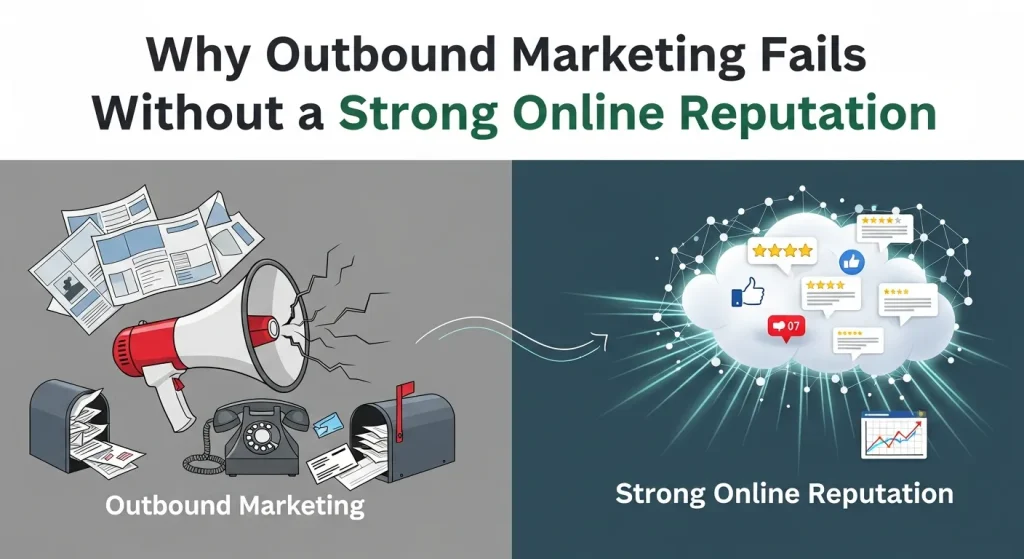
Outbound marketing—from cold calls to direct mail—can generate initial interest, but it rarely closes deals on its own. Modern buyers don’t make purchasing decisions based solely on a sales pitch. They research companies online, read reviews, and evaluate credibility before moving forward. When your online reputation doesn’t support your outbound efforts, even the most compelling sales messages fall flat.
This post explores why outbound marketing fail without strong online credibility and provides actionable strategies to align your reputation management with your outbound campaigns for better results.
The Modern Buyer’s Journey Has Changed
Outbound Marketing Fail often happens because this approach operates on interruption. You’re reaching out to prospects who weren’t necessarily looking for your product or service at that exact moment. While this proactive method can generate initial awareness, it also tends to trigger skepticism among today’s research-driven buyers.
When a prospect receives your cold email, LinkedIn message, or sales call, their first instinct is to verify your claims. They’ll search your company name on Google, explore your website, and look for social proof such as customer reviews, testimonials, and case studies. If they discover negative feedback, outdated content, or a limited digital footprint, your outreach loses credibility—leading directly to an Outbound Marketing Fail scenario.
According to research, 84% of people trust online reviews as much as personal recommendations, and for B2B buyers, this verification process is even more extensive. Decision-makers often spend weeks evaluating multiple vendors, reading reviews, and comparing online reputations before ever responding to a sales pitch.
In essence, your outbound marketing creates the first touchpoint, but your online reputation determines whether prospects take the next step. Without digital credibility, even the most persuasive outbound strategy can falter—transforming opportunity into an Outbound Marketing Fail instead of a conversion.
How Poor Online Reputation Sabotages Outbound Efforts
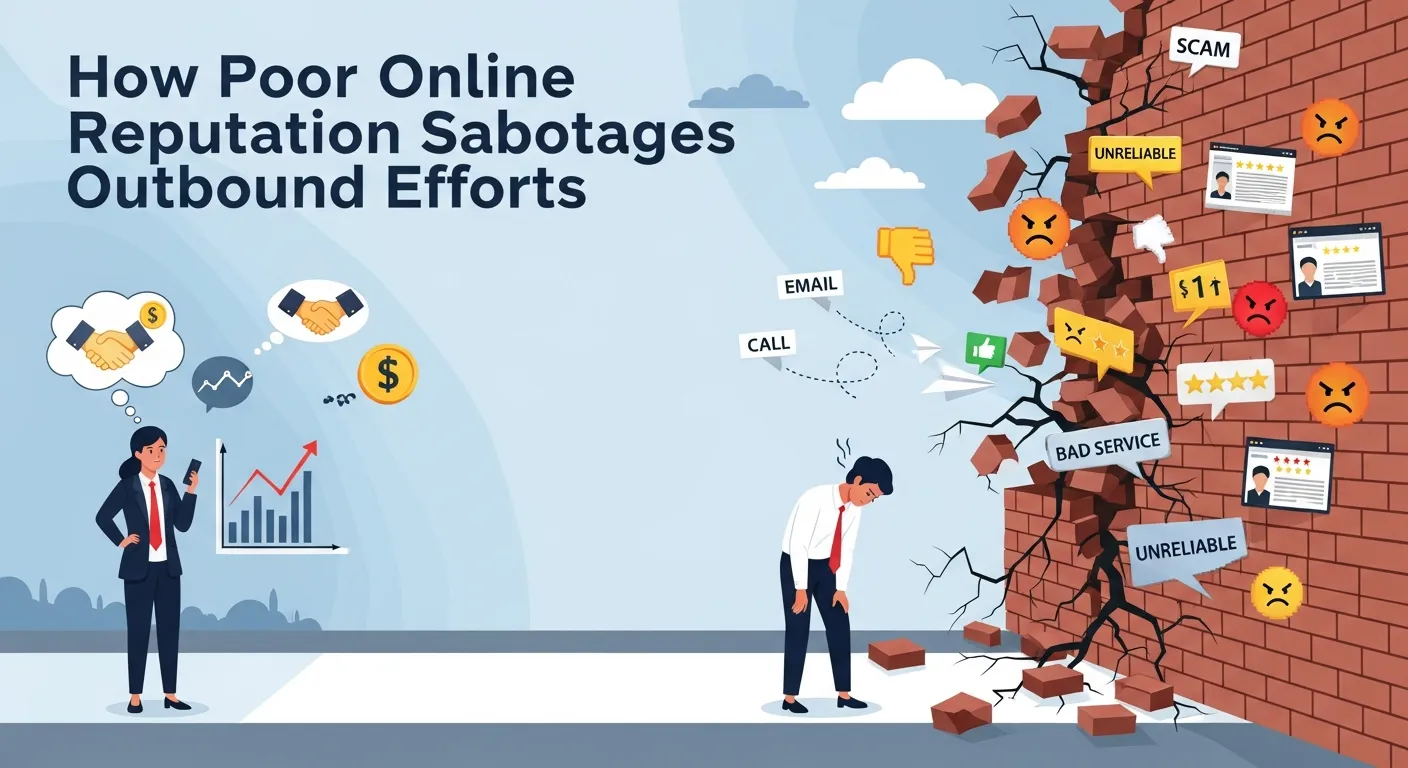
A major cause of Outbound Marketing Fail is the inability to build trust quickly. When prospects research your company and encounter inconsistent information, poor reviews, or a weak online presence, it creates credibility gaps that are difficult to overcome. These gaps directly affect how potential customers perceive your brand and can derail even the most carefully planned outreach campaigns.
For example, if your sales team promises exceptional customer service but online reviews consistently highlight poor support experiences, prospects will question your reliability. This contradiction weakens your outbound messaging, damages credibility, and leads to hesitation—one of the earliest indicators of Outbound Marketing Fail.
Negative Reviews Amplify Objections
Every salesperson knows that objections are part of the sales process. However, negative online reviews can introduce objections long before you even speak to a prospect. When potential buyers find negative feedback dominating your search results, they form preconceived doubts about your company’s quality and reliability.
As a result, your team faces uphill conversations where reputation issues overshadow product benefits. In many cases, this dynamic transforms outreach into another Outbound Marketing Fail, where skepticism outweighs persuasion before meaningful engagement occurs.
Limited Social Proof Reduces Conversion
Another common trigger for Outbound Marketing Fail is the lack of visible social proof. Outbound campaigns often target prospects unfamiliar with your brand. Without strong online validation—such as positive reviews, customer testimonials, and case studies—these prospects have little reason to believe your claims or trust your product.
Social proof functions as third-party credibility. When prospects can easily find success stories, client feedback, and measurable results, they’re more likely to engage with confidence. But if that evidence is missing, doubts grow—and your outbound efforts lose their impact, leading to lost conversions and another Outbound Marketing Fail scenario.
The Cost of Misaligned Marketing and Reputation
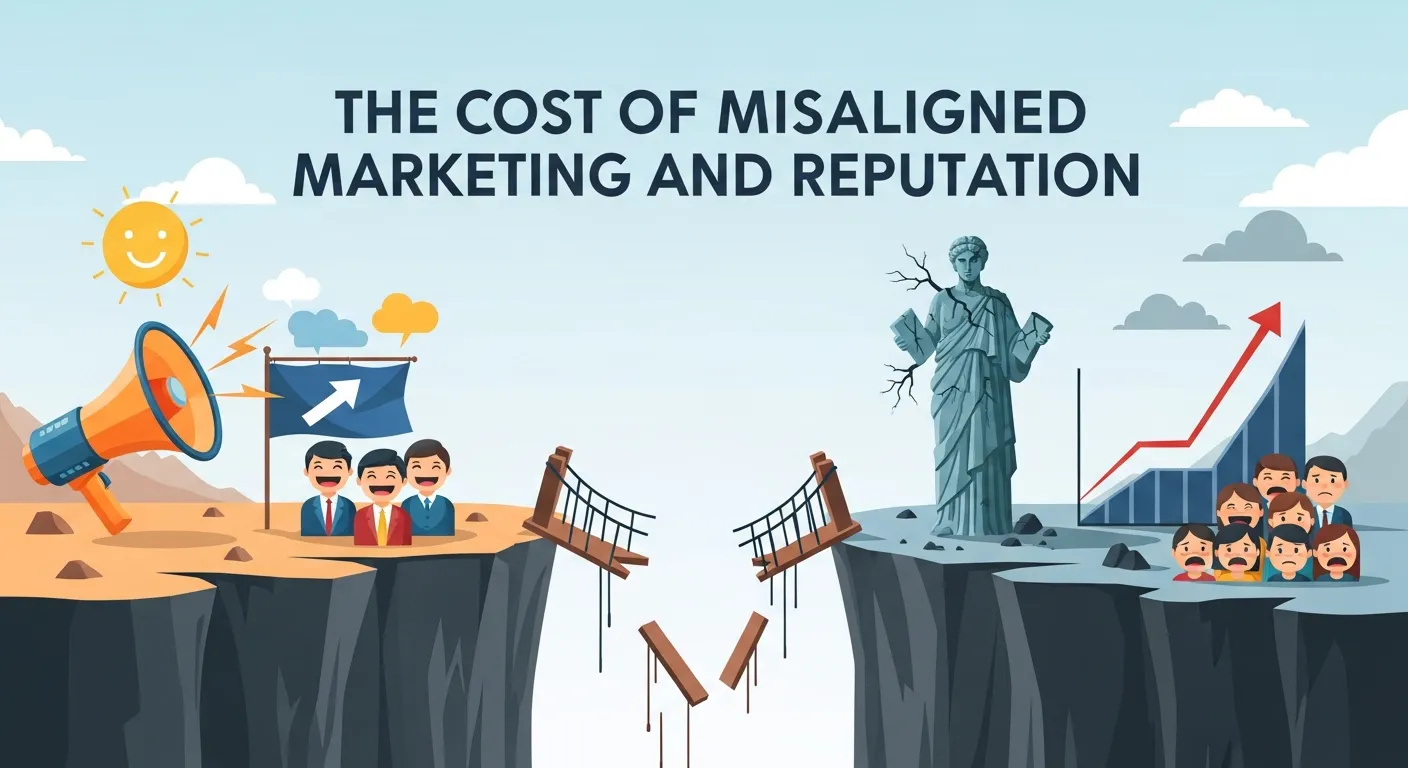
When outbound marketing and online reputation don’t align, the financial impact extends beyond poor conversion rates.
Wasted Marketing Spend
Outbound campaigns require significant investment in tools, personnel, and time. When poor online reputation causes prospects to disengage after initial contact, you’re essentially paying to generate leads that were destined to fail.
The cost per acquisition increases dramatically when you factor in reputation-related dropoffs. You might need to contact twice as many prospects to achieve the same results as a company with strong online credibility.
Longer Sales Cycles
Poor online reputation doesn’t just reduce conversions—it extends sales cycles. Prospects need more convincing when they’ve seen negative information about your company online. Sales teams must spend additional time addressing reputation-related concerns instead of focusing on product benefits and closing deals.
Damaged Referral Potential
Outbound marketing can generate referrals when prospects have positive experiences, even if they don’t initially purchase. However, prospects who discover reputation issues during their research are unlikely to refer others, eliminating a valuable source of future leads.
Building a Reputation That Supports Outbound Success
Audit Your Current Online Presence
Start by understanding how prospects perceive your company online. Search for your business name and key terms related to your industry. Review the first two pages of search results, paying attention to:
- Review sites and ratings
- Social media profiles and recent posts
- News articles or press coverage
- Industry directory listings
- Employee profiles and content
Document any negative or outdated information that could undermine your outbound efforts. This audit provides a baseline for improvement and helps identify the most critical reputation issues to address.
Develop Consistent Messaging Across Channels
Your outbound marketing messages should align with the information prospects find online. If your sales team emphasizes innovation but your website content feels outdated, create messaging guidelines that ensure consistency.
Review your outbound scripts, email templates, and marketing materials alongside your website copy, social media posts, and other online content. Identify discrepancies and update materials to present a cohesive brand narrative.
Actively Generate Positive Reviews
Don’t wait for reviews to appear organically. Implement systematic processes to encourage satisfied customers to share their experiences online. This might include:
- Follow-up emails after successful project completions
- Review requests integrated into your customer success workflows
- Incentives for customers who provide detailed testimonials
- Multiple review platforms to increase visibility
Focus on platforms where your prospects are most likely to research vendors. For B2B companies, this often includes Google Business, industry-specific review sites, and professional networks.
Create Content That Demonstrates Expertise
Prospects who discover your company through outbound marketing need reasons to trust your expertise. Regularly publish content that showcases your knowledge and provides value to potential customers.
Blog posts, whitepapers, case studies, and video content can all serve as credibility builders when prospects research your company. This content should address common questions and concerns that arise during your sales process.
Monitor and Respond to Online Feedback
Online reputation management isn’t a one-time project. Implement systems to monitor mentions of your company across review sites, social media, and industry forums. Respond promptly and professionally to both positive and negative feedback.
When prospects see that you actively engage with customer feedback and address concerns transparently, it builds confidence in your customer service and business practices.
Measuring the Impact of Reputation on Outbound Results
Track specific metrics to understand how online reputation improvements affect your outbound marketing performance:
Response Rate Analysis
Monitor response rates to outbound campaigns before and after reputation improvements. Companies with a stronger online presence typically see higher email open rates and more prospects willing to take initial sales calls.
Sales Cycle Length
Measure the time from initial outbound contact to closed deals. As your online reputation improves, prospects should require less convincing and move through your sales funnel more quickly.
Objection Patterns
Document the types of objections your sales team encounters. When reputation issues are addressed online, you should see fewer objections related to credibility and more focus on product fit and pricing.
Lead Quality Scores
Evaluate whether prospects who engage after outbound contact are more qualified when your online reputation is strong. A better reputation often attracts prospects who are more serious about purchasing.
Integrating Reputation into Product Marketing
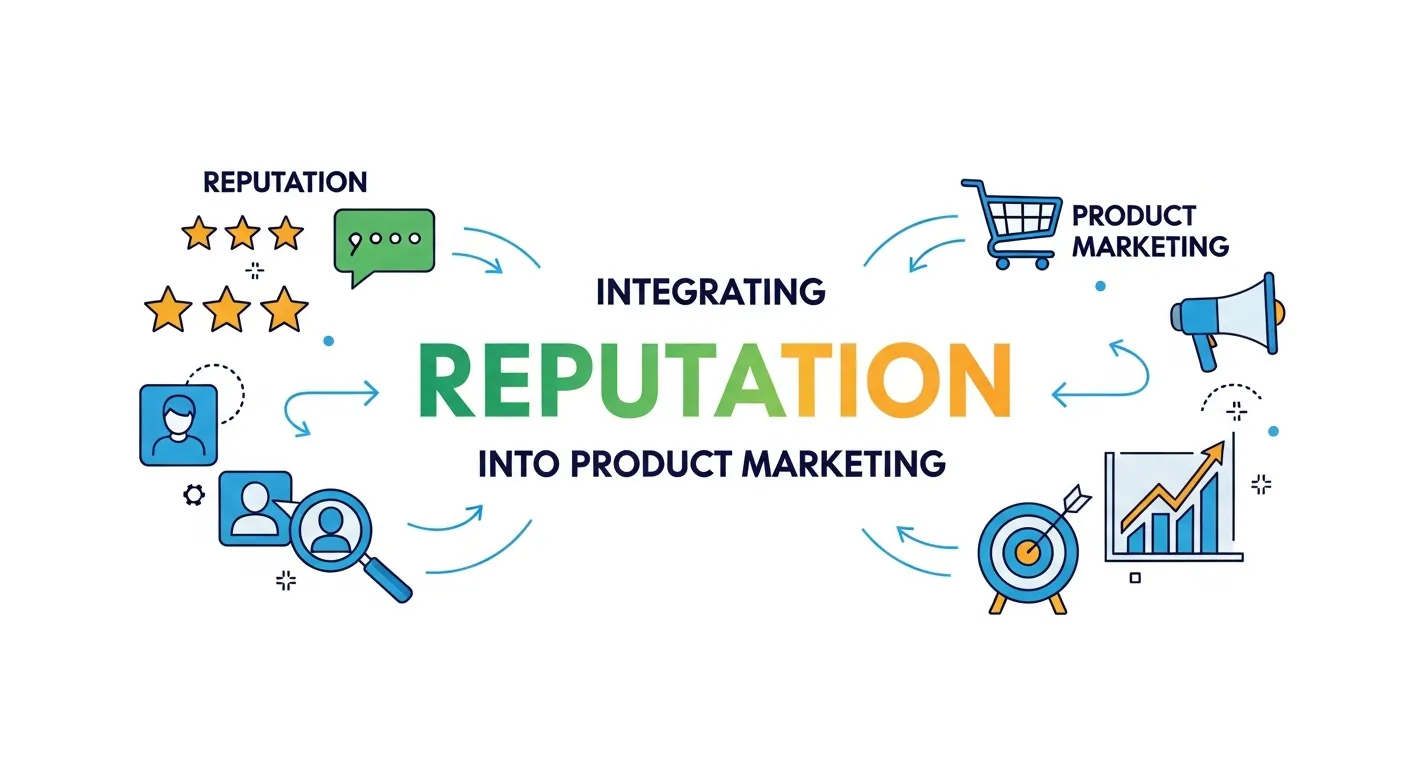
Strong online credibility isn’t just for sales—it’s also a common product marketing technique that plays a central role in how customers perceive, evaluate, and adopt your product. Reputation is no longer an afterthought; it’s a strategic asset that directly influences every stage of your marketing and sales funnel.
In the modern marketplace, buyers are more informed and discerning than ever. They no longer rely solely on marketing claims—they look for proof. This proof often comes in the form of customer reviews, case studies, media mentions, and brand consistency across channels. When your product marketing strategy integrates reputation management effectively, your outbound campaigns gain authenticity, credibility, and conversion power.
Why Reputation Belongs in Product Marketing
Product marketing bridges the gap between product development and market perception. It’s about communicating the right message to the right audience, but that message only resonates when it’s believable. Reputation transforms product marketing from simple promotion into trust-based storytelling.
Here’s why this integration matters:
- Builds long-term credibility: Consistent reputation management ensures that your product messaging reflects reliability, not just hype.
- Enhances differentiation: In competitive markets, reputation becomes your unique selling advantage—proof that your product delivers on its promises.
- Improves customer confidence: When potential buyers see genuine success stories and reviews, they perceive your product as lower risk.
- Strengthens outbound campaigns: Reputation-anchored messaging makes cold outreach more effective because prospects find supporting evidence online.
In short, your reputation isn’t just a reflection of your marketing—it’s the foundation that supports it.
Steps to Integrate Reputation with Product Marketing
Integrating reputation into your product marketing plan requires structured, ongoing effort. Here’s how to build a seamless connection between your brand’s credibility and outbound performance:
- Conduct Audience Research to Identify Perception Gaps
Understand how your target market currently perceives your brand versus competitors. Use surveys, online reviews, and social listening tools to identify what’s missing or misunderstood about your product. - Gather Customer Feedback and Convert It into Testimonials or Use Cases
Encourage satisfied customers to share their success stories. These stories add authenticity and help prospects visualize real-world benefits. - Sync Outbound Messaging with Brand Reputation Goals
Your outbound emails, calls, and ads should mirror the values and promises reflected in your brand reputation. Mixed messages erode trust quickly. - Use Thought Leadership Content to Reinforce Product Credibility
Publish blogs, guides, and webinars that highlight your expertise. This content positions your brand as a knowledgeable leader in your industry—helping outbound efforts gain authority and traction. - Monitor and Adapt Continuously
Reputation is dynamic. Regularly monitor online mentions and feedback to ensure your messaging evolves with customer sentiment and market changes.
Reputation Integration Framework
| Action | Purpose | Expected Impact |
|---|---|---|
| Gather customer testimonials | Build authenticity and credibility | Strengthened brand authority |
| Align outbound and PR messages | Ensure consistency and coherence across channels | Improved audience trust and recall |
| Showcase case studies | Prove product performance and reliability | Higher conversion likelihood |
| Promote thought leadership content | Establish brand expertise | Increased inbound traffic and social proof |
| Monitor sentiment trends | Identify potential risks early | Prevent negative perception and outbound marketing fail |
The Strategic Payoff: A Reputation-Driven Growth Cycle
When you integrate reputation into your product marketing efforts, you create a growth loop that benefits every department—from sales to customer success:
- Outbound marketing generates awareness.
- Prospects research your brand and find credibility.
- Positive reputation accelerates conversions.
- Satisfied customers share testimonials, fueling reputation further.
- Enhanced reputation improves future outbound success.
This cycle continuously compounds trust and visibility, transforming your marketing engine into a self-reinforcing system of credibility and results.
Practical Example
Imagine a software company launching a new analytics platform. Their outbound campaign targets enterprise clients with personalized demos. But before sending a single email, they publish detailed customer case studies, gather verified testimonials on G2 and Capterra, and optimize their website with trust badges and certifications.
When prospects receive the outreach and research the company, they immediately encounter consistent, positive digital proof. This alignment between outbound activity and online reputation shortens the sales cycle and boosts conversions—illustrating exactly why integrating reputation into product marketing prevents outbound marketing fail.
A positive reputation doesn’t just support product marketing—it magnifies it. When every outbound effort echoes the credibility your brand has earned, your campaigns stop feeling like cold outreach and start feeling like trusted recommendations.
By making reputation a core component of your product marketing strategy, you don’t just promote your product—you validate it in the eyes of your audience. The result? Stronger trust, higher conversions, and a brand that stands out in even the most competitive markets.
Reputation’s Role in Product Launches
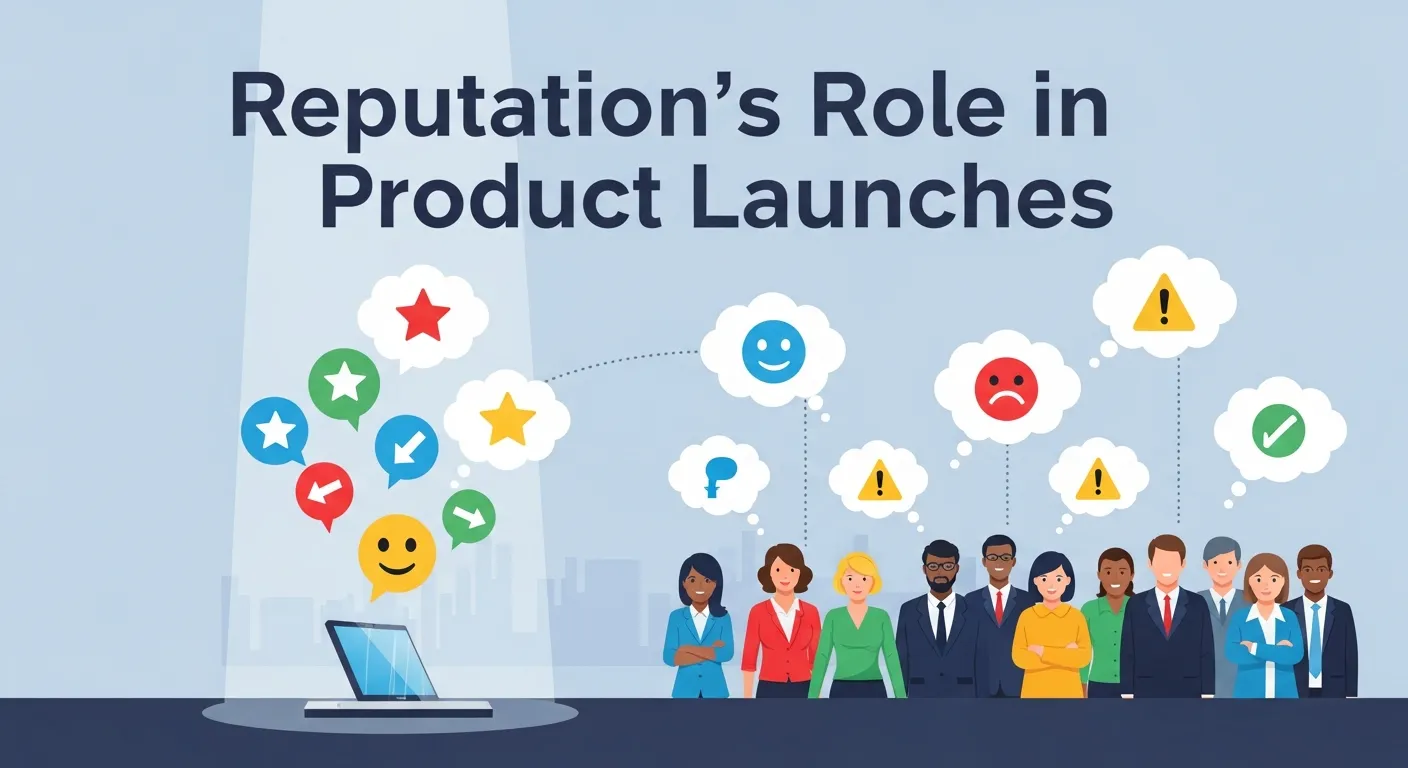
No matter how advanced your marketing tools are or how innovative your product may be, outbound marketing should be part of every product launch plan—but only when your reputation supports it. A powerful launch isn’t just about creating buzz; it’s about transforming curiosity into confidence.
Your online reputation acts as the trust layer that determines whether your outbound campaigns generate genuine excitement or skepticism.
Modern buyers are cautious. Before they sign up for a demo or make a purchase, they research the brand behind the message. If your digital presence reflects credibility—through positive reviews, thought leadership, and consistent branding—your outbound efforts will resonate. If not, your product launch may suffer the classic outbound marketing fail: high outreach, low response, and cold leads.
The Importance of Reputation During a Product Launch
A strong reputation builds momentum, authority, and conversion potential throughout all stages of a launch. Outbound activities—like press releases, email campaigns, or media pitches—can only achieve their full potential when the brand behind them already commands trust.
A positive reputation provides three essential advantages during product launches:
- Validation: Prospects feel confident exploring a new product because it’s backed by a trusted name.
- Visibility: Strong online sentiment improves discoverability and engagement across channels.
- Velocity: With credibility established, sales cycles shorten as buyers are quicker to act.
In contrast, brands that neglect reputation management often see outbound marketing fail—not because the message is wrong, but because the audience doubts the messenger.
Key Elements of Reputation-Driven Launches
1. Pre-Launch: Build Anticipation and Authority
Before your product hits the market, reputation sets the stage for excitement. Outbound efforts here focus on generating buzz and validating your product’s credibility through early endorsements.
Strategies:
- Leverage customer success stories or beta testimonials to establish trust early.
- Distribute press releases that position your brand as a category innovator.
- Use teaser email campaigns and social media previews to build anticipation.
- Encourage thought leaders or partners to discuss your upcoming launch publicly.
When done right, these activities create a narrative of innovation and reliability—two qualities that spark market attention.
2. Launch Phase: Amplify Credibility and Engagement
During the launch, every outbound touchpoint must reinforce the positive perception you’ve already built. This is when reputation and outbound marketing fail must work in perfect sync to convert curiosity into meaningful engagement.
Strategies:
- Coordinate personalized outreach to key prospects, journalists, and influencers.
- Use live demos, webinars, or virtual events to showcase product value.
- Highlight media mentions, partnerships, or awards to boost social proof.
- Ensure consistent messaging across email campaigns, landing pages, and sales scripts.
Prospects encountering your brand for the first time will judge it based on the trust signals they find online. If your digital presence reflects professionalism and authority, outbound messaging becomes significantly more persuasive.
3. Post-Launch: Sustain Trust and Momentum
After launch, your reputation helps maintain traction. Early customers become your strongest advocates—or your loudest critics—depending on the experience they have and how your brand responds.
Strategies:
- Actively collect and publish customer reviews across key platforms.
- Turn positive feedback into testimonials or case studies for future outreach.
- Address negative feedback promptly and transparently.
- Continue email engagement to share product updates, success stories, and community wins.
Reputation at this stage ensures long-term retention and word-of-mouth growth, turning one-time buyers into brand promoters.
Reputation-Driven Product Launch Framework
| Phase | Reputation Goal | Supporting Outbound Activity | Outcome |
|---|---|---|---|
| Pre-Launch | Build excitement and establish authority | Press releases, teaser campaigns, influencer collaborations | Heightened curiosity and media attention |
| Launch | Reinforce credibility and social proof | Personalized outreach, demo invitations, event participation | Increased conversions and strong media pickup |
| Post-Launch | Sustain trust and generate advocacy | Review collection, case study promotion, customer follow-ups | Long-term loyalty and referral growth |
Why Reputation and Outbound Must Align During Launches
When reputation and outbound marketing fail operate in harmony, your product doesn’t just enter the market—it arrives with authority. Prospects move from awareness to purchase faster, and the overall conversion rate improves. But when they’re misaligned, outbound messages may generate attention but fail to inspire confidence, resulting in wasted ad spend and missed opportunities.
Think of it this way:
Outbound marketing fail creates the conversation, but your reputation determines whether anyone believes what you’re saying.
In every successful launch, trust is the multiplier. Brands that actively nurture credibility—through transparent communication, authentic reviews, and consistent digital presence—find that their outbound marketing fail performs exponentially better.
Understanding Outbound Product Marketing in Context
Before combining outbound efforts with reputation management, it’s vital to understand what is outbound product marketing and how it differs from traditional or inbound promotion. This understanding is key to identifying why outbound marketing fail when not backed by credibility, consistency, and trust.
What Is Outbound Product Marketing?
Outbound product marketing is a proactive, engagement-driven strategy that focuses on initiating contact with potential customers rather than waiting for them to discover your brand organically. It’s about taking your message directly to the market—through emails, cold calls, paid ads, events, webinars, and direct mail campaigns—to build awareness and drive sales opportunities.
This approach contrasts with inbound marketing, where the goal is to attract prospects through value-based content, SEO, and organic discovery. Outbound marketing fail pushes your product into the spotlight; inbound marketing pulls prospects toward it.
However, in today’s digital-first world, outbound product marketing can’t succeed in isolation. Modern buyers research before they respond. That means your online reputation becomes the silent deal-maker—or deal-breaker—behind every campaign.
Why Outbound Product Marketing Relies on Reputation
Outbound product marketing thrives on speed, precision, and trust—but only if prospects believe what you say. Without credibility, outreach efforts turn into noise. Here’s why reputation plays such a pivotal role:
- It’s interruption-based—trust must be earned quickly.
When you reach out uninvited, your message interrupts the prospect’s day. A strong online reputation ensures that when they check your credentials, they see validation instead of red flags. - Prospects verify claims through online research.
Even the best-crafted cold email will lead curious prospects to Google your brand. If they find negative reviews or inconsistent branding, skepticism sets in immediately. - Social proof acts as a substitute for prior experience.
Because outbound targets new audiences, they lack firsthand knowledge of your product. Positive reviews, testimonials, and media mentions bridge that trust gap. - A strong reputation reduces skepticism and boosts conversion.
When your brand is recognized for reliability and quality, prospects are far more receptive to outreach—and more likely to progress through the funnel confidently.
Outbound product marketing isn’t just about being heard—it’s about being believed. And belief is built on what your reputation communicates before you even speak to the customer.
Outbound vs. Inbound Product Marketing: A Comparative Lens
| Aspect | Outbound Product Marketing | Inbound Product Marketing |
|---|---|---|
| Approach | Proactive outreach that seeks attention through calls, ads, and direct communication. | Attracts leads through content, SEO, and organic visibility. |
| Speed | Delivers immediate visibility and lead generation. | Focuses on gradual engagement and long-term nurturing. |
| Trust Driver | Dependent on online reputation and third-party validation. | Built through content authority and thought leadership. |
| Audience Readiness | Reaches unaware or cold prospects. | Engages audiences already interested or searching. |
| Best Use | Launching or scaling new products, entering new markets, or driving quick awareness. | Establishing sustainable growth and nurturing existing demand. |
Bringing Balance: Reputation as the Bridge Between the Two
In practice, the best marketing strategies integrate both outbound and inbound elements. Outbound sparks initial awareness, while inbound nurtures long-term relationships. Yet, the connecting thread between them is reputation.
Imagine this scenario:
A potential customer receives your outbound email about a new SaaS tool. Interested, they Google your company—finding consistent branding, glowing customer reviews, and expert blog content. Suddenly, your message feels credible. The sale becomes not just possible but probable.
Without that digital validation, however, the same outreach would likely be dismissed or ignored. This is where most outbound marketing fail —not because of poor strategy, but because the brand hasn’t earned the online trust required to support its proactive efforts.
Key Takeaways: Making Outbound Product Marketing Work
- Build a strong digital foundation before launching outbound campaigns.
- Align messaging across all touchpoints—your emails, website, and reviews should tell the same story.
- Use customer success stories and case studies as outbound proof points.
- Track how reputation improvements impact open rates, response rates, and conversions.
- Blend outbound and inbound efforts to create a reputation-driven growth engine.
By strengthening your online reputation, outbound product marketing campaigns become not only more persuasive but also more profitable—turning cold prospects into confident buyers and ensuring your outbound efforts never fail for lack of trust.
Creating Synergy Between Outbound and Inbound Efforts
A strong online reputation doesn’t just support outbound marketing—it can amplify your results by creating inbound opportunities.
When prospects research your company after outbound contact and find an impressive online presence, they may share your information with colleagues or remember your company when future needs arise. This creates a multiplier effect where outbound efforts generate both immediate opportunities and future inbound leads.
Consider how your outbound messaging can drive prospects to specific online resources that showcase your reputation. Instead of generic website links, direct prospects to customer success stories, recent awards, or industry recognition that reinforces your credibility.
Take Action to Align Your Marketing and Reputation
Outbound marketing fail and online reputation aren’t separate business functions—they’re interconnected elements of your overall growth strategy. When prospects can’t find credible information about your company online, even the most sophisticated outbound campaigns struggle to generate results.
Start by conducting a thorough audit of your online presence from a prospect’s perspective. Identify gaps between your outbound messaging and online reality, then develop systematic approaches to build credibility that supports your sales efforts.
The companies that succeed with outbound marketing fail understand that every cold call and sales email is just the beginning of the prospect’s evaluation process. By ensuring your online reputation reinforces your outbound messaging, you’ll see higher response rates, shorter sales cycles, and better overall marketing ROI.
Your next outbound campaign’s success depends not just on what you say to prospects, but on what they discover when they research your company afterward. Make sure those discoveries support your sales goals rather than undermine them.
Frequently Asked Questions (FAQ)
1. Why does outbound marketing often fail without a strong online reputation?
Outbound Marketing Fail scenarios typically occur when brands reach out to cold prospects without establishing credibility first. Outbound marketing relies on trust-building from the first interaction. Without a solid online reputation—such as positive reviews, thought leadership, and consistent branding—your outreach loses authority. Buyers research before responding, and if they find weak or negative online proof, they disengage immediately.
2. How does online reputation impact outbound marketing results?
A strong online reputation prevents Outbound Marketing Fail situations by acting as proof of reliability. When prospects research your brand and discover testimonials, positive reviews, and success stories, it validates your claims and increases engagement. This directly improves open rates, lead quality, and conversion potential across outbound campaigns.
3. What are the main differences between outbound and inbound product marketing?
Outbound product marketing proactively reaches audiences through direct outreach—emails, ads, and calls—while inbound marketing attracts leads organically through SEO and valuable content.
When comparing outbound vs inbound product marketing which works best at each stage, outbound drives early awareness and launch visibility, whereas inbound nurtures ongoing trust and long-term brand relationships that reduce the risk of outbound marketing fail.
4. Can outbound marketing work for new product launches?
Absolutely—outbound marketing should be part of every product launch plan. It builds early attention, generates leads, and creates brand buzz. However, poor reputation management often leads to Outbound Marketing Fail, as prospects hesitate to engage with brands they don’t trust. A positive reputation amplifies outbound effectiveness, turning curiosity into conversions.
5. How can companies build an online reputation that supports outbound success?
To avoid Outbound Marketing Fail, start with a complete reputation audit. Optimize your business listings, gather authentic customer reviews, and align your digital messaging with your outbound campaigns. Publishing expert content and case studies also enhances trust, positioning your brand as a credible authority and boosting outbound performance.
6. Can you use both inbound and outbound marketing together effectively?
Yes—combining both is one of the most powerful strategies to prevent Outbound Marketing Fail. Outbound generates awareness and drives traffic, while inbound nurtures those prospects with value-driven content. When you can you use both inbound and outbound marketing, the result is a seamless customer journey supported by credibility, engagement, and consistent messaging.
7. What are some signs that poor reputation is hurting outbound performance?
You may be facing an Outbound Marketing Fail if your campaigns show declining response rates, long sales cycles, or unresponsive leads. Negative reviews, outdated content, and inconsistent online branding can all create trust barriers that weaken outbound efforts, making prospects hesitant to engage or buy.
8. How can businesses recover from outbound marketing failures caused by weak reputation?
To bounce back from an Outbound Marketing Fail, brands must focus on authenticity and transparency. Address negative reviews publicly, refresh outdated content, and showcase satisfied customer experiences. Once your reputation improves, re-launch outbound campaigns supported by strong testimonials and media credibility to rebuild trust.
9. Inbound vs outbound marketing—which strategy is right for your business?
Deciding between strategies depends on your goals. When evaluating inbound vs outbound marketing which strategy is right for your business, outbound is ideal for fast visibility and immediate sales, while inbound is better for long-term brand growth and trust-building. The most successful companies combine both approaches to strengthen their reputation and avoid outbound marketing fail pitfalls.
10. How can a business measure the impact of reputation on outbound efforts?
Monitor key metrics—like email response rates, conversion ratios, and lead quality—before and after improving your online reputation. A noticeable boost in engagement and reduced objections signal a recovery from potential Outbound Marketing Fail scenarios, confirming that your enhanced reputation is fueling better outbound results and ROI.