A Guide to Outbound Digital Marketing
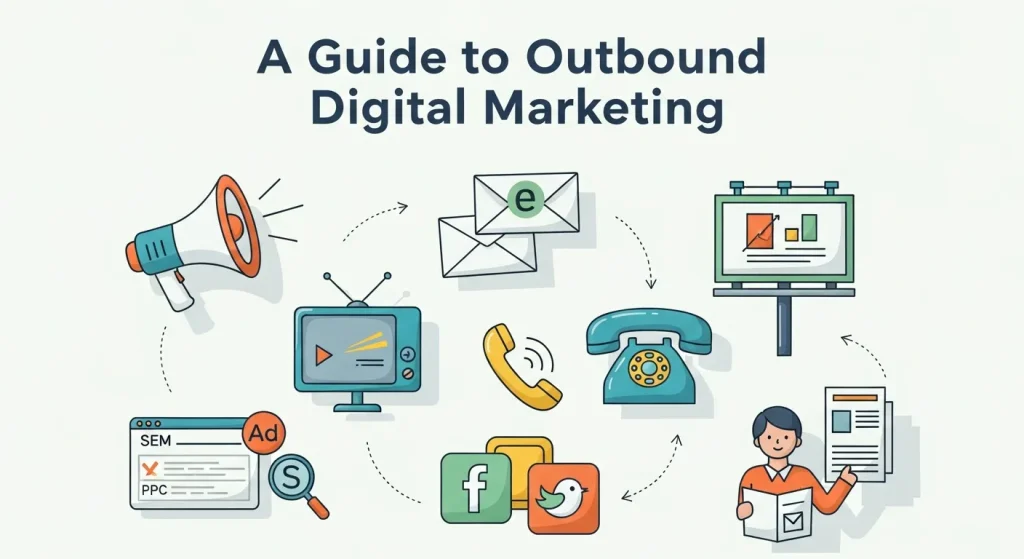
In digital marketing, there are two primary ways to reach your audience: inbound and outbound. While inbound marketing focuses on attracting customers through valuable content and experiences, outbound marketing takes a more direct approach. It’s about proactively reaching out to potential customers to introduce them to your product or service.
Many marketers have declared outbound marketing dead, arguing that its interruptive nature doesn’t resonate with modern consumers. However, when executed thoughtfully, outbound digital marketing can be a powerful engine for growth. It allows you to target specific audiences, generate leads quickly, and build brand awareness on a massive scale.
This guide will explain what outbound digital marketing is, explore its key channels, and show you how to build a strategy that complements your inbound efforts and delivers real results.
What is Outbound Digital Marketing?
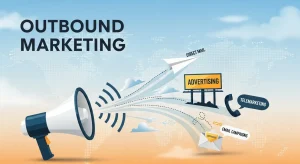
Outbound digital marketing, also known as “push” marketing, involves proactively sending messages to a target audience. Instead of waiting for customers to find you, you initiate the conversation. Think of it as starting a conversation at a networking event rather than waiting for someone to approach your booth.
The goal is to place your message in front of a broad but relevant audience to generate leads and build brand recognition. While traditional outbound methods include TV commercials, billboards, and telemarketing, digital outbound marketing leverages online channels to achieve these goals with greater precision and measurability.
Outbound Product Marketing: Aligning Strategy and Execution
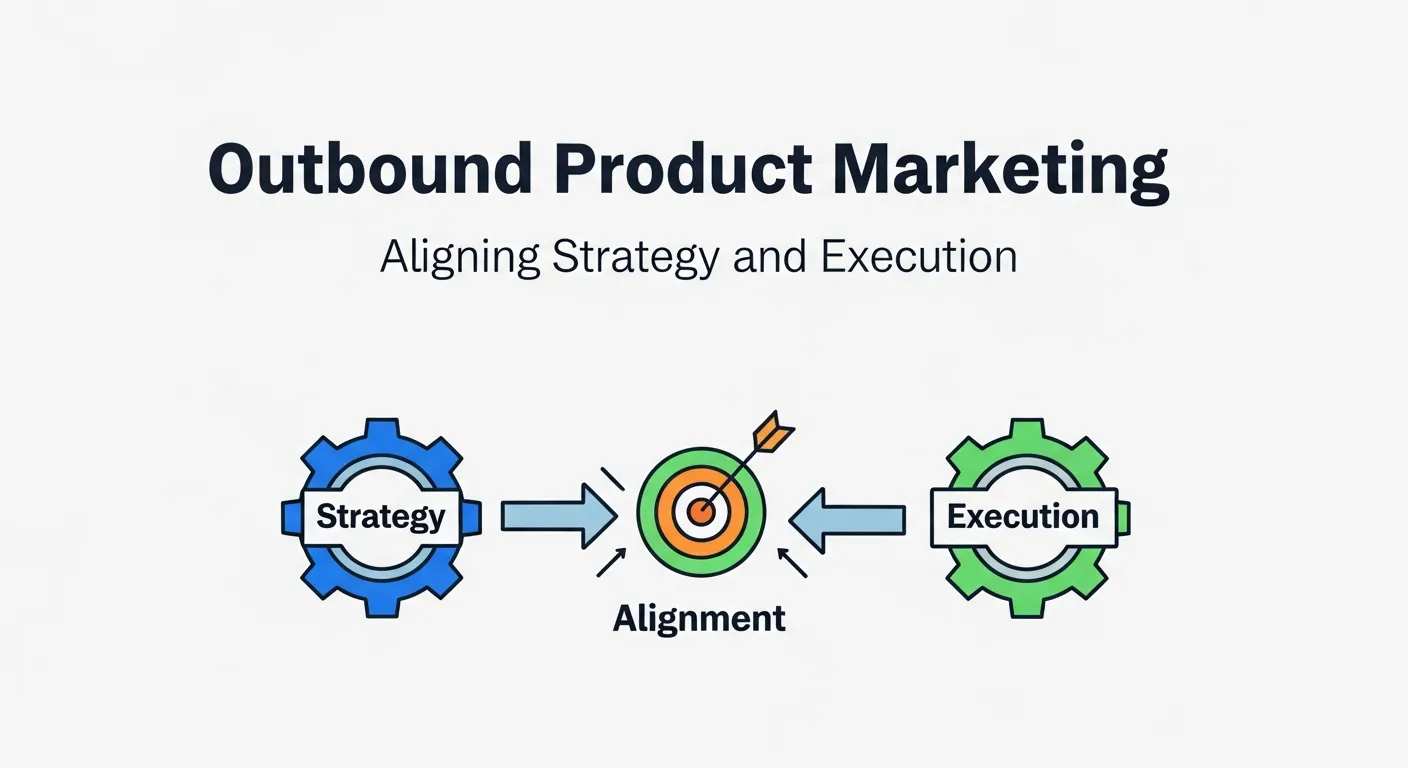
When we think of outbound marketing, we often picture ads and emails — but at its core, it’s also about how you communicate your product’s value to the world. This is where outbound product marketing comes in.
What is outbound product marketing? It’s the process of using outbound channels — such as email campaigns, social media ads, webinars, or events — to promote your product directly to potential customers. Rather than waiting for people to discover your brand, outbound product marketing ensures your solution reaches the right audience at the right time.
Key ways outbound marketing supports product growth:
- Market Education: Helps audiences understand why your product matters.
- Competitive Positioning: Enables clear differentiation through targeted messaging.
- Faster Awareness: Drives visibility before and after product launches.
| Goal | Outbound Tactic | Example |
|---|---|---|
| Build awareness | Social media ads | Product teaser campaigns before launch |
| Generate leads | Email outreach | Personalized demo invitations |
| Support adoption | Retargeting ads | Showing “how-to” content post-launch |
When integrated with inbound strategies, outbound product marketing becomes a powerful engine for growth — helping you boost product sales with powerful outbound marketing strategies that connect messaging, audience, and timing.
Key Outbound Digital Marketing Channels
Modern outbound strategies use a variety of digital platforms to connect with potential customers. Here are some of the most effective channels available today.
1. Pay-Per-Click (PPC) Advertising
PPC is a cornerstone of outbound digital marketing. It allows you to display ads on search engines, social media platforms, and other websites, and you only pay when someone clicks on your ad.
- Search Ads: These ads appear at the top of search engine results pages (SERPs) when users search for specific keywords. Platforms like Google Ads and Microsoft Advertising let you target users who are actively looking for solutions you provide, making it a highly effective channel for capturing high-intent leads. For example, a software company might bid on the keyword “best project management tool” to show their ad to relevant searchers.
- Display Ads: These are visual ads—banners, images, or videos—that appear on websites across the internet through networks like the Google Display Network. While they can be less targeted than search ads, they are excellent for building brand awareness and retargeting users who have previously visited your site.
- Social Media Ads: Platforms like LinkedIn, Facebook, Instagram, and X (formerly Twitter) offer sophisticated advertising tools. You can target users based on demographics, interests, job titles, and behaviors, making it possible to deliver highly relevant messages directly into their feeds.
2. Email Marketing
While email is also a key component of inbound marketing (think newsletters), outbound email takes a different approach.
- Cold Email Outreach: This involves sending personalized emails to potential customers who have not previously interacted with your brand. The key to success here is research and personalization. Instead of sending a generic blast, you identify specific individuals or companies that fit your ideal customer profile and craft a message that speaks directly to their potential pain points. Tools like Hunter or Apollo.io can help you find contact information, but the message itself must be compelling and valuable.
- Sponsored Emails: Some platforms and publications allow you to sponsor an email blast to their subscriber list. This gives you access to an established and engaged audience that aligns with your target market.
3. Content Syndication
Content syndication involves republishing your content—like blog posts, white papers, or webinars—on third-party websites. This strategy pushes your content to new audiences who might not have discovered your brand otherwise. It’s an effective way to generate leads, build backlinks, and establish your brand as an authority in your industry. Many B2B publications and industry-specific websites offer content syndication programs.
4. LinkedIn Outreach
For B2B companies, LinkedIn is an invaluable outbound channel. You can use it to identify key decision-makers at target companies and initiate conversations.
- Direct Messaging: Sending personalized connection requests and InMail messages allows you to start one-on-one conversations. Like cold email, the goal is to provide value and start a relationship, not just pitch your product.
- LinkedIn Ads: As mentioned under PPC, LinkedIn’s ad platform is powerful for reaching specific professional audiences. Sponsored Content, Message Ads, and Lead Gen Forms are all effective outbound tools on the platform.
Integrating Outbound Marketing into Product Launch Plans
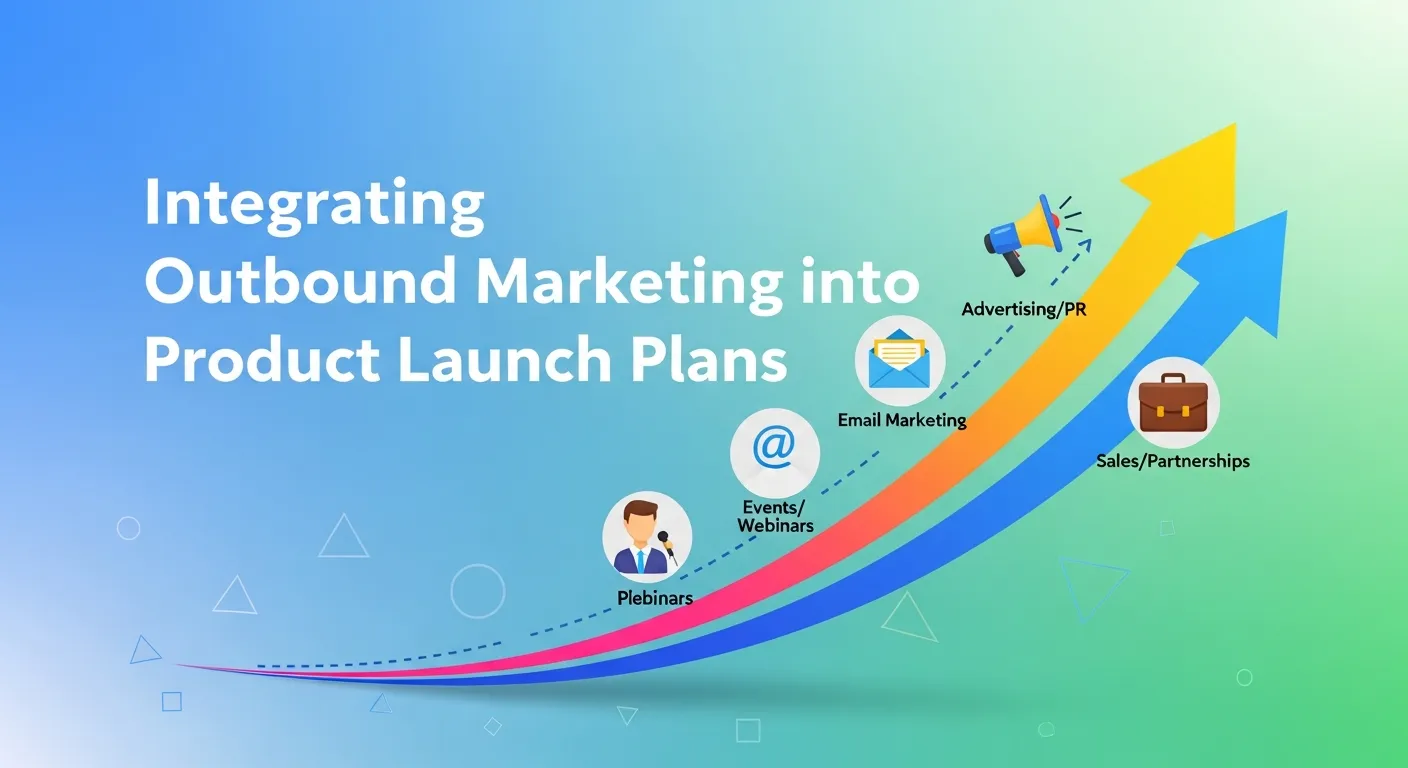
A product launch without a strong outbound component risks going unnoticed. That’s why outbound marketing should be part of every product launch plan — to ensure your message cuts through the noise and drives real attention from day one.
Outbound tactics play an essential role in every launch phase:
Before Launch (Awareness Phase):
- Use targeted PPC ads and press releases to build anticipation.
- Run cold outreach to influencers, media, or industry leaders.
During Launch (Engagement Phase):
- Execute multi-channel campaigns (email, social, webinars) to introduce the product.
- Offer early access or exclusive demos to qualified leads.
After Launch (Retention Phase):
- Leverage retargeting ads and follow-up emails to nurture ongoing engagement.
- Collect feedback to refine your outbound messaging and offers.
How Outbound Fits into the Launch Process
| Launch Stage | Outbound Objective | Key Channel |
|---|---|---|
| Pre-launch | Generate buzz | Paid social, PR |
| Launch | Drive conversions | Email, webinars |
| Post-launch | Retain customers | Retargeting ads |
When executed properly, outbound efforts amplify your launch, speed up lead generation, and reinforce brand credibility.
Mapping the Product Lifecycle to Outbound Marketing Strategy
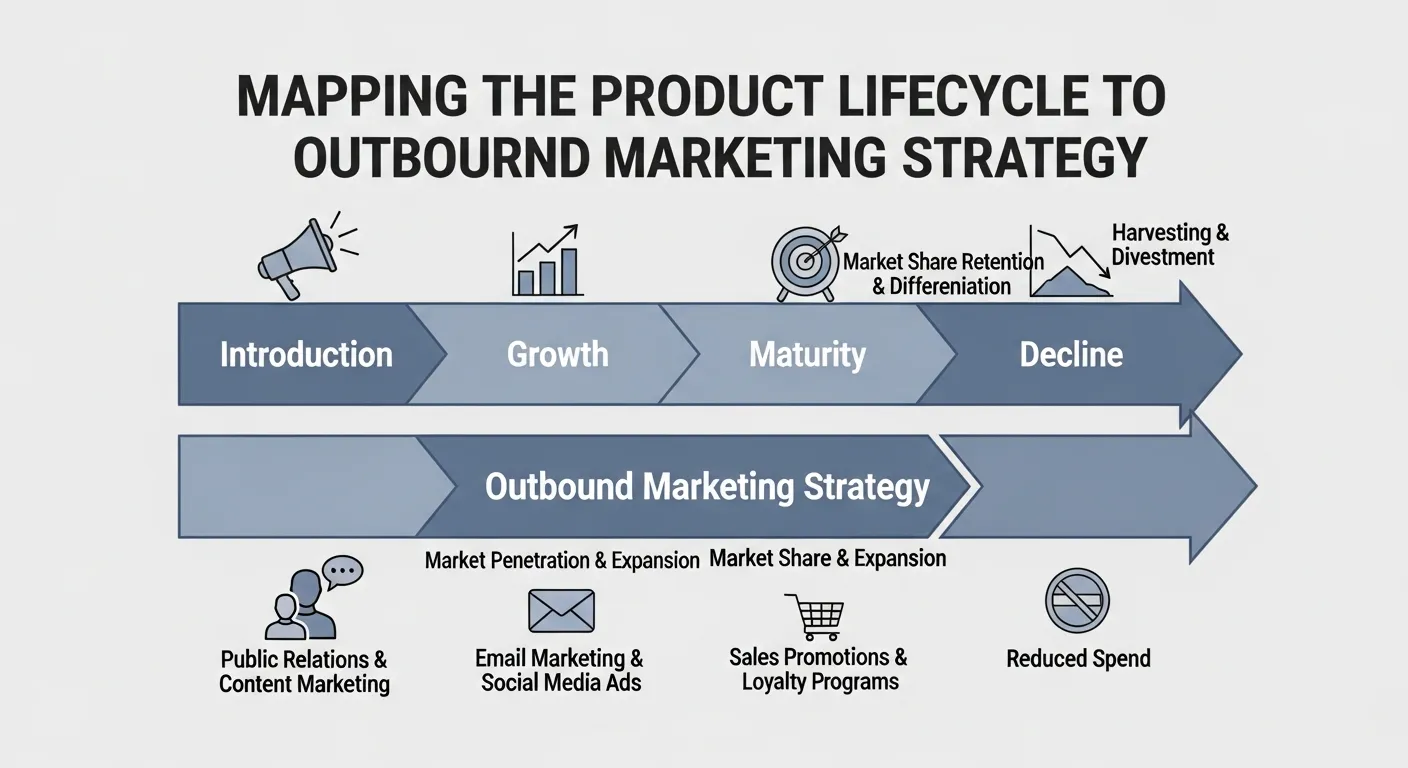
Outbound marketing shouldn’t stop after a product launch — it should evolve alongside the product lifecycle. Each stage presents unique opportunities for engagement, awareness, and conversion. That’s why mapping the product lifecycle to outbound marketing strategy is essential for sustained growth.
Lifecycle Stages and Outbound Tactics:
| Product Stage | Goal | Recommended Outbound Strategy |
|---|---|---|
| Introduction | Create awareness | Run brand awareness ads, PR outreach |
| Growth | Capture market share | Use targeted PPC and influencer partnerships |
| Maturity | Maintain interest | Launch retargeting and loyalty campaigns |
| Decline | Revitalize or pivot | Promote upgrades or new offers to existing users |
Best practices for lifecycle-based outbound planning:
- Refresh messaging regularly: As your product evolves, so should your outreach tone and offer.
- Leverage data insights: Use engagement metrics to refine targeting.
- Integrate with inbound efforts: Sync content marketing with outbound ads for cohesive messaging.
This approach ensures your outbound campaigns remain relevant, data-driven, and effective throughout your product’s lifespan.
Creating an Effective Outbound Strategy
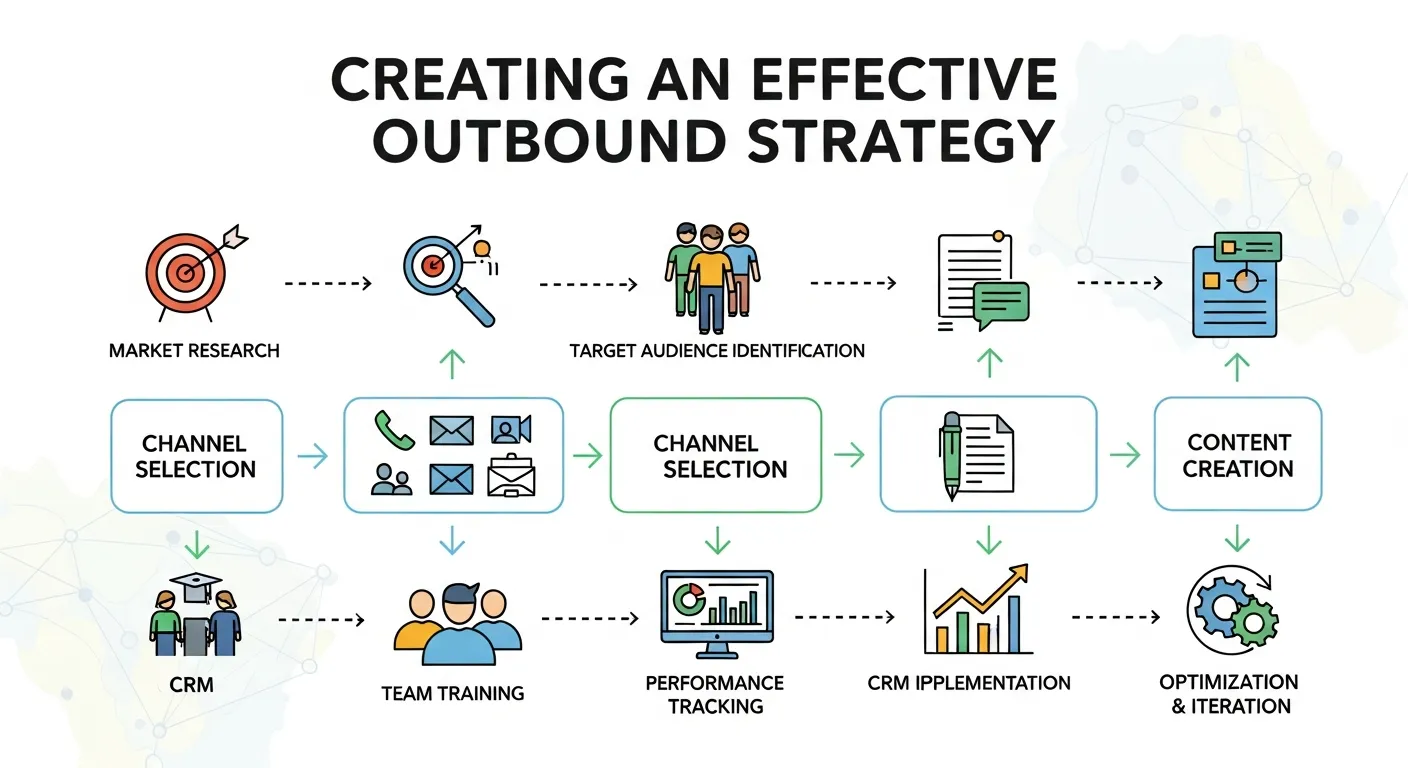
A successful outbound marketing plan isn’t about shouting your message at everyone. It’s about strategic targeting, compelling messaging, and careful measurement.
1. Define Your Ideal Customer Profile (ICP)
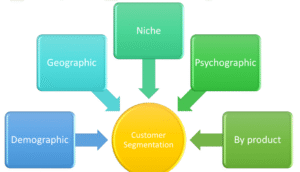
Before you launch any campaign, you need to know exactly who you’re trying to reach. Your Ideal Customer Profile (ICP) is a detailed description of the perfect customer for your product or service. Go beyond basic demographics and consider:
- For B2B: Industry, company size, job titles, technologies used, and business challenges.
- For B2C: Interests, online behaviors, life events, and purchasing habits.
A clear ICP is the foundation of your targeting. It ensures your message reaches people who are most likely to be interested in what you have to offer.
2. Craft Compelling Messaging
Your message needs to grab attention and resonate with your audience’s needs. An effective outbound message is:
- Personalized: Address the recipient by name and reference their company, role, or interests.
- Problem-Oriented: Clearly articulate a problem or pain point that your audience experiences.
- Solution-Focused: Briefly explain how your product or service can solve that problem.
- Clear and Concise: Get to the point quickly. People have short attention spans, especially for unsolicited messages.
3. Choose the Right Channels
Don’t try to be everywhere at once. Based on your ICP, select the channels where your audience is most active. If you’re targeting B2B professionals, LinkedIn and targeted cold email might be your best bet. If you’re a D2C e-commerce brand, Facebook and Instagram ads could be more effective.
4. Test and Measure Everything
The beauty of digital marketing is its measurability. Track key metrics for each campaign to understand what’s working and what isn’t. Key metrics include:
- Click-Through Rate (CTR): The percentage of people who click your ad or link.
- Conversion Rate: The percentage of people who take a desired action (e.g., sign up, make a purchase).
- Cost Per Acquisition (CPA): How much it costs to acquire a new customer.
- Return on Ad Spend (ROAS): The revenue generated for every dollar spent on advertising.
Use A/B testing to experiment with different headlines, ad copy, images, and calls to action to continuously optimize your campaigns for better performance.
The Future of Outbound Marketing
Outbound digital marketing is far from obsolete. When integrated with a strong inbound strategy, it creates a comprehensive marketing engine that drives both immediate and long-term growth. By focusing on personalization, value, and precise targeting, you can turn outbound from an interruption into a welcome introduction. The key is to be strategic, respectful, and relentlessly focused on solving your customers’ problems.
Frequently Asked Questions (FAQ) About Outbound Digital Marketing
1. What is the main goal of outbound digital marketing?
The primary goal of outbound digital marketing is to proactively reach potential customers and introduce them to your product or service. Unlike inbound marketing, which waits for customers to find you, outbound marketing focuses on starting conversations through advertising, cold outreach, and promotional campaigns. Its aim is to generate leads, increase brand visibility, and accelerate conversions by strategically targeting audiences who fit your Ideal Customer Profile (ICP).
2. How does outbound marketing differ from inbound marketing?
Outbound marketing involves pushing messages out to your audience using ads, emails, and direct outreach. Inbound marketing, on the other hand, pulls customers in through valuable content like blogs, SEO, and social media engagement. Both are essential for long-term growth — outbound drives immediate awareness, while inbound nurtures trust over time. The most successful brands integrate both strategies to cover the full customer journey.
3. What are the most effective outbound marketing methods today?
Modern outbound marketing methods have evolved far beyond cold calls and TV ads. Today, the most effective include:
- Pay-Per-Click (PPC) campaigns on search and social platforms
- Cold email outreach to personalized, high-intent prospects
- Social media advertising on LinkedIn, Meta, or X
- Content syndication on relevant industry sites
- Retargeting ads that re-engage visitors who showed prior interest
Each of these methods can be tailored with data-driven targeting and automation to maximize reach and return on investment.
4. How can I build a proper marketing strategy that includes outbound?
If you’re wondering how to build a proper marketing strategy, start by defining your audience first. Identify who your ideal customers are, where they spend time online, and what problems they face. Next, craft messaging that clearly communicates your product’s value and select outbound channels (like PPC, cold emails, or social ads) that reach those audiences directly.
Finally, measure everything — track click-through rates, cost per acquisition, and return on ad spend (ROAS). This continuous optimization process helps you refine your outbound campaigns and integrate them seamlessly with inbound efforts.
5. Is outbound marketing still relevant in 2026?
Absolutely. Outbound marketing remains a key driver of brand awareness, lead generation, and sales growth — especially when paired with automation and personalization tools. Modern outbound marketing tactics are no longer about spamming; they’re about precision. By using CRM data, behavioral analytics, and AI targeting, brands can reach the right prospects at the right time with relevant, value-driven messages.
6. What role does WhatsApp play in outbound digital marketing?
WhatsApp outbound marketing has become an emerging trend, particularly for direct and conversational engagement. Businesses use WhatsApp to send personalized updates, product launches, appointment reminders, and promotional offers directly to customer inboxes. Since it offers high open rates and instant communication, WhatsApp can effectively complement email and SMS outreach — especially for local businesses or brands with an existing customer base.
7. How do I measure the success of my outbound campaigns?
Measuring outbound marketing success requires clear metrics and consistent tracking. Some of the most important include:
- Click-Through Rate (CTR): How many people engage with your ad or message.
- Conversion Rate: The percentage of users who take the desired action.
- Cost Per Lead (CPL): How much you spend to acquire each lead.
- Return on Ad Spend (ROAS): The revenue generated per dollar spent.
Using analytics tools from Google Ads, Meta, or HubSpot can help you visualize these metrics and make informed adjustments.
8. How can outbound marketing and inbound marketing work together?
When outbound marketing and inbound marketing are integrated, they create a complete customer acquisition system. Outbound channels — like paid ads and email outreach — generate quick awareness and traffic. Those leads are then nurtured through inbound channels — such as blogs, SEO, and social engagement — to build trust and convert them into long-term customers. This combination ensures short-term impact and sustainable brand growth.
9. What challenges should marketers expect with outbound marketing campaigns?
Common challenges include ad fatigue, audience resistance, and poor targeting. Many outbound marketing campaigns fail because they’re too generic or overly promotional. The key is to make your outreach personal, valuable, and respectful of your audience’s time. Testing different messages, optimizing your offers, and using data-driven segmentation can help overcome these hurdles and maintain engagement.
10. How can outbound marketing support product launches?
Outbound marketing is a powerful catalyst for new product introductions. Through targeted ads, influencer collaborations, email campaigns, and PR outreach, brands can generate awareness before the product even hits the market. Outbound channels help you create anticipation, reach decision-makers fast, and collect feedback early. This proactive visibility ensures your launch gets the attention it deserves and quickly converts curiosity into sales.
Learn more: Account-Based Marketing: The Evolution of Targeted Outbound Strategies