Mastering the Outbound Market: A Guide to Driving Results
No doubt, outbound marketing still plays a pivotal role in how a company grows and how a brand is received. While inbound tactics have become more popular, outbound is certainly not dead. Instead, it has changed, combining traditional and digital tactics to reach new audiences and create tangible results.
In this article, you’ll learn what outbound marketing is, whether you’re a CMO planning your next promotion or a business owner hoping to grow your base. This guide explores what it is, how it developed, and best practices that will enable you to create campaigns that resonate … and convert.
What is Outbound Marketing and Why Does it Matter?
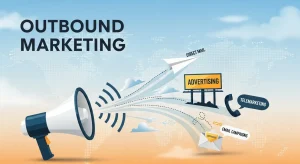
Outbound marketing refers to the proactive approach businesses take to reach potential customers rather than waiting for those customers to come to them. Often called “push marketing,” it involves actively promoting products or services through various channels — such as advertisements, cold emails, sales calls, events, direct mail, or display campaigns. The core idea is to broadcast a message to a targeted audience to generate awareness, spark interest, and ultimately drive conversions.
Unlike inbound marketing, which attracts leads organically through valuable content and SEO, outbound marketing takes the initiative to make the first move. It’s about putting your brand directly in front of your audience — wherever they are — and prompting engagement through strategic messaging and timing.
Why Does It Still Matter?
In today’s digital-first world, outbound marketing continues to play a crucial role in business growth. It helps brands gain instant visibility, create strong brand recall, and generate qualified leads quickly, especially for new products or companies seeking rapid expansion.
Moreover, outbound strategies complement inbound efforts beautifully. While inbound nurtures long-term trust, outbound ensures your message cuts through the noise and reaches prospects who may not even know they need your solution yet. When you find the perfect outbound mix — combining channels like targeted ads, email sequences, and personalized outreach — you’re not just waiting for customers to find you; you’re actively putting your brand in front of them and creating meaningful opportunities for connection.
Outbound marketing still matters because attention is a scarce resource — and businesses that know how to capture it gain a lasting competitive advantage.
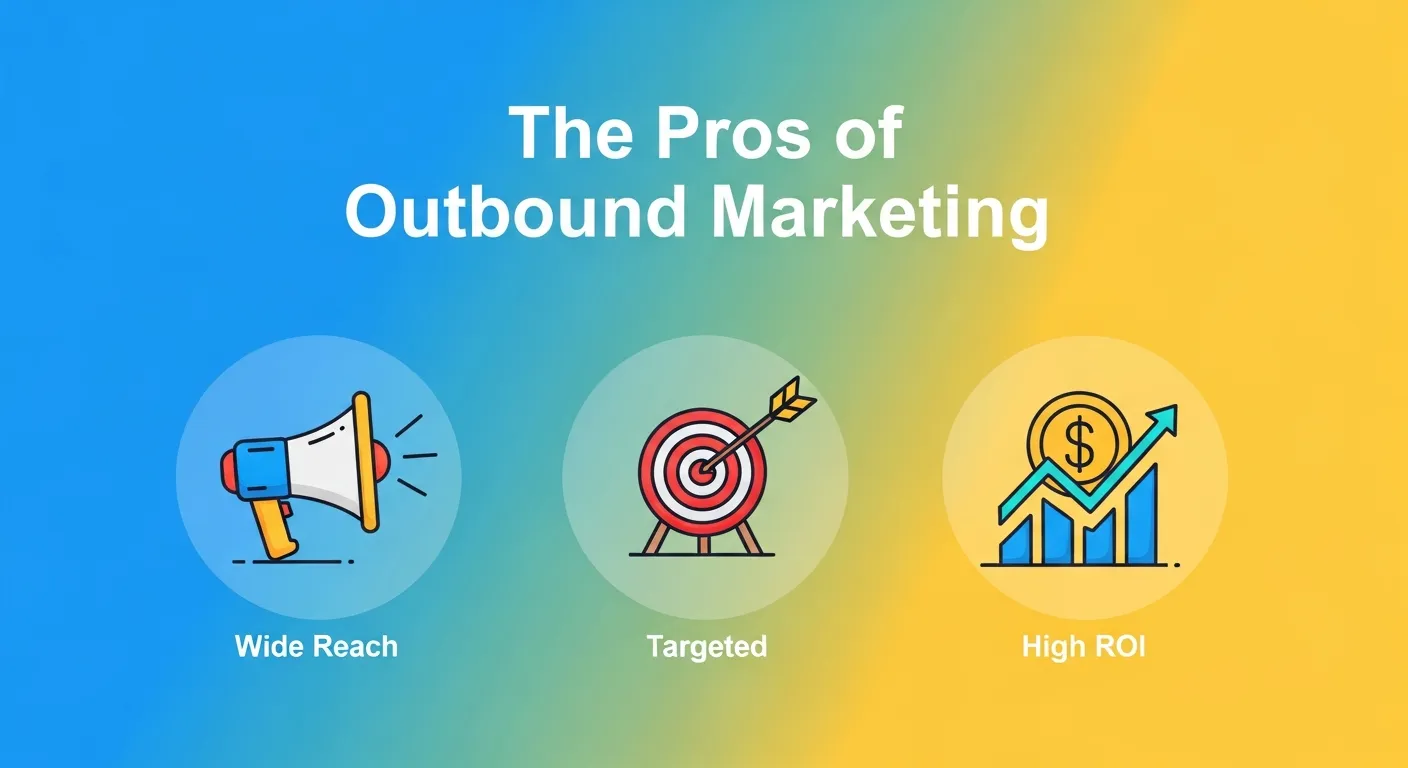
The Pros of Outbound Marketing
1. Broad Reach
One of the biggest advantages of outbound marketing is its ability to reach a wide and diverse audience quickly. Unlike inbound tactics that rely on users actively searching for information or solutions, outbound allows businesses to proactively introduce their brand to large groups — spanning different demographics, locations, and interests. Whether it’s through TV ads, billboards, cold emails, or digital display campaigns, outbound marketing ensures that your message is seen by many, increasing brand visibility and recognition across multiple touchpoints. This broad exposure can be especially valuable for new product launches, event promotions, or brand awareness campaigns where scale and speed matter.
2. Control Over Your Brand Message
Outbound marketing gives you complete control over how and when your brand is presented to potential customers. You choose the message, tone, visuals, and delivery timing — ensuring a consistent and strategic brand image across all channels. This allows you to shape public perception intentionally rather than leaving it to chance. Whether you want to position your business as innovative, trustworthy, or customer-focused, outbound tactics let you craft that narrative directly. By determining when and where your audience encounters your brand, you maintain full control of the customer journey from the very first impression.
3. Quick Turnaround and Measurable Impact
Outbound marketing often delivers faster results than inbound approaches. Since it’s designed to generate immediate visibility and responses, businesses can start seeing engagement and conversions soon after launching a campaign. For example, a well-targeted ad or a compelling sales call can produce leads within days — making outbound ideal for companies that need quick wins or have time-sensitive goals like event registrations or product launches.
In addition, modern outbound tools provide detailed analytics, allowing marketers to track open rates, responses, impressions, and conversions in real time. This means you can fine-tune campaigns quickly and maximize your return on investment.
Conventional Outbound Marketing Methods
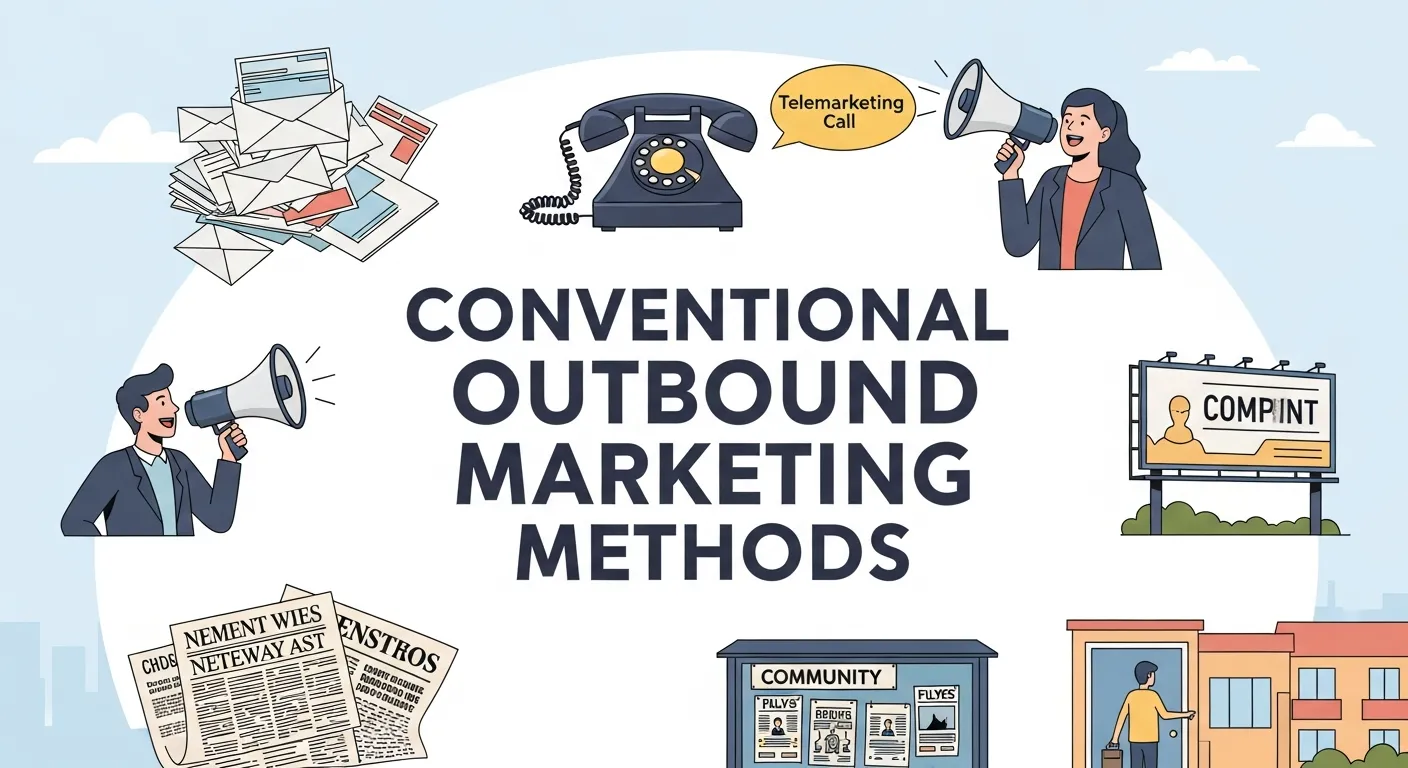
Outbound marketing is rooted in time-tested techniques that have driven brand visibility and customer acquisition for decades. While some may label them “old-fashioned,” these methods remain highly relevant and effective — especially when combined with modern data-driven insights and digital enhancements. Below is a closer look at the core traditional outbound marketing strategies that continue to deliver results.
Advertising
Advertising has always been the backbone of outbound marketing. From TV commercials and radio spots to print ads and billboards, this method allows brands to broadcast their message to massive audiences in a visually or emotionally engaging way.
- Television & Radio Ads: Great for storytelling and brand recognition, reaching audiences during specific time slots or programs.
- Print Advertising: Magazine and newspaper ads help businesses target specific demographics, like luxury buyers or local communities.
- Outdoor/Billboard Advertising: Ideal for driving top-of-mind awareness, especially in high-traffic areas.
- Digital Out-of-Home (DOOH): Modern digital billboards can now integrate data, display real-time updates, and even run targeted ad rotations.
Despite the digital era, traditional advertising remains a powerful driver of brand recall, especially when integrated with digital remarketing efforts.
Direct Mail
Direct mail involves sending physical promotional materials — such as brochures, flyers, catalogs, or postcards — directly to potential customers’ mailboxes. Although it may seem outdated, modern direct mail campaigns have evolved dramatically through personalization and data analytics.
Today’s marketers use demographic data, purchase history, and geographic targeting to make mail pieces more relevant and engaging. For instance, a personalized postcard offering a discount based on a customer’s location or purchase behavior can outperform generic email campaigns in engagement rates.
Direct mail bridges the physical and digital experience, creating a tangible brand connection that consumers often find memorable.
Telemarketing
Telemarketing — or cold calling — remains one of the most direct and personal forms of outbound marketing. It allows businesses to connect one-on-one with potential leads, answer questions, and build trust in real time.
While this approach requires skilled and well-trained sales teams, it can be highly effective in B2B industries and high-value sales contexts. A successful telemarketing campaign often uses structured scripts, empathetic communication, and lead qualification tools to maximize conversions.
In addition to cold calls, many businesses now leverage warm calling, where outreach is based on prior interactions or intent signals, blending the power of outbound outreach with inbound intelligence.
Comparison of Conventional Outbound Methods
| Method | Primary Channel | Key Strengths | Modern Enhancements | Best For |
|---|---|---|---|---|
| Advertising | TV, radio, print, billboards | Broad visibility, brand recall | Data-driven media buys, programmatic placements | Brand awareness, product launches |
| Direct Mail | Physical mailers | Tangible engagement, personalization | CRM-based targeting, QR code integration | Local promotions, personalized offers |
| Telemarketing | Phone calls (cold/warm) | Real-time connection, lead qualification | CRM automation, AI call analytics | B2B sales, service promotions |
Conventional outbound marketing methods continue to thrive when adapted with modern tools, data insights, and omnichannel integration. By combining the credibility of traditional channels with the precision of digital technology, businesses can achieve stronger visibility, deeper engagement, and lasting brand impact.
Outbound Marketing is Going Digital
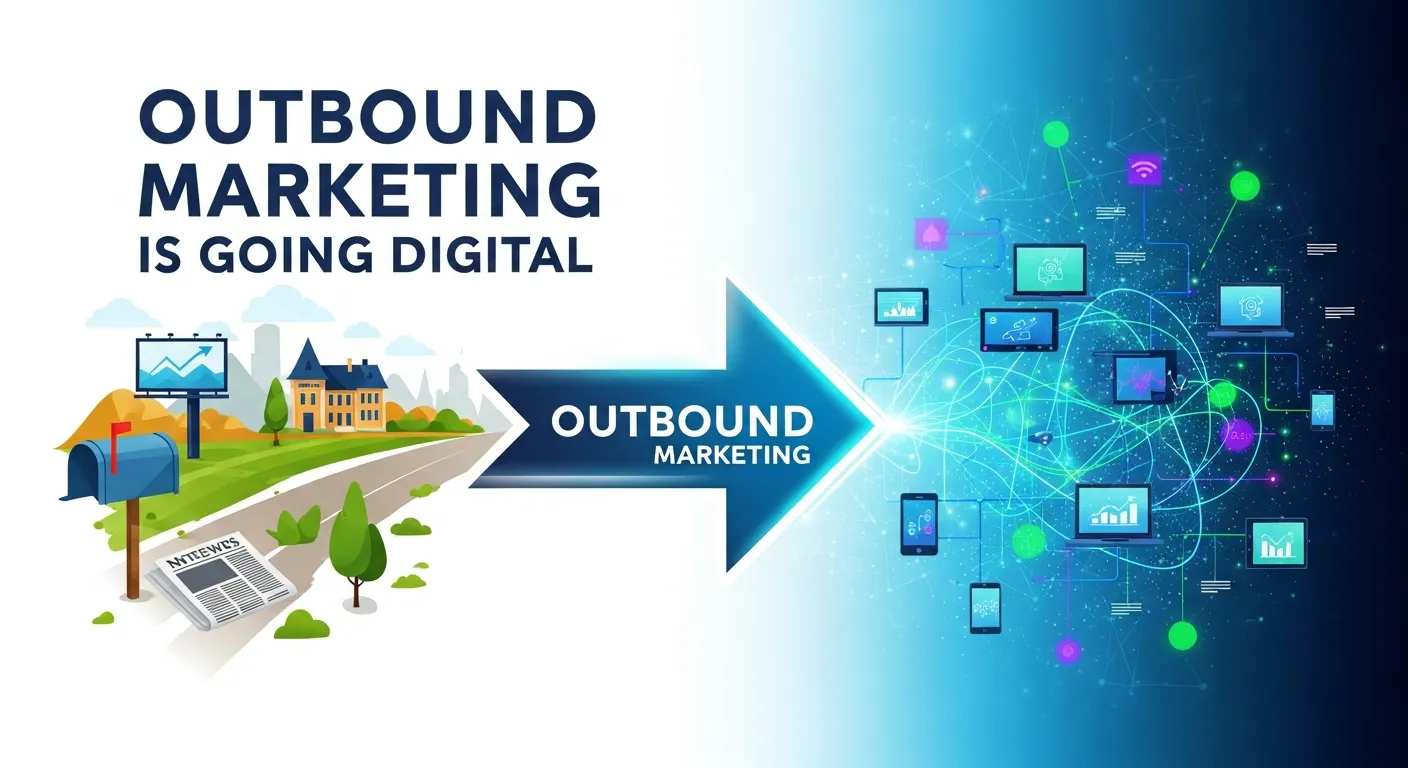
The world of outbound marketing is undergoing a massive transformation. Thanks to the rise of digital technologies, advanced analytics, and automation tools, businesses are no longer limited to traditional methods like print ads or cold calls. The next two decades will be defined by smart, data-driven outbound strategies that blend the best of both worlds — traditional reach and digital precision.
Companies today have broadened their outbound toolkit, merging proven tactics with technology-enabled channels that enhance targeting, measurement, and personalization. Let’s take a closer look at the most impactful digital outbound marketing methods reshaping the industry.
Programmatic Advertising
Programmatic advertising has revolutionized the way outbound ads are bought, placed, and optimized. Instead of relying on manual ad placements, programmatic systems use artificial intelligence and real-time bidding (RTB) to automatically purchase digital ad space on websites, social platforms, and apps.
What makes this so powerful is data-driven precision — you can target audiences by demographics, interests, location, behavior, or even online intent. Detailed analytics then help marketers track performance in real time, optimize budgets, and achieve higher ROI with laser-focused accuracy.
Whether it’s a display ad on a news site or a pre-roll video on YouTube, programmatic advertising ensures that your outbound messages reach the right person, at the right time, in the right context.
Email Marketing
Despite being one of the oldest digital marketing tools, email marketing remains one of the most cost-effective outbound strategies. With the right tools and strategy, businesses can deliver personalized, automated, and targeted email campaigns that engage prospects directly in their inbox.
Modern email marketing platforms allow segmentation based on user behavior, demographics, or stage in the sales funnel — ensuring each recipient receives content relevant to their needs. Automation features like drip campaigns and triggered follow-ups make communication seamless and scalable, while still feeling personal.
When done right, email marketing serves as a high-return outbound channel — nurturing leads, promoting products, and driving conversions without requiring large ad spends.
Social Media Outreach
Social platforms such as LinkedIn, Instagram, Facebook, and X (formerly Twitter) have completely redefined outbound marketing. What was once considered purely inbound territory has evolved into a dynamic outbound arena where brands can initiate conversations and build relationships directly.
- Paid promotions help brands reach targeted audiences instantly, boosting visibility and engagement.
- Influencer collaborations provide credibility and expand reach through trusted voices.
- Direct messaging (DM) outreach allows sales and marketing teams to connect personally, humanizing their brand without being intrusive.
Social media outreach is about connection with precision — reaching prospects in environments where they already spend time, while maintaining authenticity and trust.
Search Engine Marketing (SEM)
Search Engine Marketing (SEM) is one of the most powerful digital outbound tools in the marketer’s arsenal. Through Pay-Per-Click (PPC) campaigns, businesses can instantly gain visibility at the top of search results when users look for relevant products or services.
For instance, by bidding on keywords like “outbound marketing strategy” or “lead generation software”, your business can appear right when potential customers are searching for what you offer — even before they know your brand.
Modern SEM platforms like Google Ads or Microsoft Advertising provide deep analytics, allowing marketers to measure click-through rates, cost per acquisition (CPA), and conversion value with precision. This makes SEM a data-rich outbound channel that drives both traffic and tangible results.
Defining Success in Outbound Marketing
Historically, one of the largest drawbacks of outbound marketing has been how difficult it can be to measure its ROI. But digital appliances can now measure and analyze the performance in detail.
Key Metrics to Track
-
Response Rate: Keep track of who responds (opens email, clicks an ad, or answers a call).
-
Conversion Rate: Monitor what percentage of those responses were converted to paying customers.
-
Customer Acquisition Cost (CAC): Work out how expensive or cheap it is to bring in a new customer through outbound means.
-
ROAS (Return on Ad Spend): Look at how much revenue you earned for each dollar you spent on ads.
Analytics Tools That Are Interesting to Look At
-
Google Analytics tells us about traffic and conversions from SEM sources.
-
Email Marketing Platforms such as Mailchimp and Constant Contact provide email open rates, click through, and bounce rates.
-
Customer Relationship Management (CRM) Systems like HubSpot or Salesforce track leads and conversions and ensure that the success can be attributed to the campaign.
Best Practices of Outbound Marketing
Launching a successful outbound campaign is a lot more than having a fat budget. Read below for best practices for the best results from your efforts:
Know Your Audience
Before you go out there and push your message out there, why don’t you spend time to explain who your audience is? Build customer personas with the help of data.
Optimize Your Message
Don’t forget to hit home with your content. Use stimulating headlines, personalization and a good value proposition to catch the recipients’ attention.
Adopt an Omnichannel Approach
Don’t keep all your eggs in one basket. Leverage a combination of digital guidance and traditional channels to meet your audiences where they are. One example is to include a targeted social media ad with an email campaign.
Focus on Timing
When it comes to outbound campaigns, timing is everything. Whether it’s a cold call during business hours, or an ad slotted in alongside a seasonal trend, be aware of when your audience is most likely to be receptive.
Test and Adjust
Every outbound campaign must allow for testing. A/B test your email subject lines, ad creatives and call scripts to see what works best with your audience.
The Future of Outbound Marketing in the Context of a Mixed Strategy
Outbound marketing is not dead. Rather, it is an evolving field that is constantly evolving to keep up with technological advancements and changing consumer behaviors. What it does do successfully is drive that initial touchpoint and it works well alongside inbound strategies as part of an integrated marketing strategy.
In today’s competitive environment, those companies that manage to merge traditional outreach and digital tools are more likely to succeed.
Outbound marketing is still an important aspect whether you are after brand awareness, lead acquisition or increased sales. And with the techniques and advice detailed here, you can hone your campaigns and see them deliver measurable results.
Frequently Asked Questions (FAQ) About Outbound Marketing
1. What exactly is outbound marketing?
Outbound marketing refers to the proactive strategies businesses use to reach potential customers directly. Unlike inbound methods, where prospects find your business organically, outbound involves actively pushing your message through channels like cold emails, ads, social media, calls, or direct mail. The goal is to create awareness, generate leads, and build immediate visibility for your brand.
2. How is outbound marketing different from inbound marketing?
While both aim to attract and convert customers, their approaches differ. Inbound marketing draws people in through valuable content, SEO, and social engagement — letting customers come to you. Outbound marketing, on the other hand, pushes your message out through paid ads, outreach, or promotions to capture attention quickly. Combining both creates a balanced funnel that drives steady growth.
3. Outbound vs inbound product marketing — which works best at each stage?
When comparing outbound vs inbound product marketing, each has strengths at different stages of the customer journey. Outbound works best for awareness and early lead generation, helping new audiences discover your brand or product fast. Inbound shines in the consideration and retention stages, nurturing trust and loyalty through consistent content, engagement, and education. The best results come from using both in harmony.
4. Can you use both inbound and outbound marketing together?
Absolutely. In fact, many successful businesses integrate both. Outbound tactics can drive initial attention and leads, while inbound methods nurture those leads into long-term customers. For instance, outbound ads can send users to inbound content like blogs, webinars, or landing pages. So yes, you can use both inbound and outbound marketing for a seamless, high-performing marketing funnel.
5. Inbound vs outbound marketing — which strategy is right for your business?
Choosing between inbound and outbound depends on your goals, budget, and audience. If you want quick visibility and immediate results, outbound is ideal. If you prefer organic growth and long-term engagement, inbound is better. Most modern marketers find that inbound vs outbound marketing — which strategy is right for your business is not a one-or-the-other question; rather, a balanced mix often delivers the strongest ROI.
6. What are some examples of modern outbound marketing tactics?
Modern outbound marketing blends traditional methods with digital innovation. Examples include programmatic advertising, PPC campaigns, cold email outreach, social media ads, influencer partnerships, and personalized retargeting. These approaches allow businesses to reach audiences faster and more precisely, supported by analytics that track performance in real time.
7. Is outbound marketing still effective in 2026?
Yes — more than ever. Outbound marketing remains effective because it delivers instant reach and measurable impact. When powered by digital tools and data insights, outbound can target highly specific audiences, personalize messages, and generate fast results. It’s especially valuable for product launches, seasonal promotions, or B2B lead generation.
8. How can outbound marketing support inbound campaigns?
Outbound can amplify the visibility of your inbound assets. For example, promoting your blog, eBook, or webinar via paid ads or cold outreach can significantly increase reach and engagement. This synergy ensures your inbound content attracts more qualified leads faster, bridging the gap between awareness and conversion.
9. What are the main challenges of outbound marketing?
The biggest challenges include ad fatigue, audience targeting, and cost efficiency. Since outbound is often broad-reaching, it can be less personalized if not executed carefully. However, leveraging data, automation, and A/B testing can overcome these challenges — making outbound campaigns more relevant, efficient, and engaging.
10. How do you measure the success of outbound marketing campaigns?
Success in outbound marketing is measured using key metrics such as click-through rate (CTR), conversion rate, cost per lead (CPL), response rate, and return on ad spend (ROAS). Tools like Google Ads, HubSpot, and Salesforce help track performance across channels, allowing businesses to refine strategies for higher impact and profitability.
Learn how to use video content strategically by diving into what YouTube marketing is and how it helps elevate brand visibility.