The Hidden Metrics Behind Outbound Marketing That Actually Drive Conversions

Traditional attribution models miss how outbound marketing truly drives conversions. Multi-touch attribution reveals hidden influence across channels, delayed conversions, and middle-funnel impact—helping teams measure real value, optimize spend, and align outbound efforts with buyer journeys.
Ever wonder which parts of your outbound marketing efforts actually drive results? The answer lies deeper than most marketers realize. Traditional metrics only tell part of the story, while the real conversion drivers often remain hidden beneath layers of data.
Why Traditional Attribution Models Fall Short
Most marketing teams rely on last-click or first-touch attribution models that oversimplify the complex journey customers take before converting. These approaches either give all credit to the final touchpoint or the initial interaction, ignoring the critical middle-ground where decisions often crystallize.
For outbound marketing specifically, this creates a dangerous blind spot. Your cold calls, direct mail campaigns, and email outreach may be setting the stage for conversions that ultimately happen through other channels. Without proper attribution, you might cut these vital programs based on misleading metrics.
The Multi-Touch Reality of Outbound Marketing

Today’s B2B buyers typically engage with 7-10 pieces of content before making a purchasing decision. The path rarely follows a straight line, especially when outbound tactics initiate the journey.
Consider this common scenario: A prospect receives your targeted email, doesn’t respond directly, but later searches for your company, consumes several blog posts, and eventually converts through an inbound channel. Without proper attribution, your outbound email gets zero credit despite being the catalyst.
This interconnected web of touchpoints makes comprehensive attribution not just helpful but essential for understanding your true conversion path.
Hidden Metrics That Matter Most
Beyond the standard open rates and click-through percentages lie deeper metrics that reveal the true impact of your outbound efforts. These often-overlooked measurements include:
Time-delayed conversions from initial outbound contact, Search lift following targeted campaigns, Micro-conversions triggered by outbound touchpoints, Cross-channel influence patterns, Velocity changes in the sales pipeline
Tracking these hidden metrics requires moving beyond platform-specific analytics toward a holistic view of your marketing ecosystem. When properly measured, they often reveal that outbound marketing contributes significantly more value than surface-level metrics suggest.
The Attribution Technology Stack
Modern attribution demands specialized tools that can connect disparate data points across your marketing landscape. Your technology stack should include:
Customer Data Platforms (CDPs) that unify information across touchpoints, Multi-touch attribution software for algorithmic modeling, UTM parameter strategies tailored to outbound campaigns, and CRM integrations that track prospect journeys from first touch to close
Each component plays a vital role in painting the complete picture of how your outbound marketing influences buying decisions.
Implementing Outbound-Specific Attribution Models
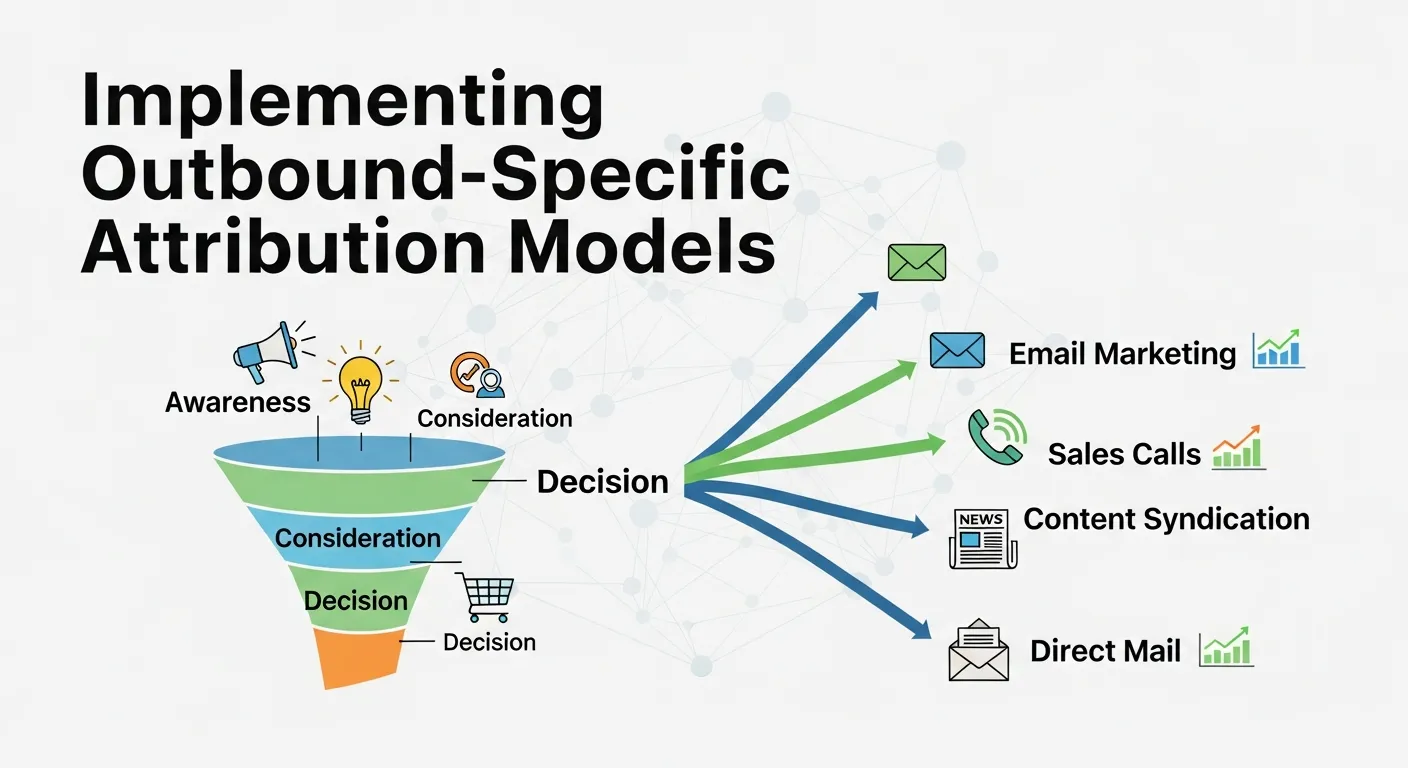
Not all attribution approaches work equally well for outbound marketing. Position-based models that assign a higher value to first and last touchpoints often undervalue crucial middle-funnel outbound interactions.
Time-decay attribution, which gives more credit to touchpoints closer to conversion, similarly disadvantages early-stage outbound efforts that plant the initial seed of interest.
For most organizations, custom attribution models deliver the most accurate insights. These tailored approaches might assign weighted values based on:
Campaign intent and targeting precision, Engagement depth at each touchpoint, Time intervals between interactions, Conversion probability at different funnel stages
The ideal model varies by business, but the goal remains constant: accurately valuing each contribution throughout the conversion path.
Best Practices for Implementing Marketing Attribution Models
Effective implementation of marketing attribution models requires thoughtful planning, integration of tools, and alignment across your marketing and sales teams. Here are some best practices for success:
1. Align Sales and Marketing Teams
Marketing and sales teams often operate in silos, making it difficult to get a unified view of the customer journey. For attribution models to be accurate, both teams must collaborate closely. Regular meetings between sales and marketing can ensure the feedback loop is constant and that attribution insights are shared and acted upon.
2. Define Clear KPIs
Clear Key Performance Indicators (KPIs) should be established to evaluate the effectiveness of both inbound and outbound channels. For instance, KPIs might include:
- Attribution-adjusted revenue: Revenue generated by touchpoints accounted for by your attribution model.
- Engagement depth: How deeply prospects interact with various marketing assets (e.g., email, blog posts, webinars).
- Customer retention post-attribution: How well you’re retaining customers that entered through outbound channels.
By focusing on the right KPIs, your attribution model will provide more meaningful insights that align with your overall marketing objectives.
3. Test, Measure, and Optimize Continuously
Attribution is not a one-time activity but an ongoing process. Regularly revisit and refine your models to ensure they remain aligned with changes in buyer behavior or market conditions. Run A/B tests with different touchpoint combinations and continually adjust based on the results. Over time, this helps fine-tune your approach and optimize every stage of the conversion funnel.
Breaking Down Channel Silos
Attribution challenges often stem from organizational structures that separate inbound and outbound teams. When departments operate in isolation, tracking cross-channel influence becomes nearly impossible.
Progressive marketing organizations are addressing this by:
Creating unified reporting dashboards accessible to all teams, establishing cross-functional attribution committees implementing shared KPIs that measure holistic marketing impact, and developing integrated campaign strategies that leverage both inbound and outbound tactics
This collaborative approach uncovers valuable attribution insights while fostering stronger alignment between previously siloed teams.
Case Study: Revealing Hidden Value
A B2B software company recently discovered that its cold calling program—previously considered marginally effective based on direct conversions—actually influenced 38% of all sales when measured using comprehensive attribution.
Their analysis revealed that prospects contacted through outbound calls were three times more likely to engage with subsequent email campaigns and twice as likely to respond to retargeting ads. Though few converted directly from calls, the outbound touchpoint significantly accelerated the overall journey.
By recognizing this hidden value, the company increased its outbound investment by 40% while simultaneously optimizing their follow-up sequences based on newly discovered behavioral patterns.
From Data to Action: Optimizing Based on Attribution Insights
Discovering hidden attribution patterns is just the beginning. The real value comes from acting on these insights to optimize your marketing mix.
When properly analyzed, attribution data often reveals:
Which outbound messages most effectively initiate customer journeys? Optimal timing between outbound touchpoints. Most productive combinations of outbound and inbound tactics. Content types that best convert outbound-initiated prospects, and Personalization approaches that drive higher attribution value
These insights allow for precise refinements to your outbound strategy, moving beyond basic efficiency metrics toward true effectiveness measures.
Overcoming Common Challenges in Outbound Marketing Attribution
While attribution is a powerful tool, it also presents several challenges. Here are common hurdles marketers face and strategies to overcome them:
1. Data Fragmentation
Many companies use multiple platforms for email, ads, CRM, and analytics, creating fragmented data. This can lead to inaccurate or incomplete attribution. To overcome this, invest in an Integrated Marketing Platform or Customer Data Platform (CDP) that consolidates data across touchpoints. Centralizing this data makes attribution models more accurate and actionable.
2. Attribution Across Multiple Devices
Modern consumers interact with brands across multiple devices—smartphones, desktops, and tablets—which complicates tracking their entire journey. To handle this, adopt cross-device tracking technologies and multi-touch attribution software. These tools ensure that all customer interactions are captured, regardless of the device used.
3. Complexity of Long Sales Cycles
Outbound marketing, especially in B2B, often involves long and complex sales cycles, making attribution harder to manage. In such cases, consider using time-decay attribution or custom attribution models that better account for the duration and complexity of your sales funnel. By assigning value to the touchpoints closer to conversion, you can better measure the full impact of earlier outbound efforts.
4. The Attribution Data Overload
With all the data pouring in, it can be easy to become overwhelmed. Ensure you have proper reporting systems and dashboards in place to help prioritize insights. Create visual reports that focus on high-level trends while still allowing deeper dives into specific touchpoints when needed. Clear, actionable reporting is crucial to making informed decisions without drowning in numbers.
Aligning Outbound Marketing with Your Overall Strategy

Outbound marketing should never be an isolated effort. For maximum effectiveness, attribution insights need to be tied directly to your overarching business objectives and marketing strategy. Here’s how you can align your outbound efforts with your overall marketing goals:
1. Set Clear Strategic Goals for Outbound Campaigns
Outbound marketing should always be aligned with specific business objectives, whether it’s lead generation, brand awareness, or customer retention. By setting clear strategic goals, you can design your attribution models to capture the relevant touchpoints that contribute to these goals. For example, if your primary goal is lead generation, focus on attribution models that highlight which outbound tactics are driving the most leads into the funnel.
2. Ensure Cross-Channel Alignment
Outbound efforts should complement inbound strategies, rather than work in opposition. For instance, a cold email campaign might spark initial interest, but its true effectiveness will be seen when prospects continue to engage with your brand through organic search, content marketing, or paid ads. Make sure your attribution model accounts for both outbound and inbound channels and how they interact to drive conversions. Building a unified reporting system that reflects the combined impact of all channels ensures you get a complete picture of your marketing performance.
3. Tie Attribution Insights to ROI
The ultimate measure of your outbound efforts is ROI. Once you understand the hidden value of your outbound campaigns through attribution, you need to tie those insights directly to return on investment. By understanding which outbound touchpoints most effectively drive conversions, you can optimize your resource allocation to get the highest ROI. If cold calls or email outreach significantly impact future sales, investing more in those channels can provide a better return than doubling down on channels that don’t perform as well.
4. Iterate and Adjust Your Strategy
Outbound marketing is an ongoing process that requires continuous refinement. Use attribution insights to test different strategies and adjust based on performance. For example, if you find that a particular outreach tactic (like direct mail or LinkedIn outreach) is influencing conversions, you can fine-tune the messaging and timing to optimize that touchpoint. Conversely, if other tactics are underperforming, you can pivot to more effective channels without wasting resources.
5. Integrate Attribution Across Departments
For attribution to truly align with your business strategy, it’s essential to share insights across departments. Marketing, sales, and even customer service teams should be using the same data to understand the customer journey. Encourage collaboration between teams to create a holistic marketing strategy. By working together, each department can tailor its efforts based on attribution insights—whether it’s adjusting sales outreach based on touchpoints or creating content aligned with customer engagement patterns
The Future of Outbound Attribution
As marketing technology continues evolving, attribution models are becoming increasingly sophisticated. Emerging approaches include:
AI-powered attribution that predicts conversion likelihood from early interactions, Privacy-focused methodologies that maintain attribution accuracy despite cookie restrictions, Real-time attribution systems that enable immediate tactical adjustment, Cross-device tracking that captures the full spectrum of prospect engagement
These advancements promise even greater visibility into how your outbound efforts contribute to the overall marketing ecosystem.
Taking Your First Steps Toward Better Attribution
Improving your outbound marketing attribution doesn’t require an immediate overhaul of your entire analytics infrastructure. Start with these manageable steps:
Audit your current attribution approach and identify specific blind spots. Implement basic cross-channel tracking through consistent UTM parameters. Create regular reporting that examines delayed conversions from outbound campaigns. Establish a formal feedback loop between sales and marketing teams
Even these initial measures will begin revealing valuable insights about your true conversion path.
NFT Marketing Attribution: Measuring Impact in a Decentralized Buyer Journey
NFT marketing introduces a unique attribution challenge due to its decentralized, community-driven nature. Unlike traditional outbound or inbound channels, NFT buyers often engage across Discord, Twitter/X, marketplaces, influencer wallets, and blockchain transactions—making single-touch attribution nearly impossible.
In NFT marketing, outbound efforts such as whitelist outreach, influencer partnerships, community AMAs, and direct Discord engagement often spark interest long before an on-chain conversion occurs. A prospect might first see a DM or Twitter post, join a Discord server days later, follow project updates, and only mint weeks after—yet the original outbound touchpoint is often overlooked.
Key Attribution Metrics for NFT Marketing
To accurately measure NFT marketing performance, teams must track metrics beyond basic mint counts or wallet activity:
- Community entry attribution (Discord joins, Twitter follows after outbound outreach)
- Wallet behavior over time (first interaction vs. mint timing)
- Influencer-driven outbound impact on secondary marketplace activity
- Engagement-to-mint velocity, measuring how outbound touchpoints accelerate decisions
- Cross-platform influence, connecting social engagement with on-chain actions
Why Multi-Touch Attribution Matters for NFT Campaigns
NFT buyers rarely convert after a single interaction. Multi-touch attribution helps identify how outbound NFT promotions—such as targeted influencer drops, email announcements, or private whitelist invites—work together with organic buzz and community engagement to drive successful mints and long-term holder value.
By combining off-chain data (social, community, outbound campaigns) with on-chain analytics, NFT brands gain a clearer picture of what truly drives adoption, loyalty, and resale activity.
Turning NFT Attribution Insights Into Growth
When NFT marketers understand which outbound tactics spark sustained engagement and conversions, they can:
- Optimize influencer and community outreach spend
- Improve whitelist and pre-mint strategies
- Identify high-impact audience segments earlier
- Build stronger, longer-lasting NFT communities
In an ecosystem where hype fades quickly, accurate attribution turns NFT marketing from speculation into strategy.
Conclusion
The hidden metrics of outbound marketing attribution often tell a dramatically different story than surface-level analytics suggest. By implementing comprehensive attribution models that capture the full customer journey, you’ll discover the true value of your outbound efforts and unlock opportunities for optimization that your competitors likely miss.
In today’s complex marketing landscape, seeing the complete picture isn’t just an analytical luxury—it’s a strategic necessity that separates market leaders from those left wondering why their campaigns underperform.
FAQ: Outbound Marketing Attribution
1. What is outbound marketing attribution?
Outbound marketing attribution is the process of tracking and assigning value to different touchpoints (e.g., cold calls, emails, direct mail) that contribute to a customer’s decision to convert. It helps marketers understand how their outbound efforts influence conversions, even when those conversions happen through other channels.
2. Why is attribution important for outbound marketing?
Attribution helps identify which outbound activities are driving results, enabling marketers to optimize their strategies. Without accurate attribution, you risk underestimating the value of outbound tactics like cold calling or email outreach, which might be influencing conversions in ways traditional metrics miss.
3. How do traditional attribution models fall short for outbound marketing?
Traditional models, like last-click or first-touch attribution, oversimplify the customer journey by either giving all credit to the initial or final touchpoint. This misses the middle-funnel interactions that often occur in outbound marketing, such as when a cold email influences a later conversion through another channel.
4. What are the best attribution models for outbound marketing?
Custom attribution models tailored to your business are often the most effective for outbound marketing. These models can assign different weights to touchpoints based on factors like campaign intent, engagement level, and timing. Time-decay and position-based models can also be useful, but they may need customization to fully capture outbound activities’ impact.
5. How can I track time-delayed conversions from outbound touchpoints?
To track delayed conversions, you’ll need tools like multi-touch attribution software and Customer Data Platforms (CDPs) that unify data across touchpoints. These tools help track when initial outbound contact (e.g., an email or cold call) influences a conversion that happens days or weeks later, even through inbound channels.
6. What are hidden metrics in outbound marketing attribution?
Hidden metrics refer to data points that go beyond typical click-through rates or open rates, such as:
- Search lift: Increased brand searches after an outbound campaign.
- Micro-conversions: Small actions, like opening an email or clicking on a link, that indicate interest and move prospects closer to conversion.
- Cross-channel influence: How outbound efforts influence conversions on inbound channels (e.g., a cold email leads to a prospect visiting your website and converting later).
7. What tools should I use for outbound marketing attribution?
To accurately track outbound marketing attribution, use tools like:
- Multi-touch attribution software (e.g., HubSpot, Marketo, or Salesforce Attribution)
- Customer Data Platforms (CDPs) for unifying data across touchpoints
- CRM systems (e.g., Salesforce) for tracking the full customer journey from initial touch to final conversion
8. How do I integrate outbound attribution into my overall marketing strategy?
Ensure your attribution model aligns with your broader marketing goals. For example, set clear objectives for lead generation or brand awareness and track how outbound marketing contributes to those goals. By integrating attribution data with sales and marketing efforts, you can refine both your inbound and outbound strategies to optimize results.
9. What challenges should I expect when implementing outbound marketing attribution?
Common challenges include data fragmentation across platforms, tracking conversions across multiple devices, and long sales cycles that complicate attribution. Overcoming these requires integrating tools like cross-device tracking, unified reporting dashboards, and custom attribution models tailored to your business needs.
10. What’s the future of outbound marketing attribution?
The future of outbound marketing attribution includes AI-powered attribution models that predict conversion likelihood, real-time attribution for faster adjustments, and improved cross-device tracking to capture the full spectrum of prospect engagement. As technology evolves, attribution will become more accurate and predictive.